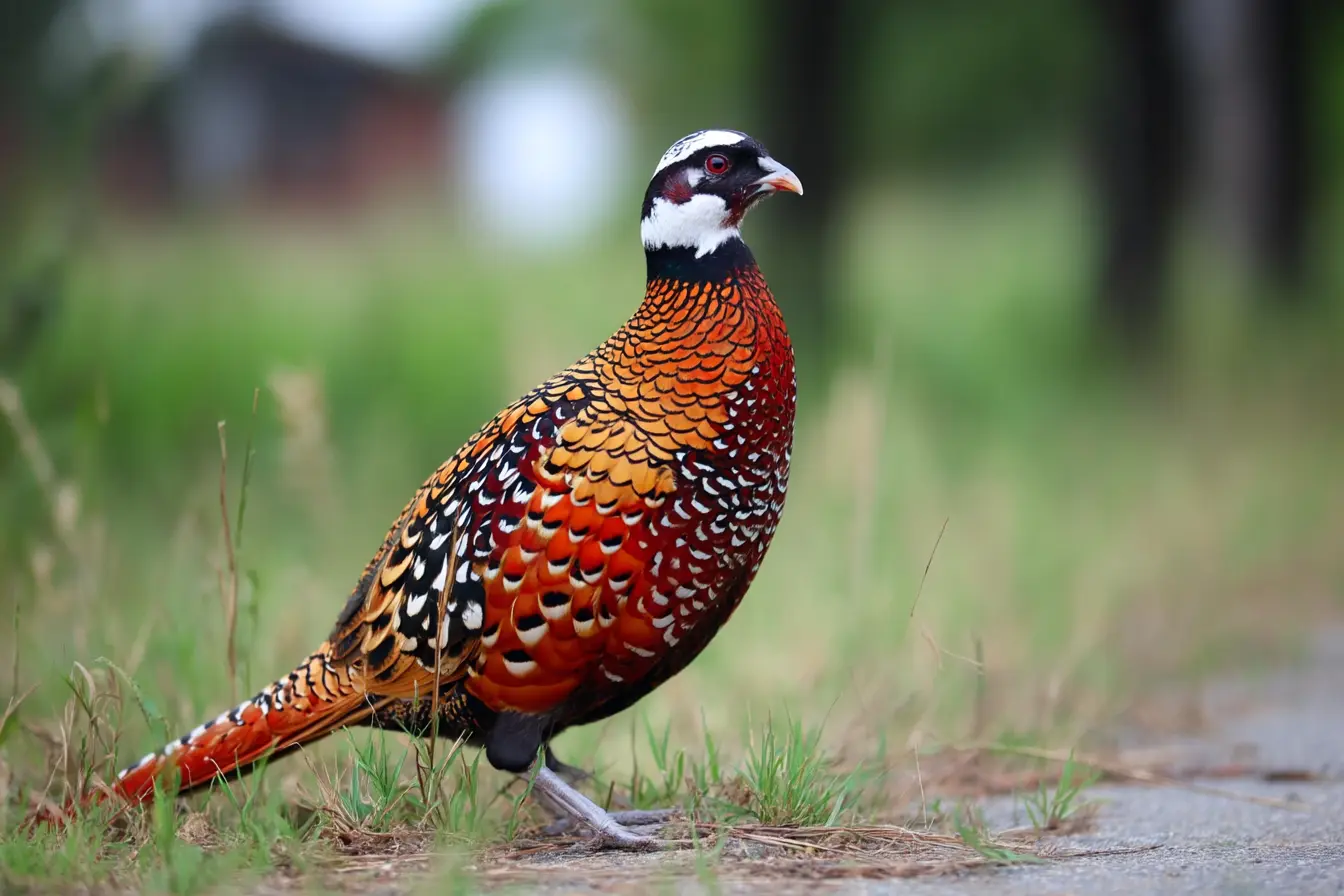
The Reeves’s Pheasant is one of the most magnificent and striking game birds in the world. With its extraordinary tail feathers and bold plumage, it is a favourite among avicultural enthusiasts and estate owners who value both beauty and rarity. Native to China, this species has adapted well to life in the UK under proper management and care.
This detailed guide explains everything you need to know about keeping Reeves’s Pheasants, from housing and feeding to breeding, health, and legal considerations.
Understanding the Reeves’s Pheasant
The Reeves’s Pheasant (Syrmaticus reevesii) originates from the woodlands and scrub of central and northern China. It was introduced to Britain in the 19th century and, for a time, established small wild populations. Today, it is primarily kept in aviaries, wildlife parks, and large estates as an ornamental or conservation bird.
Key Characteristics
Size: 210–240 cm in length, including tail
Weight: 1.3–1.5 kilograms (males), 0.9–1.1 kilograms (females)
Lifespan: 8–12 years in captivity
Temperament: Bold and occasionally aggressive, especially males in breeding season
Diet: Seeds, grains, green vegetation, and insects
Conservation status: Near Threatened in the wild due to habitat loss and hunting
Appearance
The male Reeves’s Pheasant is among the most spectacular birds in the pheasant family. It has a golden head and neck, black-bordered white facial markings, a scaled pattern of golden and brown feathers across the back, and an extremely long tail with alternating buff and chestnut bars. The female is smaller and much plainer, with brown mottled plumage for camouflage.
Legal Considerations
In the UK, keeping Reeves’s Pheasants does not require a special licence, as they are not protected species under the Wildlife and Countryside Act 1981. However, their welfare is governed by the Animal Welfare Act 2006, which obliges keepers to ensure all animals are provided with:
A suitable environment.
A suitable diet.
The ability to express normal behaviour.
Appropriate housing and companionship.
Protection from pain, suffering, and disease.
If you plan to breed or sell Reeves’s Pheasants commercially, you may need to register your premises with the Animal and Plant Health Agency (APHA) and follow relevant biosecurity measures.
Acquiring Birds
Reeves’s Pheasants are less common than other ornamental pheasants, but they can be obtained from specialist breeders and avicultural collections. Always source your birds from reputable suppliers with healthy, well-managed stock.
When purchasing:
Look for bright eyes, smooth feathers, and alert posture.
Avoid birds that appear lethargic or show signs of respiratory distress.
Ask about the birds’ age, breeding history, and diet.
Juvenile birds tend to settle more easily into new environments than fully mature adults.
Housing and Enclosures
Reeves’s Pheasants are hardy and adapt well to the British climate, but they are large, strong birds that require spacious and secure enclosures. They are also known to be territorial, particularly males, so careful planning is essential.
Aviary Requirements
Minimum size: 6 metres long, 3 metres wide, and 2.5 metres high for a pair.
Structure: Sturdy frame with heavy-gauge welded mesh (25 mm or smaller).
Roof: Fully enclosed with mesh or netting to prevent escape.
Flooring: Natural grass, soil, or sand for foraging and dust bathing.
Shelter: Provide dry, draught-free shelters or sheds for roosting and protection from bad weather.
Vegetation: Include shrubs, grasses, and low cover to provide natural shade and nesting areas.
Because Reeves’s Pheasants are strong fliers and can damage enclosures if startled, use flexible roof netting or high fencing to reduce injury risk.
Space and Compatibility
Keep one male per enclosure during breeding season to avoid fighting.
Males may attack other pheasants or smaller birds, so avoid mixed-species aviaries.
Allow visual barriers such as plants or fencing to reduce aggression.
Position the aviary in a quiet area with some natural shade and good drainage.
Feeding and Nutrition
Reeves’s Pheasants are omnivorous, and a varied diet is essential to maintain their health and vivid plumage.
Basic Diet
Pellets: Game bird or pheasant pellets (16–18% protein).
Grains: Wheat, barley, cracked maize, and millet.
Greens: Lettuce, spinach, clover, cabbage, and dandelion leaves.
Fruits and vegetables: Apple, carrot, or berries in small amounts.
Protein supplements: Mealworms, crickets, or boiled egg during breeding.
Provide grit to aid digestion and oyster shell for calcium. Always supply fresh, clean water in heavy bowls that cannot be tipped over.
Feeding Routine
Feed once or twice daily at regular times. Scatter some grain on the ground to encourage natural foraging. Remove uneaten food to deter rodents and insects. In winter, increase grain portions to supply extra energy.
Breeding and Reproduction
Reeves’s Pheasants are seasonal breeders, with courtship and nesting typically beginning in April and lasting until July. They reach maturity at around one year old.
Breeding Setup
One male can be kept with two or three females.
Provide secluded nesting areas with straw, hay, or natural vegetation.
Ensure the aviary offers privacy, as the hens prefer quiet, sheltered spots.
Avoid housing multiple males near each other during breeding season.
Egg Laying and Incubation
Average clutch: 7–14 eggs.
Incubation period: 24–25 days.
Incubation temperature: 37.5°C.
Humidity: 50–55% during incubation, 65% for hatching.
Turn eggs 3–4 times per day until day 21.
Hens may incubate naturally, but artificial incubation produces more consistent results. After hatching, chicks should be moved to a brooder with controlled temperature.
Rearing Chicks
Brooder temperature: 35°C, reduced by 3°C weekly.
Bedding: Clean, dry wood shavings.
Feed: Game bird starter crumb (28–30% protein).
Water: Shallow drinkers to prevent drowning.
Chicks can move to outdoor pens at around six weeks when they are fully feathered and weather-resistant.
Behaviour and Temperament
Reeves’s Pheasants are intelligent and active but can also be assertive. Males, especially, are known for their strong territorial instincts.
Avoid housing multiple males together.
Handle birds minimally to reduce stress.
Provide enrichment such as logs, plants, and perches for stimulation.
Observe carefully during breeding season for signs of aggression.
Outside the breeding season, they are generally calm and curious, often recognising their keeper and responding to regular feeding routines.
Health and Welfare
Good hygiene and proper husbandry are key to maintaining healthy Reeves’s Pheasants.
Common Health Concerns
Coccidiosis: A parasitic infection of the gut; prevent through clean housing and medicated feed if needed.
Worms: Regular worming every 3–4 months for outdoor birds.
Mites and lice: Prevent with dust baths and periodic inspection.
Respiratory illness: Avoid damp or poorly ventilated housing.
Injury: Due to their strength and occasional aggression, injuries can occur during fights.
Preventative Care
Clean and disinfect the aviary regularly.
Replace bedding weekly.
Rotate pens or rest enclosures annually to prevent disease build-up.
Quarantine new birds before introduction.
Healthy Reeves’s Pheasants display bright eyes, upright posture, and active foraging behaviour.
Winter Care
Reeves’s Pheasants are cold-hardy and can tolerate UK winters if they have dry shelter.
Provide draught-free housing with deep straw bedding.
Increase energy-dense feed in cold months.
Ensure water supplies remain unfrozen.
Protect from prolonged damp conditions and wind.
They enjoy access to outdoor areas even in cold weather, as long as they can retreat to shelter when necessary.
Record Keeping
Accurate record keeping supports welfare and breeding success. Maintain detailed records of:
Pairings and breeding seasons.
Hatch rates and chick survival.
Feed and worming schedules.
Health and treatment history.
Good documentation also helps prevent inbreeding and supports responsible conservation breeding.
Conservation and Ornamental Value
In the wild, Reeves’s Pheasant populations have declined due to deforestation and hunting. Captive breeding plays an important role in preserving the species for future generations.
In the UK, these pheasants are primarily kept for ornamental and educational purposes. Their spectacular plumage and impressive tail make them a centrepiece in any aviary or parkland setting.
They are best suited to experienced keepers who can provide space, security, and proper management.
Conclusion
Keeping Reeves’s Pheasants is a privilege that rewards the dedicated bird keeper with beauty, presence, and the satisfaction of caring for a rare and majestic species.
With appropriate housing, balanced nutrition, and careful handling, these remarkable birds can thrive in captivity, bringing elegance and a sense of the exotic to any collection. By keeping and breeding them responsibly, enthusiasts contribute to the preservation of one of the world’s most extraordinary pheasants.
Quick questions
- What should I know about reevesspheasant?
- Reeves's Pheasant care in the UK: a simple guide to housing, feeding, breeding, health and the law. Reeves's Pheasants need large, secure aviaries with natural ground, shelter and visual cover. Vet Verified can help you compare UK veterinary practices by location, species, services and opening hours before you call.
- When should I contact a vet about reevesspheasant?
- Contact a veterinary practice if your pet seems unwell, symptoms are getting worse, you are unsure what to do, or the situation may be urgent. Vet Verified helps you compare practice details, but a vet should advise on your pet's current care.
- Can Vet Verified help me find exotic vets?
- Yes. Use Vet Verified to compare exotic vets across the UK, then check practice profiles and call directly to confirm current availability.
Find a vet
Find a veterinary practice
Compare UK veterinary practices related to this topic. Call the practice to confirm its current services and availability.
Search by species
- Exotic vets Find UK veterinary practices that list care for exotic pets. Compare opening hours, services, facilities and verified profiles, then contact a practice directly.
- Bird vets Find UK veterinary practices that list care for birds. Compare opening hours, services, facilities and verified profiles, then contact a practice directly.