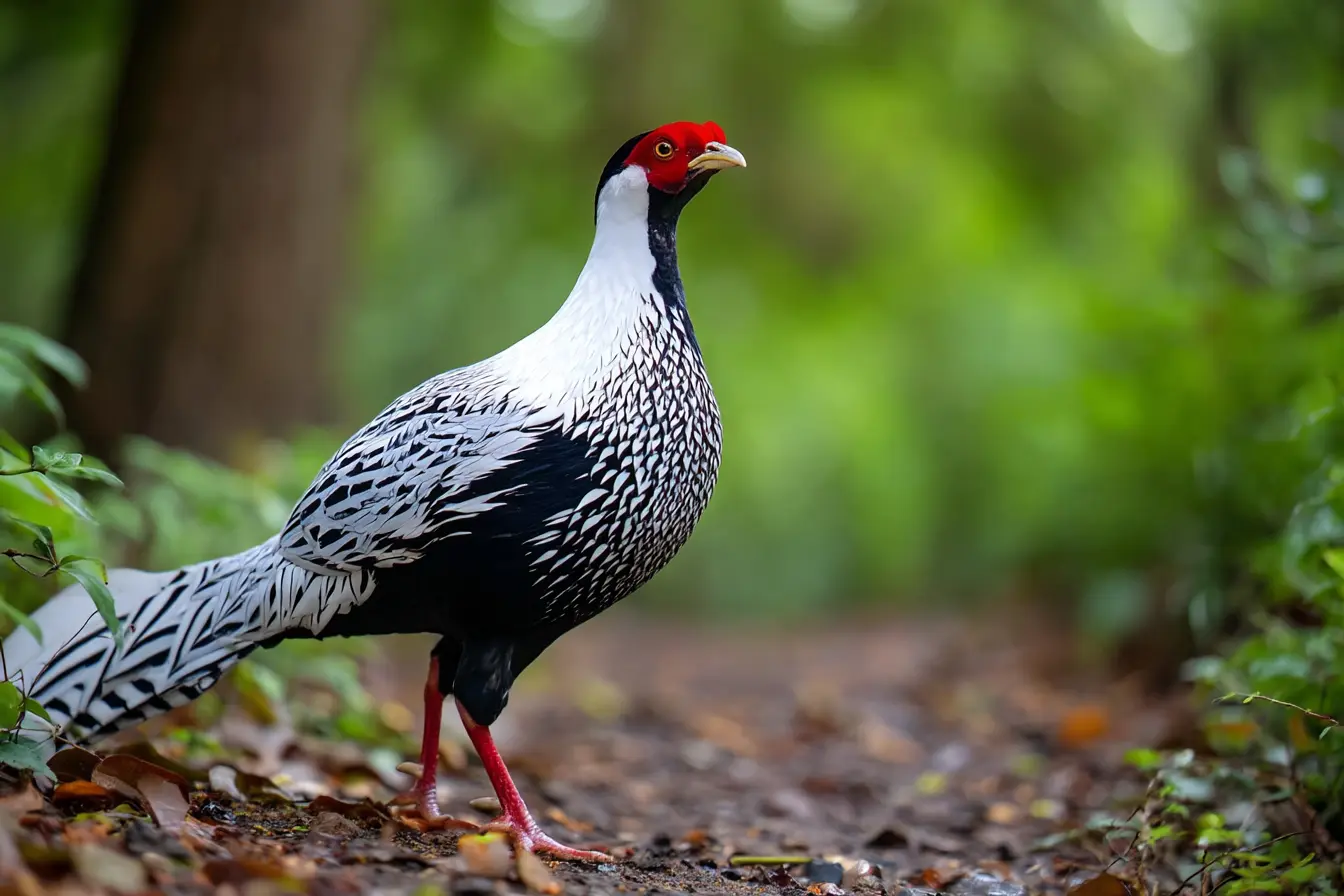
The Silver Pheasant is one of the most elegant and eye-catching birds in the pheasant family. With its contrasting black and white plumage, bright red facial skin, and graceful bearing, it makes a spectacular addition to ornamental aviaries and estates across the United Kingdom. Hardy, adaptable, and relatively easy to care for, Silver Pheasants are an excellent choice for both beginners and experienced aviculturists.
This detailed guide explains everything you need to know about keeping Silver Pheasants successfully and responsibly, from housing and feeding to breeding, health, and legal considerations.
Understanding the Silver Pheasant
The Silver Pheasant (Lophura nycthemera) is native to the forests of Southeast Asia, particularly in China, Vietnam, Laos, and Thailand. Over time, it has become a popular ornamental species in Europe due to its beauty and calm temperament.
Key Characteristics
Size: Around 100–125 cm in length (males have long tails)
Weight: 1.2–1.5 kg for males; 1–1.2 kg for females
Lifespan: 10–15 years in captivity
Temperament: Generally calm and tolerant, though males may be territorial in breeding season
Habitat: Forest edges, bamboo thickets, and lightly wooded hillsides
Diet: Seeds, fruit, leaves, and invertebrates
Appearance
The male Silver Pheasant is easily recognised by its white, finely vermiculated plumage and glossy black underparts. It has a red face and legs, long white tail feathers, and a stately posture. The female, in contrast, is smaller and brown with a shorter tail.
Several subspecies exist, with slight variations in colour and size, though all share the same distinctive elegance that makes the species so admired.
Legal Considerations
In the UK, keeping Silver Pheasants does not require a special licence, as they are not listed as protected or endangered under the Wildlife and Countryside Act 1981.
However, owners must comply with the Animal Welfare Act 2006, which requires that all animals under human care receive proper housing, nutrition, and welfare.
If you are breeding and selling birds commercially, you may need to register with the Animal and Plant Health Agency (APHA) and follow relevant animal health regulations.
Choosing and Acquiring Birds
Silver Pheasants are commonly available in the UK from ornamental bird breeders, game farms, and avicultural societies.
When selecting birds:
Choose healthy, alert individuals with smooth feathers and bright eyes.
Avoid birds with drooping wings, dirty vents, or laboured breathing.
Ask about parentage, diet, and health history.
Juveniles are easier to acclimatise and can be tamed with regular interaction, while adult birds settle well if given quiet surroundings.
Housing and Enclosures
Silver Pheasants are hardy and adaptable to the British climate, but they thrive best in secure, spacious enclosures that provide both open ground and sheltered areas.
Aviary Requirements
Minimum size: 5 metres long by 3 metres wide and 2.5 metres high for a pair.
Fencing: Welded mesh with gaps no larger than 25 mm.
Roof: Fully covered with netting or partial roofing to protect from predators and rain.
Flooring: Natural soil or grass, allowing for foraging and dust bathing.
Shelter: A dry, windproof shed or covered area for roosting and nesting.
Vegetation: Include low shrubs, bamboo, or conifers for natural cover.
Silver Pheasants are active ground birds but can fly short distances, so secure netting is essential. They are comfortable outdoors year-round but appreciate shaded areas in summer and shelter from wind and rain in winter.
Environment and Placement
Position the aviary in a quiet, sheltered area.
Ensure good drainage to prevent dampness and muddy conditions.
Provide perches and logs for enrichment and natural behaviour.
Silver Pheasants prefer open yet sheltered environments where they can display, dust bathe, and forage.
Feeding and Nutrition
A balanced diet is essential to maintain vibrant plumage, strong health, and good breeding performance.
Basic Diet
Game bird pellets or pheasant grower pellets: 16–18% protein for adults.
Grains: Wheat, maize, barley, and millet.
Greens: Lettuce, spinach, cabbage, clover, and dandelion leaves.
Fruits and vegetables: Apple, pear, carrot, and berries in moderation.
Protein: Mealworms, insects, or boiled egg during the breeding season.
Provide grit to aid digestion and oyster shell for calcium. Clean, fresh water should always be available in heavy or raised containers that cannot be tipped over.
Feeding Routine
Feed once or twice daily, ideally in the morning and evening. Scatter some grain on the ground to encourage natural foraging. Remove uneaten food daily to avoid attracting rodents.
In winter, increase the proportion of grains to help birds maintain body weight and warmth.
Breeding and Reproduction
Silver Pheasants breed readily in captivity, making them a popular choice among ornamental bird keepers. They typically begin breeding in their second year.
Breeding Season
Runs from March to July in the UK.
Males display by strutting, fanning their tails, and calling to the females.
A single cock can be paired with one or two hens.
Nesting
Hens usually build their nests on the ground, concealed under vegetation or inside a nest box filled with straw or dry leaves. Provide quiet areas with plenty of cover to encourage natural nesting.
Egg Laying and Incubation
Average clutch size: 8–15 eggs per season.
Incubation period: 25–26 days.
Temperature: 37.5°C.
Humidity: 50–55%, rising to 65% during hatching.
Turn eggs three to four times daily until day 22.
Hens may incubate their eggs naturally, but artificial incubation gives more consistent results.
Raising Chicks
Brooder temperature: Start at 35°C, reducing by 3°C per week until fully feathered.
Bedding: Dry wood shavings or straw.
Feed: High-protein game bird chick crumb (28–30% protein).
Water: Use shallow dishes to prevent drowning.
Chicks can be moved to outdoor pens at around six weeks old when weather permits.
Behaviour and Temperament
Silver Pheasants are calm, intelligent, and easy to handle with regular care. They are generally less aggressive than other pheasant species, though males can become protective during breeding season.
Avoid housing multiple males together.
Provide plenty of space to prevent fighting.
Avoid mixing them with smaller or timid birds.
They are active during the day, enjoying foraging, dust bathing, and exploring their environment. They can become quite tame with gentle and consistent handling.
Health and Welfare
Silver Pheasants are hardy birds, but good hygiene and preventive care are essential for maintaining health.
Common Health Issues
Coccidiosis: Caused by intestinal parasites; prevent with clean housing and medicated feed if needed.
Worms: Regular worming every 3–4 months for outdoor birds.
External parasites: Mites and lice can be controlled with dust baths and treatments.
Respiratory infections: Prevent by ensuring dry, well-ventilated housing.
Bumblefoot: Avoid rough perches and muddy conditions to prevent foot infections.
Hygiene Practices
Clean and disinfect the aviary weekly.
Replace bedding frequently.
Quarantine new birds before introducing them.
Keep wild birds and rodents away from feed and pens.
Healthy birds should be bright, active, and alert, with clean feathers and a healthy appetite.
Winter Care
Silver Pheasants are very tolerant of cold weather but dislike prolonged dampness.
Provide deep straw bedding and dry, draught-free shelter.
Increase energy-rich feed during cold periods.
Ensure water does not freeze.
Protect from snow and wind using solid panels or windbreaks.
They benefit from access to outdoor runs throughout winter, provided they can return to shelter easily.
Record Keeping
Responsible keepers should maintain accurate records of:
Breeding pairs and hatch rates.
Feeding schedules and diet changes.
Health treatments and worming.
Deaths, sales, and acquisitions.
Good records improve welfare management and support breeding success.
Conservation and Ornamental Value
While not endangered in captivity, some wild populations of Silver Pheasants are declining due to habitat loss. Captive breeding programmes help preserve genetic diversity and support the long-term survival of the species.
In the UK, Silver Pheasants are prized as ornamental birds. Their calm nature and striking appearance make them ideal for display aviaries, estates, and conservation collections.
Conclusion
Keeping Silver Pheasants is a rewarding experience for any bird enthusiast. Their striking appearance, hardy nature, and gentle disposition make them one of the most desirable ornamental pheasants to own.
With proper housing, balanced nutrition, and responsible care, Silver Pheasants will thrive, bringing beauty, grace, and a touch of the exotic to any collection or garden aviary. Their elegance and resilience ensure they remain a cherished part of aviculture for generations to come.
Quick questions
- What should I know about silver pheasant?
- Silver Pheasant care guide for the UK. This clear summary explains keeping Silver Pheasants in ornamental aviaries, with practical advice on housing, feeding, breeding, health and legal duties. Vet Verified can help you compare UK veterinary practices by location, species, services and opening hours before you call.
- When should I contact a vet about silver pheasant?
- Contact a veterinary practice if your pet seems unwell, symptoms are getting worse, you are unsure what to do, or the situation may be urgent. Vet Verified helps you compare practice details, but a vet should advise on your pet's current care.
- Can Vet Verified help me find exotic vets?
- Yes. Use Vet Verified to compare exotic vets across the UK, then check practice profiles and call directly to confirm current availability.
Find a vet
Find a veterinary practice
Compare UK veterinary practices related to this topic. Call the practice to confirm its current services and availability.
Search by species
- Exotic vets Find UK veterinary practices that list care for exotic pets. Compare opening hours, services, facilities and verified profiles, then contact a practice directly.
- Bird vets Find UK veterinary practices that list care for birds. Compare opening hours, services, facilities and verified profiles, then contact a practice directly.