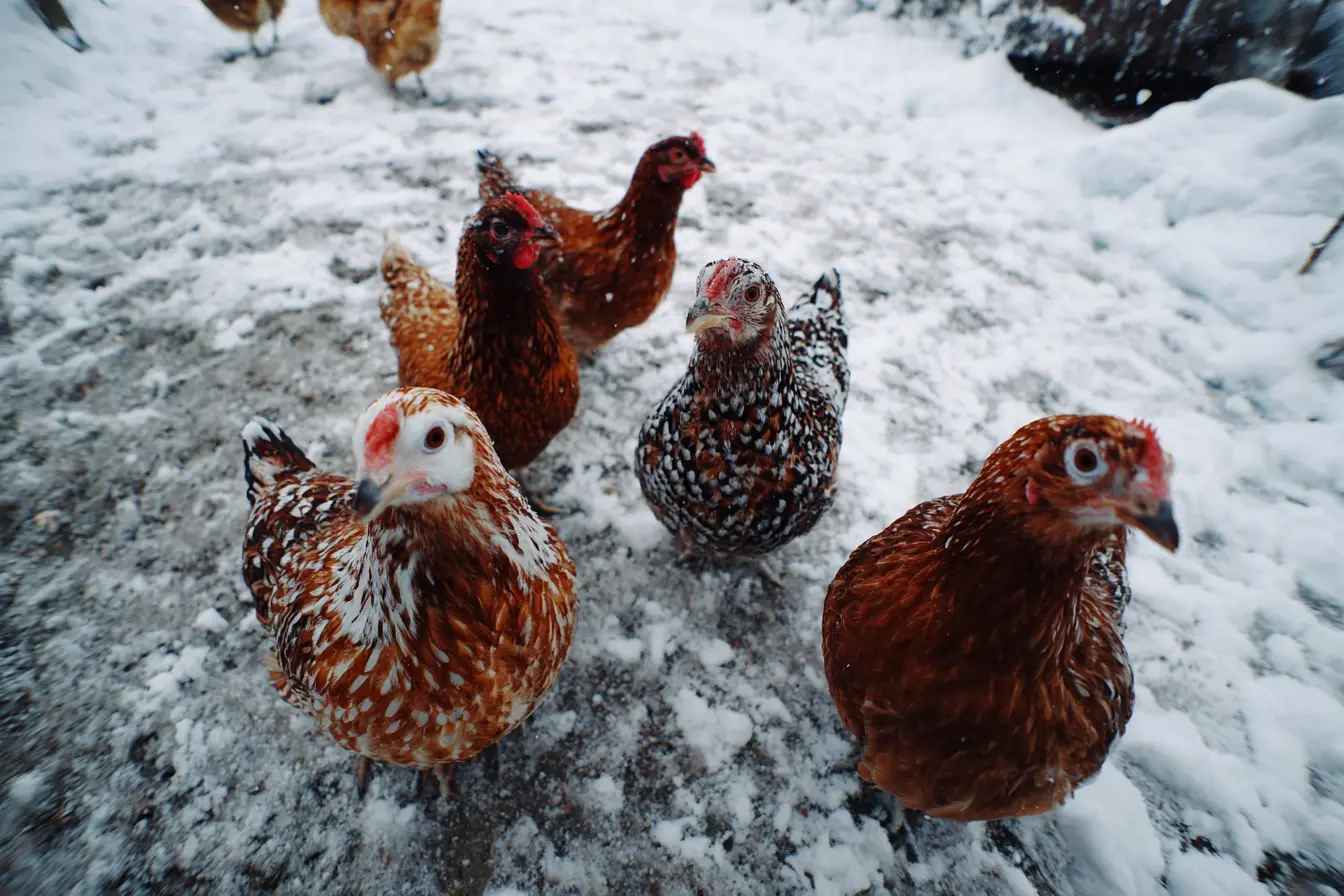
Chickens cope with cold far better than with wet, so keeping them through a UK winter comes down to a dry, well-ventilated house, water that hasn’t frozen and a daily look at every bird. You also need to keep up with the bird flu rules: every poultry keeper in the UK must register their birds, however few they keep, and housing or biosecurity measures can be brought in at short notice.
Register your flock and follow the bird flu rules
Since 2024, anyone in Great Britain who keeps poultry must register them, even if they have just two or three hens in the garden as pets. In England and Wales you register with the Animal and Plant Health Agency (APHA), online or on 03000 200 301. In Scotland you use the Scottish Kept Bird Register. In Northern Ireland, all bird keepers must register with DAERA, apart from people whose pet birds live inside their home. Registering means you are told quickly about outbreaks and new rules near you.
Bird flu (avian influenza) usually becomes more common in autumn and winter, when migrating wild birds bring it in. Each government can declare an Avian Influenza Prevention Zone (AIPZ), which makes strict biosecurity a legal requirement, and can add housing measures that mean keeping birds indoors or in fully enclosed runs. When this guide was checked in October 2026, no AIPZ or housing measures were in force anywhere in the UK, although bird flu had been confirmed in poultry in Scotland and England and the risk of bird flu in wild birds in Great Britain was rated medium. Rules can change within days, so check the bird flu pages on GOV.UK, or DAERA’s in Northern Ireland, throughout the winter.
Even when no zone is in force, keep feed and water under cover where wild birds can’t reach them, use dedicated boots or boot dip for the run, and keep wild birds away from your flock as far as you can.
Bird flu is a notifiable disease, which means you must report it if you suspect it. Call your vet and report it to APHA straight away if you see:
- several birds dying suddenly
- swollen heads, or blue or purple combs and wattles
- gasping, coughing or other breathing difficulty
- a sudden drop in laying, or birds that are very dull and off their food and water.
In England, call APHA on 03000 200 301 and in Wales on 0300 303 8268. In Scotland, contact your local APHA Field Services Office. In Northern Ireland, call the DAERA helpline on 0300 200 7840.
Keep the coop dry, sheltered and airy
Before the weather turns, check the roof, walls, floor, door and pop-hole for leaks and gaps that let in rain or wind. Fix them while the ground is still firm. Inside, there should be room for every hen to perch and move away from birds that bother her. A crowded house gets dirty and damp faster.
Bedding near the pop-hole and drinker gets wet first. Take wet bedding out and replace it with dry material rather than piling fresh bedding on top. Damp litter chills the birds and encourages mould.
Don’t seal every gap to keep heat in. Chickens need ventilation above head height, while perches should be out of draughts. If the house smells of ammonia or stings your eyes when you open it, it needs more airflow. Damp, stale air also makes frostbite more likely. If you add insulation, such as cardboard or old carpet on the outside, keep the ventilation holes clear.
Healthy, fully feathered hens don’t need a heated house. Heat lamps and electric heaters in a coop are a fire risk, because birds can knock them into dry bedding. The British Hen Welfare Trust suggests extra warmth only for feather-bare hens in extreme weather, and then only in an outbuilding with a safe power supply. If you have newly rehomed hens with thin feathering, ask the rescue or your vet what they need.
Keep water and feed going in frost
Hens need fresh water all day, and a frozen drinker can mean a hen stops eating as well. On frosty days, check drinkers first thing and again in the early afternoon. Keep a spare drinker so you can swap a frozen one straight away, refill with tepid water rather than hot, and store drinkers under cover overnight. Stand them on a firm surface out of the mud.
Keep the main diet the same through winter. A complete layers’ feed, given as pellets or mash, should make up most of what your hens eat, with grit available. Treats should stay small so they don’t replace balanced feed. If one hen guards the feeder, a second feeding spot lets the others eat.
Two feed rules catch out many keepers. It is illegal to feed chickens kitchen scraps or leftovers, including vegetable peelings and food from vegan households, because food waste can spread serious animal diseases. Pet hens count as farmed animals under these rules. In Great Britain, dried insects, including the dried mealworms sold as hen treats, are also banned from farm animal feed. The ban doesn’t cover live insects.
Laying, red mite and frostbite
Most hens lay fewer eggs, or stop for a while, as the days shorten, and many moult in autumn. This is normal and usually needs nothing more than good feed. A hen that stops laying and also seems dull, hunched or off her food is a different matter and needs a vet.
Red mites are tiny parasites that hide in cracks in the house by day and feed on roosting birds at night. Colder weather slows them down but doesn’t kill them, and they can still build up in a sheltered coop. Every week or two, look at perch ends and under nest boxes after dark with a torch, or run a piece of white kitchen roll along the underside of a perch: red or brown smears mean mites. Pale combs, hens that won’t go in at night and a fall in laying are other signs. Heavy infestations cause anaemia and can kill, so ask your vet which treatment is suitable.
Frostbite mostly affects large single combs and wattles, particularly in damp, poorly ventilated houses. Affected tips turn pale or grey at first, then dark or black. Some keepers smear petroleum jelly on large combs before a hard frost. If you see frostbite, don’t rub it or warm it quickly with direct heat. Speak to your vet, as damaged tissue can become infected and is painful.
Make the run workable after rain
Mud is often the hardest part of a UK winter. Water tends to gather in the same places: below a roof edge, by the gate or around the pop-hole. Walk the run after heavy rain to see where to act first. A covered area gives hens somewhere dry to stand, and a layer of hardwood chips over wet ground gives them firmer footing and something to scratch in. Keep covers secure in high winds.
Clear old food off wet ground, since it attracts rats and wild birds. Wet weather can also loosen fence posts and soften the ground, so check the run boundary for places a fox or badger could dig under.
A daily winter routine
The best plan is one you can keep up when it is dark and raining. A short daily check might cover:
- fresh, unfrozen water and enough feed, kept under cover
- wet bedding removed, especially near the pop-hole and drinker
- a quick look at the roof, door, cover and fencing after wind or heavy rain
- each hen watched for a moment as she eats or goes to roost.
Look for anything that differs from that bird’s normal behaviour: standing apart, fluffed up, not eating or drinking, a pale or discoloured comb, lameness, injury or noisy breathing. Contact a vet promptly if a chicken seems ill, is injured, cannot stand or is struggling to breathe. Not every vet practice sees poultry, so find one that does before you need it.
Quick questions
- What should I know about keeping chickens in winter uk?
- A practical guide for UK chicken keepers on bird flu rules and flock registration, dry and airy housing, frozen water, legal feeding, red mite, frostbite and daily winter checks. Vet Verified can help you compare UK veterinary practices by location, species, services and opening hours before you call.
- When should I contact a vet about keeping chickens in winter uk?
- Contact a veterinary practice if your pet seems unwell, symptoms are getting worse, you are unsure what to do, or the situation may be urgent. Vet Verified helps you compare practice details, but a vet should advise on your pet's current care.
- Can Vet Verified help me find bird vets?
- Yes. Use Vet Verified to compare bird vets across the UK, then check practice profiles and call directly to confirm current availability.
Find a vet
Find a veterinary practice
Compare UK veterinary practices related to this topic. Call the practice to confirm its current services and availability.