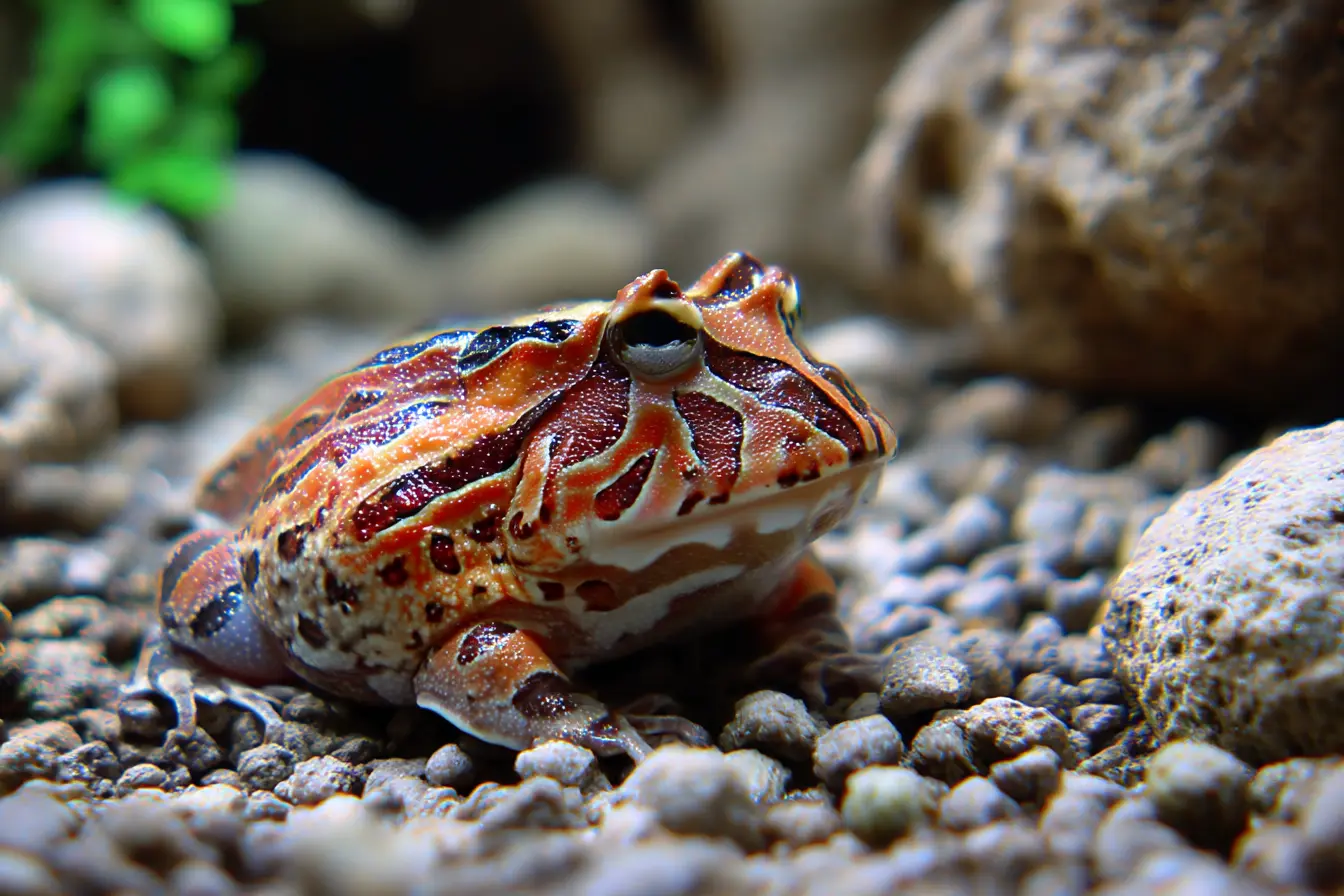
The fantasy horned frog is a striking and increasingly popular amphibian in the pet trade, prized for its bold appearance, large size, and almost comically grumpy expression. Unlike most frogs kept in captivity, horned frogs are heavy-bodied, terrestrial ambush predators that spend much of their lives buried in substrate, waiting for prey to pass by.
This guide covers the care, biology, and behaviour of the fantasy horned frog, helping you understand how to keep these impressive frogs healthy and thriving in captivity.
What Is a Fantasy Horned Frog?
The term “fantasy horned frog” does not refer to a natural species. Instead, it describes a captive-bred hybrid, most commonly a cross between:
Ceratophrys cranwelli (Chaco horned frog)
Ceratophrys cornuta (Amazonian horned frog)
These hybrids combine the hardiness and growth rate of C. cranwelli with the dramatic horns, patterns, and colours of C. cornuta. Fantasy horned frogs are bred in captivity for appearance, temperament, and adaptability, and they are not found in the wild.
Physical Characteristics
Size
Adult fantasy horned frogs typically reach 10–15 cm (4–6 inches) in length.
Females are significantly larger and heavier than males.
They are extremely stocky, with wide mouths and powerful jaws.
Lifespan
With correct care, fantasy horned frogs can live 8–12 years in captivity.
Some individuals may live longer with optimal conditions.
Colouration and Skin Texture
Colouration varies enormously and may include greens, browns, yellows, reds, and oranges.
Patterns often include marbling, blotches, or banding.
Horn-like projections above the eyes give them a distinctive, prehistoric appearance.
Skin is relatively smooth but thick and well adapted for a burrowing lifestyle.
Sexual Dimorphism
Females are much larger than males.
Mature males may develop darker nuptial pads and will call during the breeding season.
Males have a looser, more angular body shape.
Natural Range and Behaviour
As hybrids, fantasy horned frogs do not have a natural range. However, their parent species originate from South America, inhabiting warm savannahs, forests, and seasonal wetlands.
Horned frogs are sit-and-wait predators. They remain buried with only their eyes and mouth exposed, lunging explosively at passing prey. They are solitary and highly territorial, especially towards other frogs.
Legal and Ethical Considerations
Fantasy horned frogs are legal to keep in the UK and are widely available through specialist breeders and reptile shops. Because they are hybrids, they should never be released into the wild under any circumstances.
Always purchase captive-bred specimens from reputable sources. Avoid sellers offering wild-caught horned frogs, as these are more prone to parasites and stress.
Housing and Enclosure Setup
Fantasy horned frogs have simple but specific enclosure requirements. Despite their size, they are relatively inactive and do not require large amounts of space.
Enclosure Type
A terrestrial glass terrarium is ideal.
Minimum enclosure size:
Juveniles: 30 × 30 × 30 cm
Adults: 45 × 45 × 45 cm
Larger enclosures are acceptable but not essential.
Substrate
Use deep, moisture-retaining substrate such as:
Coconut fibre
Organic topsoil (fertiliser-free)
A soil and sphagnum moss mix
Substrate depth should be at least 8–12 cm to allow burrowing.
Keep substrate damp, not waterlogged.
Decor and Hides
Minimal decor is best.
Provide leaf litter or cork bark for cover.
Avoid hard or sharp decorations that could injure the frog during feeding strikes.
Temperature and Humidity
Temperature:
Daytime: 24–28°C (75–82°F)
Night-time: 20–22°C (68–72°F)
Humidity: Maintain 60–80%
Light misting once or twice daily is usually sufficient.
Lighting
Horned frogs do not require UVB, but low-level UVB (2–5%) may offer health benefits.
Provide a 12-hour day–night cycle.
Avoid intense lighting, which can stress the frog.
Diet and Feeding
Fantasy horned frogs are enthusiastic feeders but are prone to obesity if overfed.
Suitable Food Items
Appropriately sized locusts
Large crickets
Earthworms (excellent staple)
Silkworms
Occasional pinky mice for large adults (infrequent treats only)
Never feed live vertebrates regularly, as this can cause nutritional imbalance and health issues.
Feeding Schedule
Juveniles: every 2–3 days
Adults: once every 4–7 days
Feed prey items no larger than the width of the frog’s mouth.
Supplementation
Dust insects with calcium powder regularly.
Use a multivitamin supplement once every 1–2 weeks.
Earthworms generally require less supplementation but should still be rotated with insects.
Behaviour and Handling
General Behaviour
Fantasy horned frogs are sedentary and spend much of their time buried.
They feed aggressively and strike with speed and force.
They are solitary and must never be housed together.
Handling
Handling should be avoided unless absolutely necessary.
Horned frogs can bite and have strong jaws.
Their skin is sensitive to oils and chemicals.
If handling is required, use wet hands or powder-free gloves.
These frogs are best appreciated as display animals.
Health and Common Problems
Common Health Issues
Obesity from overfeeding
Impaction from swallowing substrate
Bacterial infections from poor hygiene
Dehydration from low humidity
Preventative Care
Maintain correct humidity and temperature
Feed appropriately sized prey
Spot-clean waste regularly
Replace substrate periodically
Breeding Considerations
Breeding fantasy horned frogs is uncommon and generally left to experienced breeders.
Breeding requires simulated rainy seasons and large water areas.
Hybrid offspring should be clearly labelled and never misrepresented as pure species.
Ethical breeding practices are essential.
Conservation Notes
Because fantasy horned frogs are hybrids, they have no conservation status. However, responsible ownership supports captive breeding and reduces pressure on wild populations of true horned frog species.
Conclusion
The fantasy horned frog is a bold, fascinating amphibian that offers a very different experience from arboreal or aquatic frogs. Its dramatic appearance, simple enclosure needs, and captivating feeding behaviour make it a favourite among keepers who enjoy observing natural predator behaviour.
With proper humidity, careful feeding, and minimal handling, fantasy horned frogs can thrive for many years and make an unforgettable centrepiece in a terrestrial frog enclosure.
Quick questions
- What should I know about fantasy horned frog?
- Fantasy horned frog care and facts. The fantasy horned frog is a captive-bred hybrid, usually a cross between Ceratophrys cranwelli and C. cornuta. Adults reach about 10–15 cm and can live 8–12 years with proper care. Vet Verified can help you compare UK veterinary practices by location, species, services and opening hours before you call.
- When should I contact a vet about fantasy horned frog?
- Contact a veterinary practice if your pet seems unwell, symptoms are getting worse, you are unsure what to do, or the situation may be urgent. Vet Verified helps you compare practice details, but a vet should advise on your pet's current care.
- Can Vet Verified help me find exotic vets?
- Yes. Use Vet Verified to compare exotic vets across the UK, then check practice profiles and call directly to confirm current availability.
Find a vet
Find a veterinary practice
Compare UK veterinary practices related to this topic. Call the practice to confirm its current services and availability.