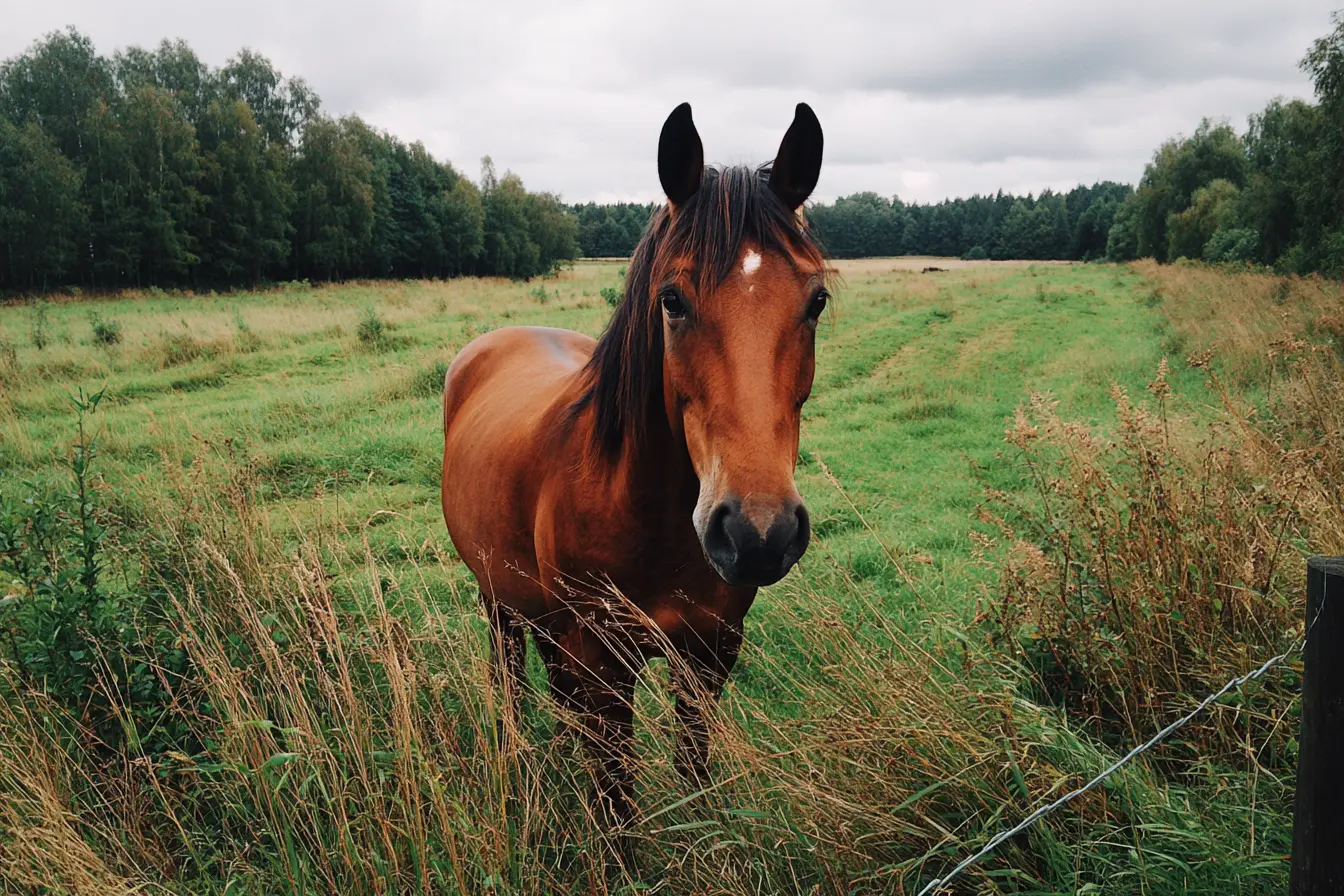
If your horse grazes near a sycamore, the seeds and leaves on the ground in autumn deserve a proper look. Atypical myopathy can be fatal, so knowing the risks and the early signs can make a real difference.
What atypical myopathy is
Atypical myopathy, also known as sycamore poisoning, is caused by eating a toxin found in the leaves, seeds and seedlings of sycamore and box elder trees. The toxin is called hypoglycin A, and it damages muscle cells, particularly the postural muscles that let a horse stand, the heart muscle and the muscles in the chest wall that are needed for breathing.
Most cases happen in autumn, but there's also a peak in spring, when horses eat sycamore seedlings that are also high in the toxin. Seeds, leaves and seedlings can be eaten all year round, so it isn't only an autumn worry.
Why it is so dangerous
As the muscle breaks down, large amounts of protein are released into the blood, and the kidneys struggle to clear it into the urine. Ultimately this can lead to collapse with respiratory, cardiac and kidney failure. There is no antidote, and as many as 70% of severely affected horses die.
It is thought to affect any breed and any age of horse, although a European review found that young and inactive animals with a thin to normal body condition are at higher risk. Some horses grazing alongside an affected one don't develop signs, but that doesn't mean the others are safe. If you suspect a case, mention every horse that shares the pasture when you speak to your vet.
Which pastures carry more risk
Studies have identified several pasture risk factors. These include a history of atypical myopathy cases, trees, a short or overgrazed field, and a wet field or one that borders or contains a watercourse or river. Piled dead leaves or deadwood and a sloping field are also on the list.
Seeds can travel. Wind can carry them several hundred metres from the parent tree, so a field with no sycamore in it can still be affected if there are trees nearby. A European review also notes that any pasture with a sycamore in the vicinity should be considered at risk.
Sycamore has five-lobed leaves and paired winged seeds that form a tight V shape. Field maple is not thought to be a problem, but fallen seeds are hard to identify on their own, especially when they are no longer in pairs or have started to decay. If you are in any doubt about the trees near your horse, the Royal Veterinary College offers testing of seeds, leaves and seedlings for the toxin.
Ways to reduce the risk in the field
A paddock walk is a good first step. Look for sycamore and box elder trees bordering your fields, and for any upstream of water that your horses can reach. Check for seeds that may have blown in from neighbouring land.
Leaves can hide seeds, so cordon off any pasture with accumulated dead leaves. If seeds are falling in or near your field, fence off those areas and check the grazing regularly for new seedlings. Collecting seeds by hand from the pasture is also advised, and it's best to avoid harrowing or spreading manure.
Horses that are short of grass are more likely to eat seeds, so provide extra forage, particularly if the pasture is poor, overgrazed or overstocked. Any hay or silage you feed needs to be toxin-free. BEVA warns of the grave danger of cutting hay from pastures contaminated with sycamore seedlings and saplings, so buy hay only from a source you know is uncontaminated, and don't feed any hay that contains sycamore material.
Where you can, rotate between fields rather than leaving horses on one permanently. During the risky seasons, favour fields without wet ground. Water from the mains or a tap is preferred to streams, because the toxin can pass from plants into water.
If seeds are spread widely, you may need to consider alternative grazing or removing the trees. Keeping up with cases in your area also helps, and the Atypical Myopathy Alert Group runs an alert network that owners can register with.
Early signs to watch for
Redwings lists the signs as a depressed or sedated manner, muscle stiffness and reluctance to walk, a high heart rate, sweating and trembling, and red to dark brown urine. In the early stages it can be confused with colic, so don't assume that a horse who seems uncomfortable simply has a stomach problem, particularly if it has been grazing near sycamore.
Call the vet as soon as possible
If you suspect atypical myopathy, call your equine vet straight away, whatever the time of day. Redwings stresses that you should seek veterinary advice as soon as possible, because early intervention can radically improve the chances of survival, so don't wait to see whether signs settle. Many cases need hospitalisation and extensive fluid therapy. Ask your vet for instructions before you move or load the horse.
If your vet is closed, you can still get out-of-hours help. All vet practices provide an out-of-hours service for emergency cases, and there may be a recorded message telling you how to reach it.
Of the affected horses still alive five days after the first signs, most are likely to recover fully. That is a good reason to act early.
Quick questions
- What should I know about atypical myopathy in horses?
- Atypical myopathy is an often fatal muscle disease in horses, caused by a toxin in sycamore seeds, leaves and seedlings. Vet Verified can help you compare UK veterinary practices by location, species, services and opening hours before you call.
- When should I contact a vet about atypical myopathy in horses?
- Contact a veterinary practice if your pet seems unwell, symptoms are getting worse, you are unsure what to do, or the situation may be urgent. Vet Verified helps you compare practice details, but a vet should advise on your pet's current care.
- Can Vet Verified help me find equine vets?
- Yes. Use Vet Verified to compare equine vets across the UK, then check practice profiles and call directly to confirm current availability.
Find a vet
Find a veterinary practice
Compare UK veterinary practices related to this topic. Call the practice to confirm its current services and availability.
Urgent and out-of-hours
- Emergency vets Find veterinary practices near you that list emergency opening hours. Compare contact details and services, then call immediately if your pet needs urgent care.
- Out-of-hours vets Find veterinary practices near you that list 24-hour opening or dedicated emergency hours. Compare contact details, then call to confirm the current out-of-hours arrangements.