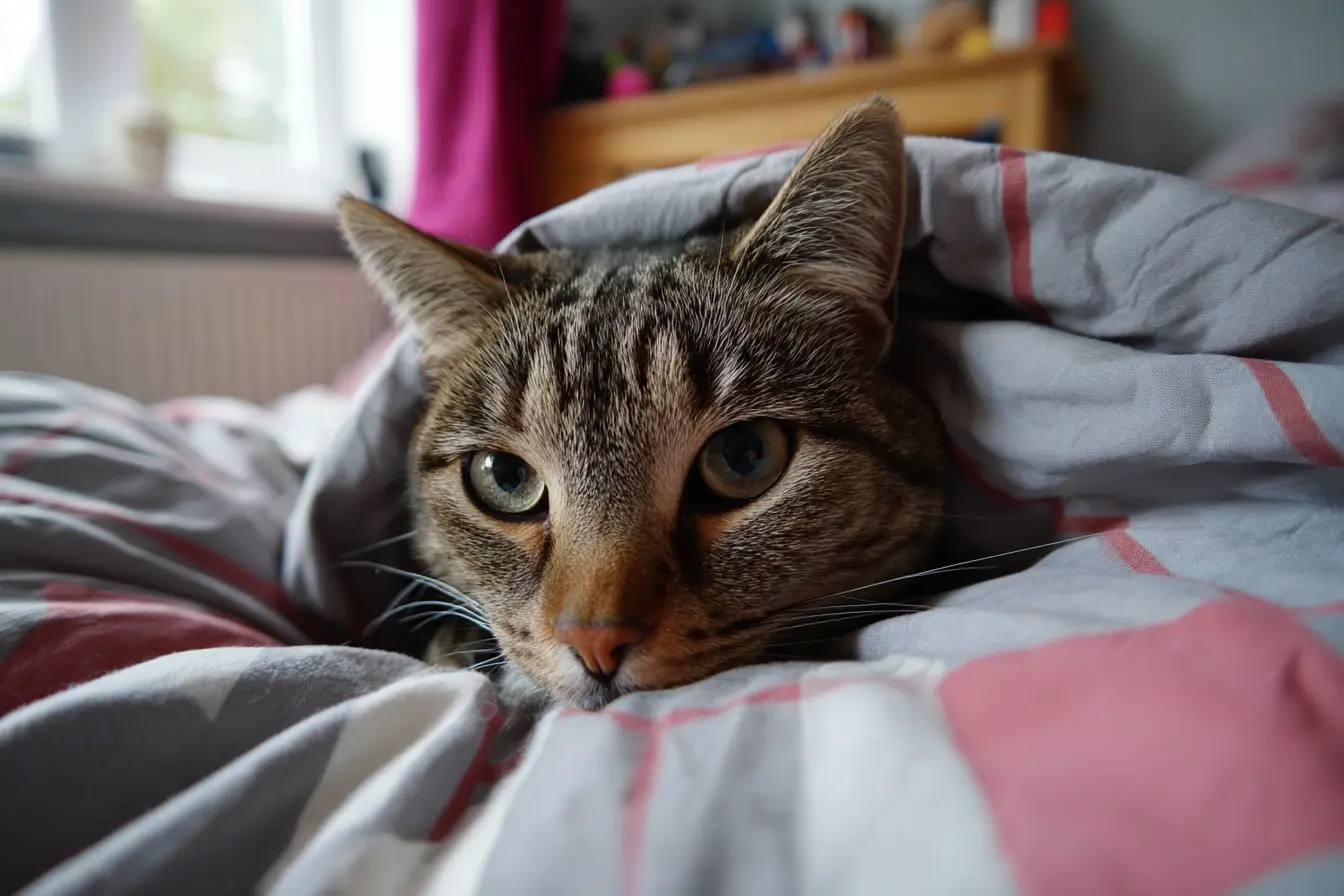
If your cat has turned into a four-legged alarm clock, you're far from alone. Being woken by miaowing or pawing at your face is a familiar story for many cat owners, and the cause is often perfectly ordinary. It's still worth knowing which changes mean a vet should take a look.
Why cats are active at dawn and dusk
Cats are naturally more active around dawn and dusk, and kittens and young cats in particular. Cats Protection points out that wild relatives such as the African wildcat are crepuscular, meaning they're more active at dawn and dusk, which is a prime time to hunt small prey. Waking you in the early hours is usually a normal part of being a cat, and although many cats have adapted to human waking patterns, plenty will still stir at the first sight of sunrise.
New or changed noises: see the vet first
Normal early waking is one thing, but a cat who suddenly starts making unusual noises is another. If your cat begins making strange noises, VCA's vets advise starting with a visit to the vet to rule out medical problems. Cats in pain often vocalise, for example with tummy trouble, arthritic joints or an injury, and thyroid disease and kidney problems, which are often linked with high blood pressure, may cause howling too.
That applies even if your cat sees the vet regularly, so it's best to take them in as soon as you notice a change in behaviour. For some cats, especially middle-aged and elderly ones, a veterinary examination is also recommended to rule out causes such as pain, endocrine dysfunction and hypertension. It makes sense to sort that out before you try changing anything at home.
Older cats and confusion
Night-time vocalising is relatively common in cats with hyperthyroidism or hypertension, according to Cornell's feline health centre, so an older cat who starts yowling after dark needs a proper check. Cognitive dysfunction is another possibility. Its signs can include altered sleep and wake cycles and loud vocalising, often in the middle of the night, and they tend to become clearly noticeable in cats of 10 or older.
The tricky part is that each of these signs can and often does relate to a physical illness, so you can't tell at home which it is. Your vet may recommend tests to identify underlying health conditions, so please don't assume it's just old age.
Check basic needs before blaming behaviour
Once your vet has found nothing medical, or while you're waiting to be seen, think about what your cat might need. VCA suggests anticipating the needs of a cat who calls at night and meeting them before the noise starts. Make sure they're not hungry or thirsty, and give extra attention beforehand. Scooping the litter tray in the evening also means they have no complaint about it in the middle of the night.
A stimulating daytime routine
For excessive night-time vocalising, VCA says a stimulating daytime routine may help change the schedule so your cat sleeps through the night. It suggests regular offerings of food, social play and exploratory toys, with the aim of giving your cat things to do that don't involve calling out, such as playing with toys, working for food, exploring, climbing or perching.
The RSPCA notes that an indoor cat needs a lot more of your time and effort to stay happy, and puzzle feeders or hiding dried food are good ways to entertain a cat at mealtimes. VCA also suggests working out when your cat is most likely to call and scheduling play or something to investigate, such as a feeding toy or a paper bag, before that point.
Avoid rewarding established attention-seeking
Once health problems and unmet needs have been dealt with, the way you respond matters. VCA says many owners inadvertently encourage vocalising by giving a cat something it values, perhaps to quieten it down. Attention, affection, play, a treat or access to a favourite area all count as rewards, and even a few rewarded outbursts can keep the behaviour going. Rewards should only be given when your cat is quiet, and clicker training can be a useful way to reward quiet behaviour.
Never punish a cat physically. The RSPCA says never to shout at or punish your cat, as they're very unlikely to understand and can become more nervous. If the calling is new, gets worse or changes in character, go back to your vet rather than putting it down to habit.
Never give human painkillers
If you suspect your cat is in pain, it can be tempting to reach for something from the medicine cabinet, but please don't. PDSA says to only give cats painkillers prescribed by your vet, as ibuprofen is toxic to cats. Cats Protection adds that over-the-counter medicines like paracetamol and ibuprofen should never be given to cats, and that as little as one tablet could be fatal.
If your cat accidentally eats a human painkiller, contact your vet or the animal poisons line immediately, and don't wait for symptoms. PDSA also says never to try to make your cat vomit unless your vet specifically tells you to.
If your vet is closed
If something seems seriously wrong in the night, call your usual practice. PDSA says all vet practices provide an out-of-hours service for emergency cases, and there may be a recorded message telling you how to reach it.
Quick questions
- What should I know about cat waking me up at night?
- Why cats are active around dawn and dusk, what to check before blaming behaviour, how daytime play and enrichment may help, and when new or changed night-time noise needs a vet. Vet Verified can help you compare UK veterinary practices by location, species, services and opening hours before you call.
- When should I contact a vet about cat waking me up at night?
- Contact a veterinary practice if your pet seems unwell, symptoms are getting worse, you are unsure what to do, or the situation may be urgent. Vet Verified helps you compare practice details, but a vet should advise on your pet's current care.
- Can Vet Verified help me find cat vets?
- Yes. Use Vet Verified to compare cat vets across the UK, then check practice profiles and call directly to confirm current availability.
Find a vet
Find a veterinary practice
Compare UK veterinary practices related to this topic. Call the practice to confirm its current services and availability.
Urgent and out-of-hours
- Emergency vets Find veterinary practices near you that list emergency opening hours. Compare contact details and services, then call immediately if your pet needs urgent care.
- Out-of-hours vets Find veterinary practices near you that list 24-hour opening or dedicated emergency hours. Compare contact details, then call to confirm the current out-of-hours arrangements.