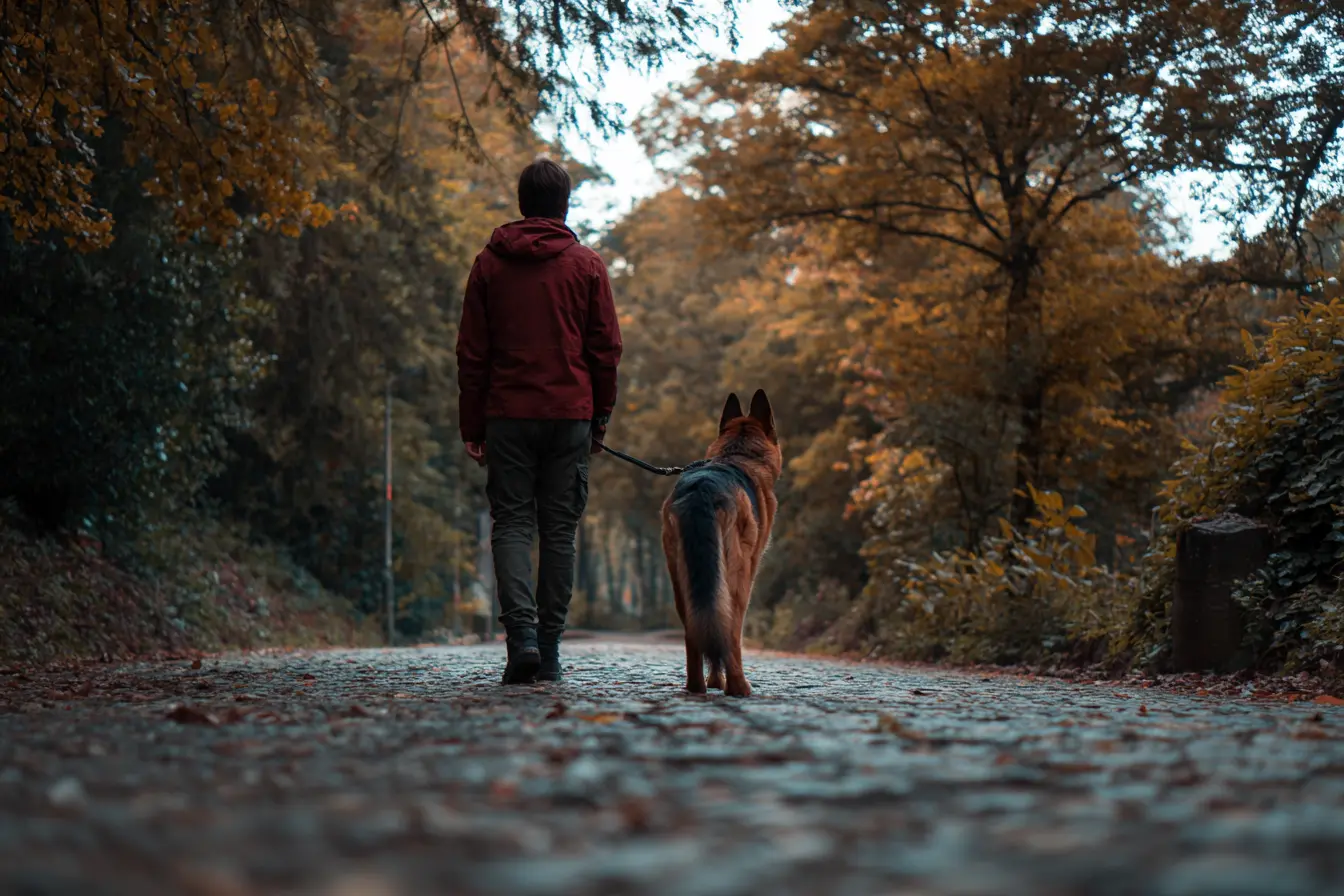
If your dog drags you along on walks, it's usually not stubbornness. Pulling is mostly something dogs have learned, and a different habit can be learned in its place. It takes patience, but the method itself is simple.
Why dogs pull on the lead
The main reason dogs pull is that they've learned pulling means they move forward faster. Even a single step forward while the lead is tight tells your dog that pulling works, and each time it gets them where they want to go, the behaviour becomes stronger and more automatic.
Excitement plays a part too. Walks can be the most exciting part of your dog's day, and dogs naturally move faster than we do, so it's easy to see why they surge ahead. Dogs will pull on the lead if they're excited or if they have lots of energy, so it may be worth giving your dog some playtime or a chance to run first. Some dogs pull to get away from things that worry them.
Teaching loose-lead walking
Start somewhere quiet. It's much easier for your dog to learn in quiet places, so begin at home or in the garden, rewarding your dog for standing or sitting by your side. Once that's going well, add movement, rewarding your dog whenever they are by your side and slowly increasing the time and distance between rewards.
The key rule on a real walk is to stop walking as soon as the lead starts to tighten. Stand still and quiet, and only move off again once the lead is slack. Don't jerk the lead back or tell your dog off, because telling a dog off won't teach them what to do instead. If your dog doesn't turn back to you, try walking a couple of steps in the opposite direction to get their focus back. Once there's slack in the lead again, reward them and carry on.
Practise in short, regular sessions and use the same approach on every walk, so your dog isn't getting mixed messages. If your dog struggles, go back to a stage where they were successful and take things slower.
Expect walks to take longer while your dog is learning, and be ready to stop and start many times at first. You may get through quite a few treats early on, so reduce their main meal portions on training days, and once pulling has eased, phase treats out slowly rather than all at once.
It's worth checking your own end of the lead as well. Constant tension can encourage some dogs to lean into the lead, so relax your hand and aim to see a little U in the lead between you and your dog. Let your dog sniff along the way too, as sniffing is part of what makes a walk worthwhile for them.
Equipment that helps and equipment to avoid
A quick search will turn up gear that promises to cure pulling, but some of it causes pain or discomfort when the dog pulls. That's unnecessary, and it can be unpleasant and confusing for your dog. PDSA advises against anything painful or restrictive, such as a choke collar.
A comfortable flat harness or collar is the starting point, and PDSA recommends a harness for dogs that pull, to help protect their neck. If you choose a harness, introduce it gently and positively. For the lead itself, a standard lead of around 1.2 to 2 metres is a sensible length. Avoid slip leads, because slip leads can tighten around the neck and cause discomfort.
When worry is behind the pulling
If your dog is lagging behind because something worries them, don't drag them or force them to move. You can give them time to look at what it is and decide it isn't scary, but only while they're coping. If they stay frightened or seem overwhelmed, stop what you're doing and calmly create distance between your dog and whatever is worrying them, or go somewhere quieter. The stop-and-wait rule above is for a dog who feels safe, so don't stand still beside something that's frightening them. If your dog pulls towards something they find overwhelming, move away before they lose their ability to focus.
Frantic behaviour such as jumping up or bouncing about can be mistaken for excitement, so it's worth watching your dog closely. If you're unsure what your dog is feeling, or the pulling isn't improving, ask a qualified behaviourist for advice. Dogs Trust has a behaviour team you can call for free. Help is also worth seeking if controlling your dog is a struggle, as the physical effort involved in controlling your dog could be overwhelming, especially with larger, stronger breeds.
When slowing down or reluctance needs a vet check
Pulling itself mostly comes down to the reasons above. A change in how your dog moves is a different matter. Reluctance to exercise, such as slower walking or hesitating before physical activity, could be a sign of pain. Stiffness usually points to a problem with the legs or back, and some dogs are very good at hiding pain from their owners.
It's easy to put a slower pace down to age, but it's always a good idea to have them checked by a vet, in case there's an underlying condition that would benefit from treatment. If you notice these signs, schedule a visit with your vet. It helps to take photos, videos or written notes to show them how your dog is behaving, and a vet will carry out a physical exam to look for the cause of the pain.
Contact your vet immediately if your dog is in severe pain, can't put a leg down or has a serious wound. If your practice is closed, contact its out-of-hours or emergency vet service straight away.
Quick questions
- What should I know about dog pulling on lead?
- Why dogs pull on the lead, how to teach loose-lead walking with rewards, which equipment to avoid, what to do when fear is behind the pulling, and why slower walking or reluctance to exercise deserves a vet check. Vet Verified can help you compare UK veterinary practices by location, species, services and opening hours before you call.
- When should I contact a vet about dog pulling on lead?
- Contact a veterinary practice if your pet seems unwell, symptoms are getting worse, you are unsure what to do, or the situation may be urgent. Vet Verified helps you compare practice details, but a vet should advise on your pet's current care.
- Can Vet Verified help me find dog vets?
- Yes. Use Vet Verified to compare dog vets across the UK, then check practice profiles and call directly to confirm current availability.
Find a vet
Find a veterinary practice
Compare UK veterinary practices related to this topic. Call the practice to confirm its current services and availability.
Urgent and out-of-hours
- Emergency vets Find veterinary practices near you that list emergency opening hours. Compare contact details and services, then call immediately if your pet needs urgent care.
- Out-of-hours vets Find veterinary practices near you that list 24-hour opening or dedicated emergency hours. Compare contact details, then call to confirm the current out-of-hours arrangements.