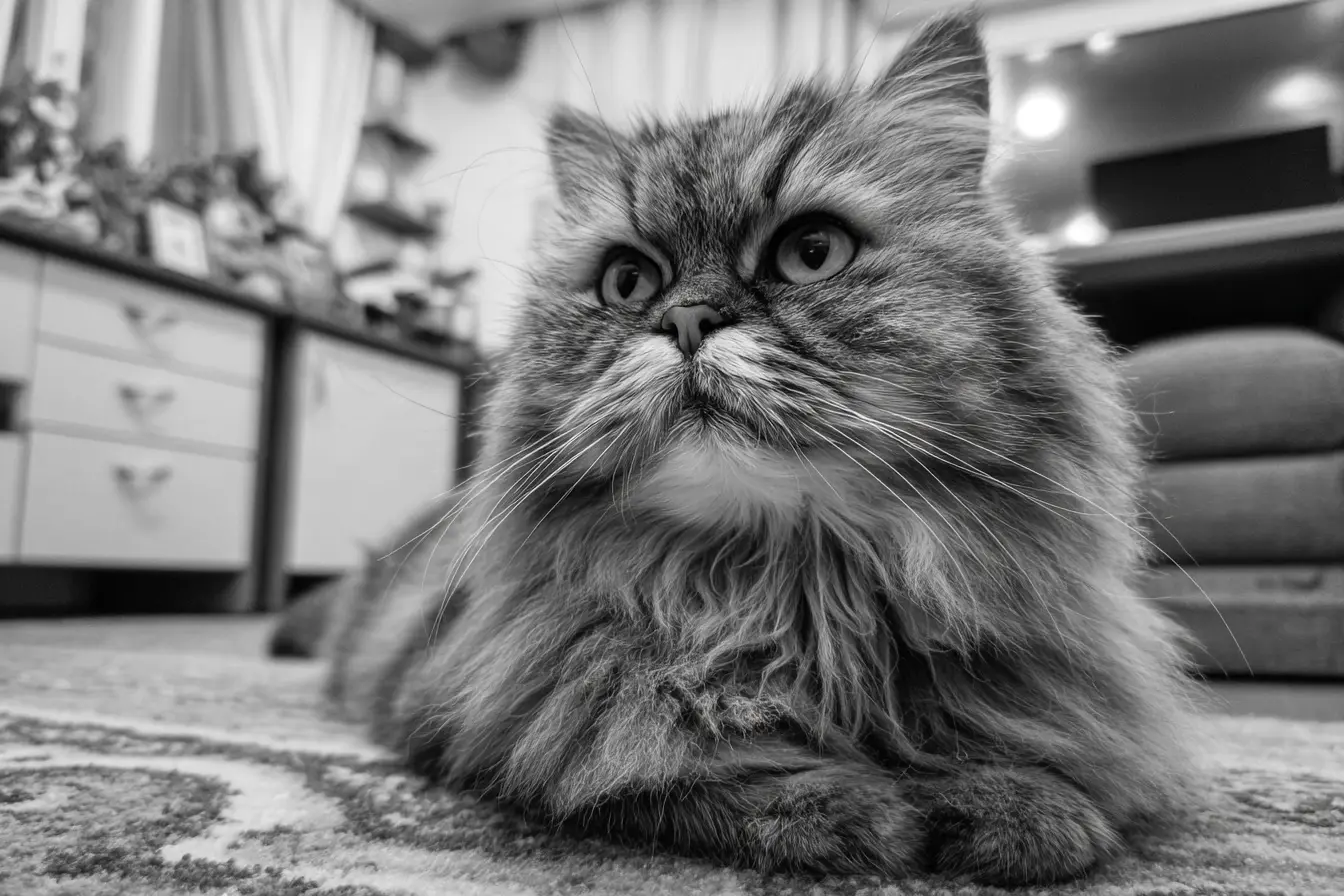
The British Longhair cat is the semi-longhaired version of the British Shorthair: the same round face, sturdy build and calm, undemanding nature, but with a coat that needs brushing every day. It suits a quieter home with time for daily grooming, and a buyer who checks that the parents have been tested for inherited kidney disease.
PDSA gives an average lifespan of 14 to 18 years, so a British Longhair is a long commitment to coat care and veterinary care.
What a British Longhair is
The Governing Council of the Cat Fancy (GCCF), which registers pedigree cats in the UK, officially recognised the name British Longhair in February 2017 and granted the breed championship status in November 2021. International registries, including TICA and FIFe, also recognise it.
The longhair is part of the British breed rather than a separate type of cat. The gene for long hair is recessive, which means a kitten needs a copy from each parent to grow a long coat. It has been carried in some British lines since Persians were used in British breeding in the past, so longhaired kittens can turn up in litters from two shorthaired parents that both carry it. The GCCF notes that a gene test can show whether a British cat carries the longhair gene.
The GCCF describes the coat as semi-long, straight and dense. Like the shorthair, the British Longhair comes in a wide range of colours and patterns. The GCCF gives a typical weight of 4.1 to 7.7kg for males and 3.2 to 5.4kg for females.
Temperament and life at home
The GCCF describes British cats as patient, tolerant and a bit lazy. PDSA calls the British Longhair a fairly relaxed, inactive breed that isn’t usually very talkative.
Most aren’t keen on being picked up and prefer to keep their paws on the ground, though PDSA says they will often happily sit on a lap. Let your cat come to you, and teach children that a cat walking away or resting wants to be left alone.
With other animals, PDSA says British Longhairs can be tolerant of dogs and rabbits but may be less happy sharing a home with another cat unless they grew up together. A breeder or rescue can tell you how an individual cat has coped with other pets.
A calm cat still needs things to do. Short play sessions with wand toys, food puzzles and somewhere high to sit and watch the world help keep a less active breed fit and interested. Because the breed is prone to laziness, keep an eye on its weight and ask your vet about portion sizes, particularly after neutering.
Daily grooming and coat care
The coat is the biggest practical difference between a British Longhair and a British Shorthair. The GCCF and PDSA both say longhaired British cats need grooming every day. PDSA warns that the coat tangles and mats easily, and that more brushing is needed when the coat changes with the seasons.
Introduce brushing while your cat is young if you can. Cats Protection suggests making grooming part of a routine. Choose a time when your cat is relaxed, groom for a short time and stop before it becomes irritated. A wide-toothed comb followed by a soft brush works for many long coats, but you may need to try a few tools before you find ones your cat accepts. Pay attention to the areas that mat first: behind the ears, under the legs, the belly and the trousers on the back legs.
Grooming is a good time to check for fleas, lumps, sore skin and changes in weight. A cat that suddenly grooms much more or much less than usual should see a vet, as a change in grooming can be a sign of illness or pain. Older cats, and cats that are overweight or stiff, often can’t reach parts of their coat and need more help.
Don’t try to cut out mats with scissors. Cats Protection warns that cutting mats out is dangerous because it’s easy to cut the skin, and that trying to brush out tight mats close to the skin can tear it. Ask your vet to remove mats, sometimes with clippers or under sedation.
Health: PKD, HCM and blood groups
PDSA lists two main health problems for the British Longhair: polycystic kidney disease (PKD) and hypertrophic cardiomyopathy (HCM).
PKD is an inherited condition in which fluid-filled cysts form in the kidneys from birth and gradually grow, which can lead to kidney failure. It is thought to have come into British lines through past crosses with Persians. There is a reliable DNA test, and the GCCF says PKD is now under control in the breed because responsible breeders test for it. Ask to see a negative PKD DNA certificate for both parents.
HCM is the most common heart disease in cats. The heart muscle thickens, so the heart pumps less efficiently. The GCCF says HCM can be a problem in British cats and that there is no DNA test for it in the breed. The only way to screen a cat is with a heart scan (echocardiogram) by a vet with cardiology training, and International Cat Care advises that cats affected with HCM shouldn’t be bred from. Ask a breeder whether the parents have been scanned, when and by whom.
Many cats with HCM show no signs until the disease is advanced. Contact your vet straight away, out of hours if necessary, if your cat breathes fast or with effort, breathes with its mouth open, collapses or suddenly can’t use its back legs or cries out in pain. HCM can cause blood clots that block blood flow to the hind legs, and these signs are an emergency.
Blood group B is much more common in British cats than in ordinary moggies. A GCCF breeding policy for the British Shorthair estimates that only 47% of the breed is blood group A, compared with about 92% of UK domestic shorthaired cats. International Cat Care also lists the British Shorthair among breeds with more type B cats. This matters for two reasons. A cat given a transfusion of the wrong blood type can have a severe, potentially fatal reaction, which is why vets blood type cats before a transfusion. And type A kittens born to a type B mother can be fatally harmed by antibodies in her first milk, so breeders should know the blood groups of their breeding cats.
Haemophilia B, an inherited bleeding disorder, has been reported in British Shorthairs, but according to the Universities Federation for Animal Welfare it’s uncommon. Signs usually appear before six months of age and include prolonged bleeding after injury or surgery, bruising and swelling. Males are affected more often than females. Tell your vet if your cat bleeds for longer than expected after a minor injury.
Choosing a kitten or an adult cat
A GCCF-registered breeder shouldn’t let a kitten go to its new home until at least seven days after its full course of vaccinations, which in practice means at least 13 weeks old. See the kitten with its mother where it was raised, and ask:
- Can I see the parents’ PKD DNA results, and have they had heart scans for HCM?
- Do you know the parents’ blood groups?
- How does the kitten cope with being brushed and handled?
- What has it been eating, and what vaccinations and parasite treatments has it had?
Be wary of a seller who won’t show paperwork, has kittens available all the time or wants to meet somewhere other than their home.
An adult cat from a rescue can be a good choice too. Its coat, grooming tolerance and attitude to children and other pets are already known.
Is a British Longhair right for you?
A British Longhair may suit you if you want a calm, fairly quiet cat and are happy to brush it every day for the next 15 years or so. It’s a poor fit if you don’t have time for daily grooming, want a cat that enjoys being carried about, or already have a cat that it hasn’t grown up with.
Quick questions
- What should I know about british longhair cat?
- A British Longhair can be a calm companion, but its thick coat needs daily care. Learn about temperament, grooming, PKD and HCM screening, and choosing a cat. Vet Verified can help you compare UK veterinary practices by location, species, services and opening hours before you call.
- When should I contact a vet about british longhair cat?
- Contact a veterinary practice if your pet seems unwell, symptoms are getting worse, you are unsure what to do, or the situation may be urgent. Vet Verified helps you compare practice details, but a vet should advise on your pet's current care.
- Can Vet Verified help me find dog vets?
- Yes. Use Vet Verified to compare dog vets across the UK, then check practice profiles and call directly to confirm current availability.
Find a vet
Find a veterinary practice
Compare UK veterinary practices related to this topic. Call the practice to confirm its current services and availability.
Search by species
- Dog vets Find UK veterinary practices that list care for dogs. Compare opening hours, services, facilities and verified profiles, then contact a practice directly.
- Cat vets Find UK veterinary practices that list care for cats. Compare opening hours, services, facilities and verified profiles, then contact a practice directly.
Urgent and out-of-hours
- Emergency vets Find veterinary practices near you that list emergency opening hours. Compare contact details and services, then call immediately if your pet needs urgent care.
- Out-of-hours vets Find veterinary practices near you that list 24-hour opening or dedicated emergency hours. Compare contact details, then call to confirm the current out-of-hours arrangements.