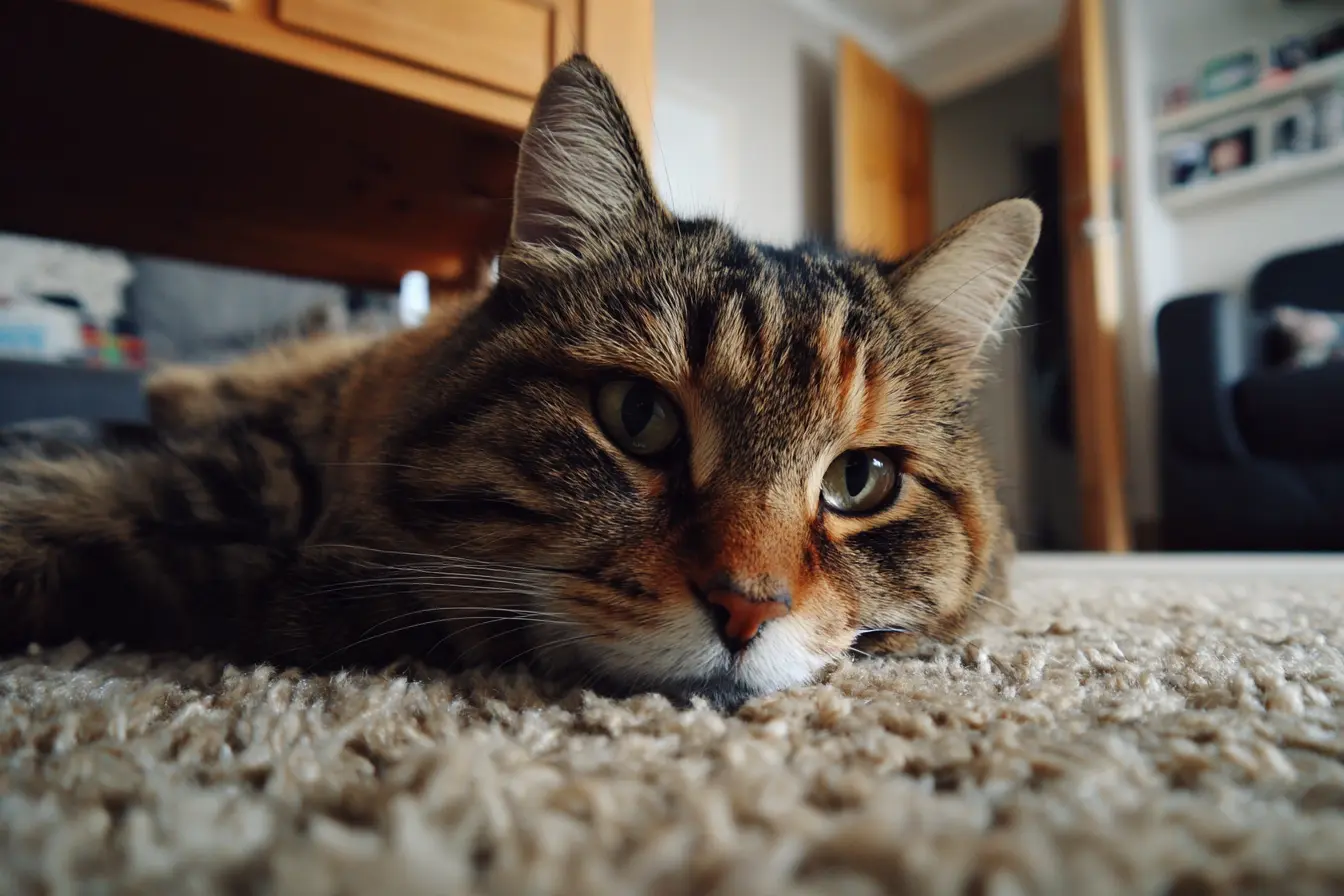
Cat flu is a contagious infection of a cat’s nose, eyes, mouth and throat, usually causing sneezing, runny eyes and nose, and loss of appetite. It can be serious for kittens, older cats and cats with other health problems, so call your vet if you notice signs rather than trying to treat it at home.
What cat flu is
Cat flu is the common name for upper respiratory infections in cats. More than 90% of cases are thought to be caused by one or both of two viruses: feline herpesvirus (FHV-1) and feline calicivirus (FCV). Bacteria such as Bordetella bronchiseptica and Chlamydia felis cause some cases, and Chlamydia mainly causes sore, red eyes. Bacteria can also move in once the viruses have weakened a cat’s defences and make them feel worse.
It is not the same as human flu. The cat flu viruses affect only cats, so you and your dog cannot catch them from your cat, but cats pass them readily to one another. They spread in saliva, nasal mucus, eye discharge and droplets from sneezing, and on bowls, bedding, litter trays, hands and clothes.
Herpesvirus stays in the body for life. Almost all cats infected with it become long-term carriers, and the virus can reactivate at times of stress or illness, bringing signs back and allowing the cat to spread it again. Most cats with calicivirus clear it within a few months, although they may shed it for weeks or months first. A cat that looks better may still be infectious, so take your vet’s advice before mixing them with other cats.
Signs to look out for
A cat with flu may sneeze and have a runny nose or watery eyes at first. The eyes can become red, swollen, sore or sticky. Other signs include:
- coughing, a blocked nose, or discharge from the eyes or nose
- sleeping more, seeming low in energy, or having a high temperature
- eating less or refusing food
- dribbling, swallowing or gagging more than usual, or mouth ulcers
- squinting, painful or closed eyes
Calicivirus often causes painful ulcers on the tongue or in the mouth, and it can cause short-lived lameness, especially in kittens. Herpesvirus can damage the surface of the eye. Do not use over-the-counter eye treatments or drops left over from another pet, as a sore or closed eye needs veterinary advice.
Loss of appetite needs particular attention. Cats rely heavily on smell to decide whether food is worth eating, so a blocked nose can put them off food completely, and mouth ulcers make eating painful. A cat that stops eating recovers more slowly and can become seriously ill, so contact your vet if your cat has stopped eating, even if the other signs seem mild. Some cats need hospital care, and occasionally a feeding tube, to get enough nutrition.
Call a vet urgently if your cat has difficult, rapid or open-mouth breathing, collapses, is very weak, or stops eating and drinking. Contact your practice, or its out-of-hours service, before you set off, as they may ask you to wait outside or in the car to avoid exposing other cats.
Kittens are more vulnerable because their immune systems are still developing. They can deteriorate quickly and very young kittens can develop pneumonia. Speak to a vet promptly if a kitten is sneezing, has eye or nose discharge, is feeding poorly or seems less alert than usual.
How cat flu is treated
Your vet will examine your cat and ask when the signs started, whether they meet other cats and whether another cat in your household is unwell. In many cases, the signs and examination are enough to guide treatment. If several cats are affected, or there is another reason to identify the cause, the vet may take swabs from the eyes, nose or mouth for testing.
There is no drug that cures cat flu. Treatment depends on how ill your cat is and which problems they have. Your vet may prescribe pain relief or anti-inflammatory medicine, eye treatment, or medicine to loosen mucus. Antiviral treatment may be suitable in some cases.
Antibiotics do not kill viruses. A vet may prescribe them if they suspect a bacterial infection as well, and if they do, give the full course exactly as directed. Cats that are severely unwell, dehydrated, or not eating or drinking may need treatment in hospital.
Do not give human cold and flu remedies, painkillers, leftover antibiotics or medication prescribed for another animal. Many human medicines, including paracetamol, are poisonous to cats.
Caring for a cat at home
Home care makes your cat more comfortable but does not replace veterinary treatment. Keep them indoors in a warm, quiet space and offer fresh water and their usual food. Warming wet food slightly, or offering something strong-smelling such as a little sardine, may tempt a cat with a blocked nose to eat. Speak to your vet if they are eating very little or nothing.
Gently wipe discharge from around the nose and eyes with cotton wool dampened in warm water, using a fresh piece for each area. This can help your cat breathe and smell more easily. Do not rub a sore eye or try to remove anything stuck to it.
Give prescribed medicine exactly as your vet has told you. Watch your cat’s eating, drinking, breathing and alertness, and call the practice again if they get worse, develop new signs or are not recovering as expected.
Stress can trigger flare-ups in cats that carry herpesvirus, so give your cat a quiet place to rest and keep handling gentle. Never force food or medicine unless your vet has shown you how to give it safely.
Limiting spread around your home
If you have more than one cat, keep the ill cat apart where possible. Give them their own bowls, bed and litter tray in a quiet room. Wash your hands after handling them and before touching another cat, then wash their bedding separately. Clean bowls and other shared items before another cat uses them.
Full separation is not possible in every home, so reduce close contact as far as you can and keep up the hand washing and separate resources. Your veterinary practice can advise when cats can spend time together again, which depends on the infection involved and whether any cats are still showing signs.
Do not take a cat with current signs to a cattery. If your cat has had flu before or gets repeat signs, tell the cattery before booking so they can decide whether they can safely accept them.
Vaccination and future risk
In the UK, routine cat vaccinations include protection against feline herpesvirus and calicivirus. Kittens can start their primary course from around eight to nine weeks of age, and adult cats need boosters at intervals advised by their vet. If your cat has missed vaccinations, ask the practice what course they need.
Vaccination usually prevents severe disease, but it cannot always stop infection, so a vaccinated cat can still catch flu and have milder signs. Cats that have had flu before can still benefit from vaccination.
Indoor cats can still meet cat flu germs, which can be carried in on clothes, shoes and other items. Keeping vaccines up to date matters most for cats that go to a cattery or live with several cats.
When bringing home a new cat, ask about their health and vaccination record before introductions. Keep a new cat and resident cats apart at first if either has sneezing, eye discharge or a runny nose, and ask your vet for advice where there are kittens, older cats or cats with ongoing health problems.
Quick questions
- What should I know about cat flu?
- Cat flu can leave cats sneezing, sore-eyed and off their food. Learn the signs, when to call a vet, how to limit spread at home and how vaccination helps. Vet Verified can help you compare UK veterinary practices by location, species, services and opening hours before you call.
- When should I contact a vet about cat flu?
- Contact a veterinary practice if your pet seems unwell, symptoms are getting worse, you are unsure what to do, or the situation may be urgent. Vet Verified helps you compare practice details, but a vet should advise on your pet's current care.
- Can Vet Verified help me find dog vets?
- Yes. Use Vet Verified to compare dog vets across the UK, then check practice profiles and call directly to confirm current availability.
Find a vet
Find a veterinary practice
Compare UK veterinary practices related to this topic. Call the practice to confirm its current services and availability.
Search by species
- Dog vets Find UK veterinary practices that list care for dogs. Compare opening hours, services, facilities and verified profiles, then contact a practice directly.
- Cat vets Find UK veterinary practices that list care for cats. Compare opening hours, services, facilities and verified profiles, then contact a practice directly.