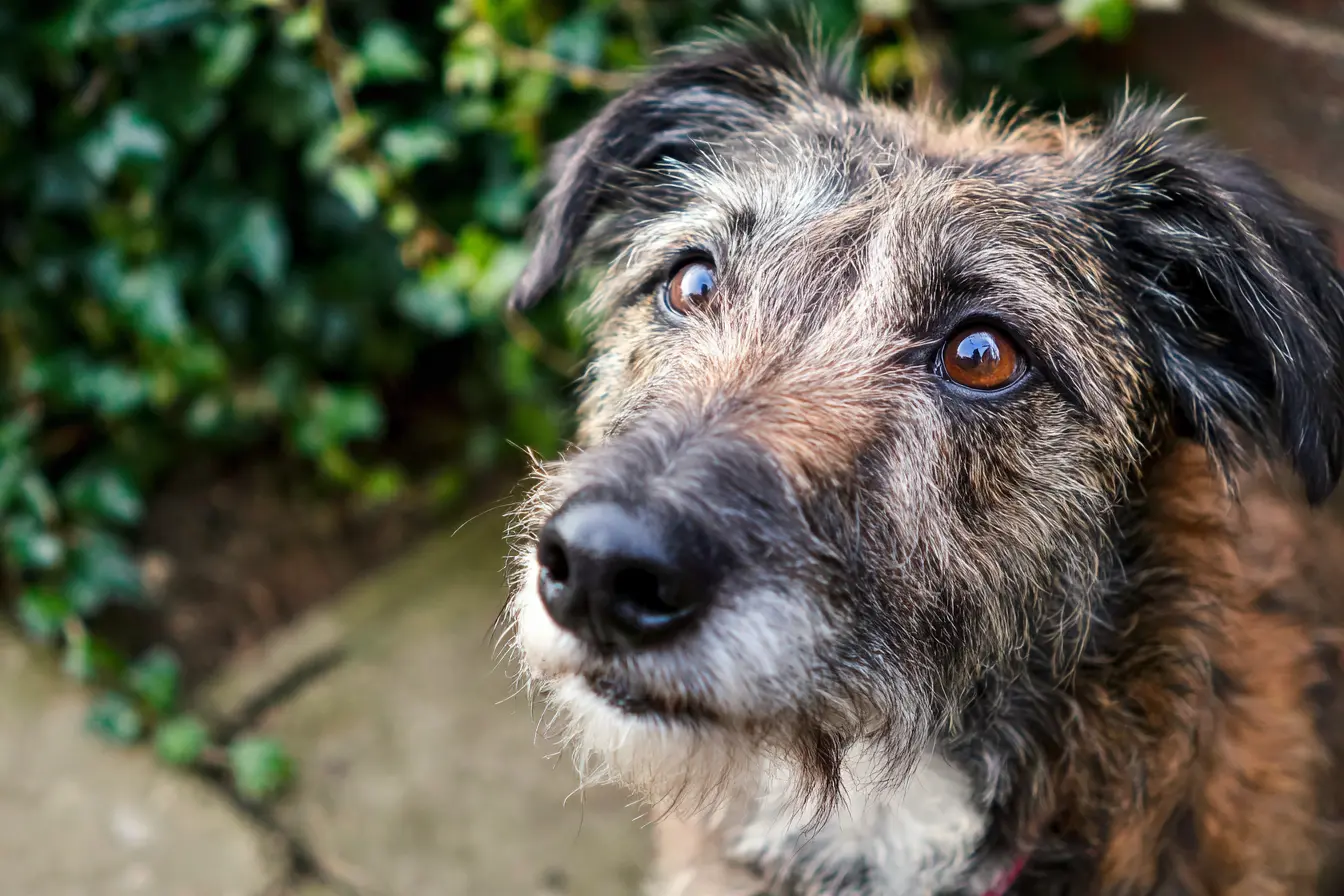
A Lurcher may be happy curled up beside you for much of the day, then light up at the sight of open space. That contrast is one reason people love them, but it is also worth thinking through before you bring one home. Because every Lurcher is a different mix, two Lurchers can look and behave very differently, so the dog in front of you matters more than the label.
What type of dog is a Lurcher
A Lurcher is a sighthound crossed with another type of dog. The sighthound side might be a Greyhound, Whippet or Saluki, while the other side may be a Collie, Terrier or another breed. This mix is why there is no single Lurcher look or set of needs. Lurchers were traditionally bred in Britain and Ireland to catch rabbits and hares. Hare coursing, where dogs are set on hares, is illegal in Great Britain, and organised coursing events are banned in Northern Ireland.
Many have a long frame and deep chest, but their adult size and coat can vary. One may be small with a short, smooth coat, while another may be bigger or have longer hair. Dogs Trust describes Lurchers as usually medium-sized, although an individual dog’s mix gives a clearer picture of what to expect.
Dogs Trust says a Lurcher’s lifespan is typically 12 years or more. Taking one on is a long-term commitment, whether you choose a puppy or an adult dog. If you are considering a puppy, ask about both parents and their health. Your vet may offer a pre-purchase consultation, which can help you discuss possible inherited health problems, care options and likely costs.
Deciding whether your home suits a Lurcher
Dogs Trust says Lurchers are usually moderately active, often enjoying short bursts of activity as well as their lounging time. They need daily walks, chances to play and opportunities to use their energy, but age, health and personality all make a difference.
Young or growing dogs may do better with several shorter walks rather than one long outing. An older dog, or one that is ill or injured, may need a different routine based on veterinary advice. Daily enrichment matters too. This can be time spent sniffing on a walk, playing with you or working for food in a way that suits your dog.
Think about the rest of your household before making a decision. Many Lurchers have a strong instinct to chase small, fast-moving animals, which can put cats, rabbits and other small pets at risk. Some Lurchers live happily with a cat, but you should not assume yours will. If you are adopting, tell the rescue centre about children, other animals, your work pattern and the sort of walks you can offer. A rescue can share what it knows about a dog’s history and the home it may suit.
A large house is not the main issue. What matters is that your dog has a safe place to rest and a routine that meets their individual needs. If you have a garden, check gates and fencing carefully. A dog that likes to chase may spot something on the other side and try to reach it.
Exercise, chasing and off-lead time
A Lurcher’s speed can be a joy to watch, but it also means that safe exercise needs some planning. Dogs may chase cars, bikes, runners, wildlife or other animals for different reasons. Chasing is not always aggression, yet it can still put the dog and others at risk.
Some dogs become so focused on movement that it is harder for them to listen and come back when called. Training can reduce chasing, but Dogs Trust says it may not stop it completely. A dog with a strong urge to chase may need safety measures throughout their life.
Until you are completely confident that your dog will return when called around real-life distractions, keep them on a well-fitted harness and lead or a long line. Many Lurchers have heads narrower than their necks and can slip out of an ordinary collar, so a wide, limited-slip (martingale) collar is safer than a standard flat collar. Off-lead time can still be possible in a genuinely secure garden or private hire field. Before letting your dog run, look for gaps, weak points and sharp edges, and consider whether the fence is high and sturdy enough for that particular dog.
You do not need to make every walk about covering distance. A long line can give a dog more room to sniff and move while you keep hold of them. Quieter routes or times of day may also help if your dog finds moving people, dogs or traffic difficult. At home, sniffing, tug and chasing games can give them a safe outlet for their energy.
Training that builds trust
Start training in an easy, quiet place where your Lurcher can focus. Learning their name and practising recall when they are calm gives you a useful base. Dogs Trust advises using treats or a favourite toy as a reward, and a long line can help you guide your dog back when they are not listening.
Try not to call your dog only when playtime is about to end. You want coming back to you to be worthwhile. If they are fixed on something moving, do not test their recall at close range. Create more space, keep them safely attached to you and choose a less busy place if you can.
This kind of management is part of good training, not a sign that you have failed. Walk a dog that chases at places and times where they are less likely to meet things they want to chase.
If chasing appears suddenly, gets worse or comes with other changes in behaviour, speak to your vet. Dogs Trust notes that health problems can be one reason a dog chases. Your vet can assess your dog and talk through the next steps.
Food, grooming and routine care
The amount a Lurcher needs depends on their age, activity level, fitness and weight. The feeding guide on the food packet is a starting point, then you can adjust it with your dog’s needs in mind and ask your vet if you are unsure.
Their body shape can make it tempting to judge weight by appearance alone, but body condition is more useful. At an ideal weight, you should be able to feel the ribs easily under a thin layer of fat. From above, there should be a visible waist, and from the side the belly should tuck up rather than look rounded. Lurchers with a lot of sighthound in their mix often carry less fat than other dogs, so in a lean, fit Lurcher it can be normal to see a faint outline of the last couple of ribs. If the spine and bones look very prominent, or the ribs are hard to feel under body fat, ask your vet for advice.
Grooming depends on the coat your Lurcher has inherited. Dogs Trust says Lurchers are generally fairly low-maintenance and often need a weekly brush, although shedding varies with coat length. Introduce brushing gradually and positively so handling does not become a worry for your dog. Short-coated Lurchers have little body fat and thin skin, so many feel the cold and benefit from a coat on winter walks. Their skin also cuts and tears more easily than many dogs’, so check them over after an off-lead run and contact your vet about any wound that is deep, gaping or bleeding heavily.
All dogs need preventative veterinary care, including vaccinations and flea and worming treatments. Your vet can advise on the care that suits your dog. Insurance is also worth considering because veterinary bills can be costly.
Finding the right dog
Lurchers are often available from UK rescues, and adopting an adult dog may give you a clearer view of the dog’s adult size, coat and known behaviour. Ask about their veterinary history, how they cope with other animals and what support is available while they settle in. Be honest about what you can manage, especially if you have small pets or need a dog that can cope with time alone.
If you decide to buy a puppy, do not rush. Ask about the parents, the puppy’s early care and any health tests that may be relevant to the breeds involved. A breeder should be willing to answer your questions clearly. Your vet can also help you prepare before you make a commitment.
Quick questions
- What should I know about lurcher dog?
- Lurchers are sighthound crosses, so their size, coat, energy levels and behaviour can vary a great deal. They often enjoy relaxing at home but need daily walks, play and safe ways to use their energy. Vet Verified can help you compare UK veterinary practices by location, species, services and opening hours before you call.
- When should I contact a vet about lurcher dog?
- Contact a veterinary practice if your pet seems unwell, symptoms are getting worse, you are unsure what to do, or the situation may be urgent. Vet Verified helps you compare practice details, but a vet should advise on your pet's current care.
- Can Vet Verified help me find dog vets?
- Yes. Use Vet Verified to compare dog vets across the UK, then check practice profiles and call directly to confirm current availability.
Find a vet
Find a veterinary practice
Compare UK veterinary practices related to this topic. Call the practice to confirm its current services and availability.
Search by species
- Dog vets Find UK veterinary practices that list care for dogs. Compare opening hours, services, facilities and verified profiles, then contact a practice directly.
- Cat vets Find UK veterinary practices that list care for cats. Compare opening hours, services, facilities and verified profiles, then contact a practice directly.