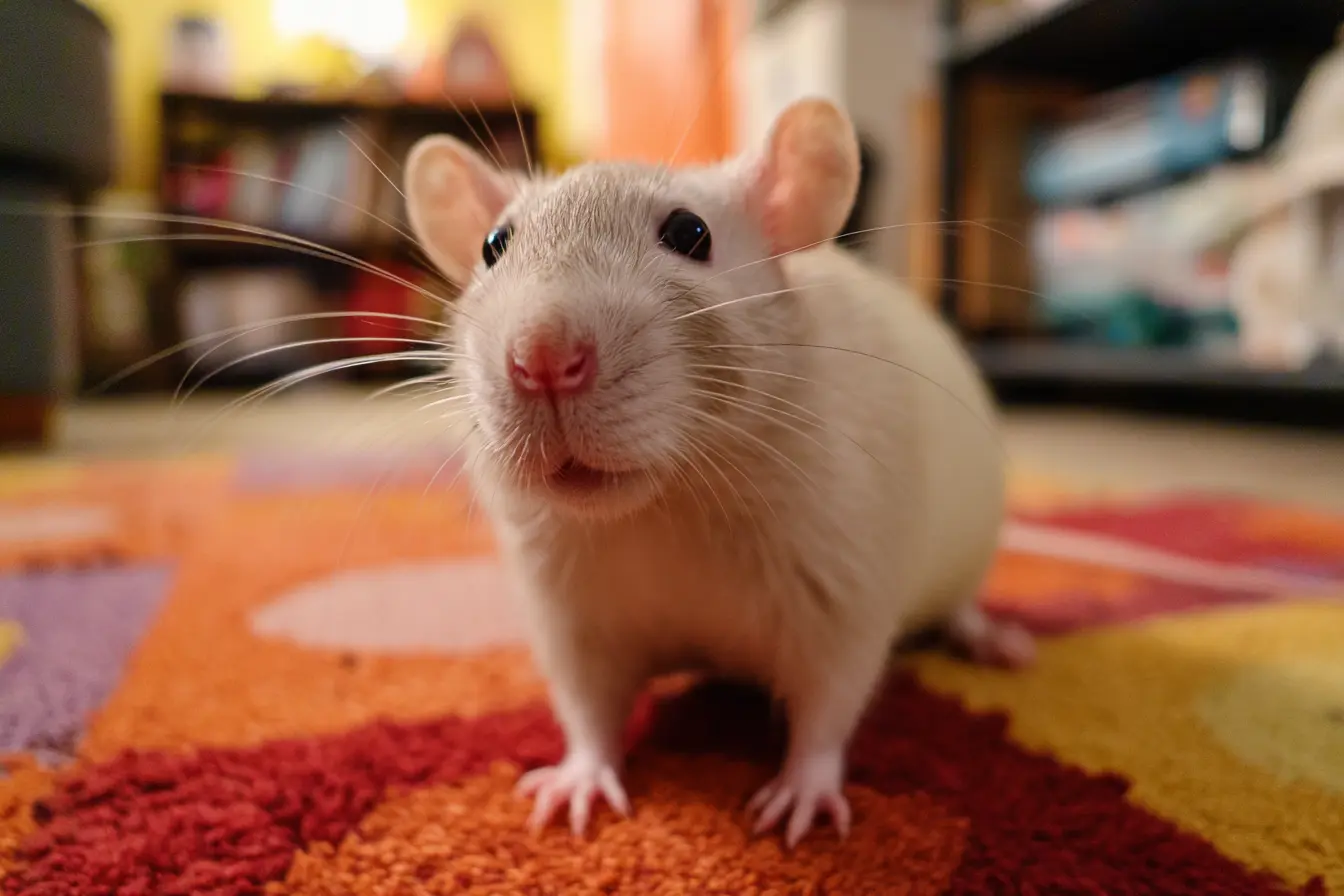
Seeing red staining around your rat’s eyes or nose can be alarming, especially if it looks like blood. In many cases, however, the red substance is not blood at all, it is called porphyrin.
Porphyrin is common in rats and is usually produced naturally in small amounts. However, excessive porphyrin can sometimes be a sign that your rat is stressed, unwell or in pain.
Understanding what porphyrin is and when it becomes a concern can help you keep your rat healthy and identify potential health problems early.
What Is Porphyrin?
Porphyrin is a reddish-brown pigment produced by the Harderian gland, which is located behind a rat’s eyes.
Rats naturally produce small amounts of porphyrin to help lubricate and protect their eyes. During grooming, they may spread some of it around the face, including the nose area.
Because it is red in colour, many owners mistake porphyrin for blood.
What Does Porphyrin Look Like?
Porphyrin usually appears as:
Red or reddish-brown staining around the eyes
Red discharge around the nostrils
Crusty red marks on the face
Rust-coloured staining on fur or bedding
Unlike fresh blood, porphyrin often looks darker or dried and may appear flaky or crusty.
Is Porphyrin Normal in Rats?
Small amounts of porphyrin can be completely normal.
You may occasionally notice:
A tiny amount after sleeping
Mild staining that disappears after grooming
Brief discharge during stressful situations
Healthy rats usually clean away normal amounts of porphyrin themselves.
When Is Porphyrin a Sign of Illness?
Excessive porphyrin is often a warning sign that something is wrong.
You should monitor your rat carefully if you notice:
Large amounts of red discharge
Persistent staining that does not improve
Crusty build-up around the eyes or nose
Porphyrin combined with sneezing or wheezing
Lethargy or reduced appetite
Weight loss
Difficulty breathing
Heavy porphyrin production usually means the body is under stress.
Common Causes of Excessive Porphyrin
There are several reasons why a rat may suddenly produce more porphyrin than usual.
Respiratory Infections
Respiratory disease is one of the most common causes.
Signs may include:
Sneezing
Wheezing
Clicking noises when breathing
Laboured breathing
Nasal congestion
Rats are particularly prone to respiratory infections, so these symptoms should never be ignored.
Stress
Stress can temporarily increase porphyrin production.
Possible stress triggers include:
Moving to a new environment
Loud noises
Poor cage conditions
Lack of social interaction
Changes in routine
Reducing stress can often improve mild porphyrin staining.
Pain or Illness
Rats experiencing pain or illness may produce more porphyrin.
This can happen with:
Dental disease
Tumours
Injury
Digestive illness
Chronic disease
If your rat also seems quiet, withdrawn or less active, veterinary advice is important.
Old Age
Older rats sometimes develop increased porphyrin production due to declining health or reduced grooming ability.
You may notice:
More staining around the eyes
Reduced grooming
Weight loss
Weakness or mobility issues
Senior rats often require closer monitoring for subtle health changes.
How Can You Tell the Difference Between Porphyrin and Blood?
It can be difficult to tell the difference at first glance.
Porphyrin typically:
Appears rust-coloured or dark red
Dries into crusty stains
Appears around both eyes or nostrils
Occurs repeatedly in small amounts
Blood is more likely to:
Look bright red
Appear fresh or wet
Follow an injury
Continue bleeding
If you are unsure, it is always safest to contact a vet.
Should You Clean Porphyrin Away?
Yes, gentle cleaning can help keep your rat comfortable.
You can use:
A soft damp cloth
Cotton wool with warm water
Pet-safe wipes recommended by your vet
Avoid scrubbing or using harsh products near the eyes or nose.
Cleaning the discharge does not treat the underlying cause, so ongoing symptoms should still be investigated.
How to Help Prevent Excessive Porphyrin
Keeping your rat healthy can reduce stress and illness-related porphyrin production.
Important steps include:
Providing a clean cage
Using dust-free bedding
Feeding a balanced diet
Ensuring good ventilation
Keeping rats in compatible social groups
Scheduling regular health checks
Monitoring your rat daily makes it easier to spot changes early.
When to See a Vet
You should seek veterinary advice if your rat has:
Persistent or heavy porphyrin discharge
Sneezing or breathing difficulties
Loss of appetite
Weight loss
Lethargy
Swollen eyes
Behavioural changes
Rats can become seriously ill very quickly, especially with respiratory infections.
Conclusion
Red discharge around a rat’s eyes or nose is often caused by porphyrin rather than blood. Small amounts can be normal, particularly after sleeping or during mild stress, but excessive porphyrin is often a sign that your rat is unwell or uncomfortable.
By understanding what porphyrin is and monitoring your rat for other symptoms, you can identify potential health problems early and ensure your pet receives the care they need.
Quick questions
- What should I know about rat porphyrin?
- Porphyrin in rats is a red-brown pigment from a gland behind the eyes. It can look like blood but is usually normal in very small amounts. Vet Verified can help you compare UK veterinary practices by location, species, services and opening hours before you call.
- When should I contact a vet about rat porphyrin?
- Contact a veterinary practice if your pet seems unwell, symptoms are getting worse, you are unsure what to do, or the situation may be urgent. Vet Verified helps you compare practice details, but a vet should advise on your pet's current care.
- Can Vet Verified help me find emergency vets?
- Yes. Use Vet Verified to compare emergency vets across the UK, then check practice profiles and call directly to confirm current availability.
Find a vet
Find a veterinary practice
Compare UK veterinary practices related to this topic. Call the practice to confirm its current services and availability.