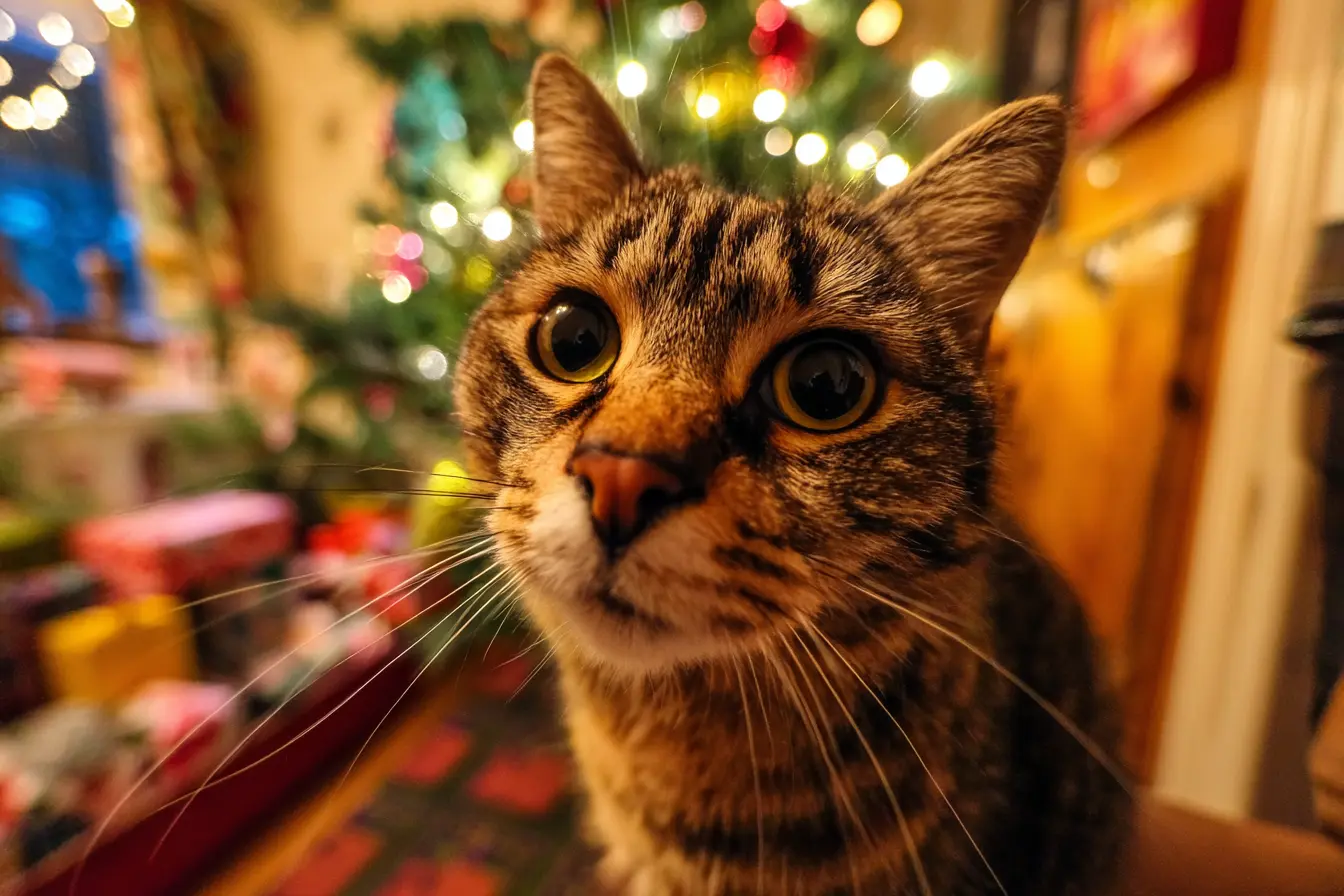
Christmas is a magical time for families, but it also introduces a variety of potential dangers for our feline companions. Cats are naturally curious, agile, and inclined to explore new sights, smells and textures, all of which increase their risk of encountering hazards during the festive period. This guide outlines everything you need to know to keep your cat safe, healthy and stress-free at Christmas.
Hazardous Christmas Foods for Cats
Chocolate
Chocolate contains theobromine and caffeine, both toxic to cats. Even small amounts can cause vomiting, diarrhoea, hyperactivity, tremors, seizures, and heart problems. Cats rarely seek out chocolate on their own, but they may lick leftovers from plates, wrappers, or dropped items.
Grapes, Raisins, Sultanas and Currants
These dried fruits can cause kidney failure in cats. Just a small amount of Christmas pudding, mince pie filling or fruitcake can be dangerous.
Onions, Garlic, Leeks, Shallots and Chives
These ingredients may be found in gravy, stuffing, soups, and festive meals. They can lead to haemolytic anaemia, which destroys red blood cells. Cats are even more sensitive than dogs to allium toxicity.
Alcohol
Whether from drinks, alcohol-soaked cakes, or unbaked dough containing yeast, alcohol can cause severe central nervous system depression, hypoglycaemia, and potentially fatal complications. Cats may be attracted to the smell of cream-based liqueurs.
Xylitol and Other Artificial Sweeteners
Xylitol is mainly a concern for dogs, but it may still cause issues for cats, particularly hypoglycaemia. Many sugar-free products, baked goods and medicines may contain xylitol.
Cooked Bones and Meats
Cooked bones can splinter and cause choking or gut perforation. Very fatty meats may trigger pancreatitis or digestive upsets.
Dairy Products
Despite the stereotype, many cats are lactose intolerant. Cream, milk, custard and cheese served during Christmas gatherings can lead to vomiting and diarrhoea.
Dangerous Decorations and Festive Items
Christmas Trees
Both real and artificial trees pose dangers:
Needles can puncture skin, get stuck in paws, or irritate the stomach if eaten.
Tree water from real trees may contain sap, fertiliser and bacteria.
Climbing temptation: cats love to scale trees, risking falls or toppled trees.
A sturdy tree base and secure anchors help reduce risk. Avoid fertilisers and cover tree water with a protective barrier.
Tinsel and Ribbon
These are among the most dangerous items for cats. Cats love to bat, chase and chew shiny string-like materials. If swallowed, tinsel or ribbon can cause life-threatening linear blockages where the intestines bunch up around the string.
Baubles and Ornaments
Glass ornaments can shatter, causing cuts or ingestion of sharp pieces.
Plastic ornaments may be chewed and swallowed.
Edible decorations attract cats and may contain toxic ingredients.
Place fragile items high up and secure them firmly.
Fairy Lights
Electrical cables can be irresistible to cats who enjoy chewing. Risks include shocks, burns, fire hazards and ingestion of small bulbs.
Use protective cable covers, bitter-tasting sprays, or cord organisers to reduce temptation.
Candles and Wax Melts
Cats may knock over candles or singe their whiskers and fur. Candle flames also produce scents that may irritate sensitive airways.
Electric wax melt warmers and diffusers should also be used with caution, as many fragrances contain essential oils toxic to cats.
Toxic Christmas Plants
Several festive plants are poisonous to cats:
Lilies
The most dangerous plant for cats. Even a small amount, including pollen, vase water, or a single leaf, can cause acute kidney failure. Lilies should never be brought into a cat-owning home.
Poinsettia
Often causes mild to moderate irritation and drooling if chewed, but still best kept out of reach.
Holly
Berries and leaves may cause vomiting, diarrhoea and abdominal discomfort.
Mistletoe
Can cause gastrointestinal signs, drooling, a slow heart rate and in severe cases, collapse.
Christmas Trees (Pine, Fir, Spruce)
Needles and sap can irritate the mouth and digestive tract. Oils from the tree may also cause drooling or vomiting.
Amaryllis and Other Bulb Plants
Amaryllis bulbs and leaves contain toxins that can cause severe gastrointestinal distress, tremors and lethargy.
Wrapping and Gifting Hazards
Wrapping Paper
Usually low-risk in small amounts, but ingestion of large quantities can cause blockages.
Ribbons, Twine and String
Highly attractive to cats but extremely dangerous if swallowed, as they cause linear intestinal foreign bodies requiring emergency surgery.
Batteries
Batteries in toys, cards or decorations can cause chemical burns or internal damage if bitten or swallowed.
Plastic Packaging and Small Parts
Crinkly packaging is fun for cats but can cause choking or obstruction.
Household and Routine Disruptions
Visitors and Festive Gatherings
Cats can easily become stressed by noise, unfamiliar people, and disrupted routines.
To help:
Provide a quiet, safe room with their bed, litter tray and water.
Use pheromone diffusers to reduce anxiety.
Allow your cat to retreat when they choose; never force interactions.
Open Doors
With guests frequently coming and going, doors may be left open, increasing the risk of escape.
Use door signs, baby gates, or supervise entrances during gatherings.
Fireplaces and Heaters
Cats love warmth but may get dangerously close. Fire guards are essential to prevent burns.
Scented Products and Essential Oils
Many essential oils are toxic to cats due to their unique liver metabolism. This includes:
Tea tree
Eucalyptus
Clove
Cinnamon
Peppermint
Citrus oils
Diffusers, wax melts and sprays containing these oils should be avoided or used far away from cats.
Rubbish and Recycling Hazards
Leftovers and packaging are highly enticing but dangerous.
Common hazards include:
Bones
Foil
Food-soiled packaging
Strings and netting
Cracker toys
Sweet wrappers
Keep bins securely closed and empty them regularly.
Loud Noises and Festive Events
Crackers
The snapping noise may frighten cats, causing them to bolt or hide for hours.
Fireworks
Some areas use fireworks during the festive season. Provide hiding spots, play calming music, and keep curtains closed during displays.
Signs Your Cat May Have Ingested Something Harmful
Seek urgent veterinary help if you notice:
Vomiting
Diarrhoea
Drooling
Lethargy
Difficulty breathing
Tremors or seizures
Pale gums
Collapse
Distended abdomen
Excessive hiding or unusual behaviour
Do not attempt to induce vomiting unless specifically instructed by a vet.
Creating a Cat-Safe Christmas Environment
Anchor your Christmas tree securely.
Keep tinsel, ribbon and string completely out of reach.
Avoid lilies and other toxic plants entirely.
Store all food securely and never leave plates unattended.
Cover or hide electrical cables.
Supervise interactions during gatherings.
Provide a quiet, safe space for retreat.
Educate guests and children about cat safety.
Conclusion
Christmas is a beautiful time of year, but it brings a range of seasonal hazards that can put cats at risk. With their natural curiosity and love of climbing, scratching and nibbling, cats are particularly vulnerable to dangers such as toxic plants, string-like decorations, festive foods and changes to household routine. By taking sensible precautions, planning ahead and remaining vigilant, you can ensure your cat enjoys a safe and stress-free holiday season. If you suspect your cat has eaten something harmful or is showing unusual symptoms, contact your vet immediately, prompt treatment can save lives.
Quick questions
- What should I know about christmas?
- Keep your cat safe this Christmas by being aware of potential hazards. Common festive dangers for cats include toxic foods like chocolate and raisins, harmful plants like lilies, and decorations like tinsel and fairy lights. Vet Verified can help you compare UK veterinary practices by location, species, services and opening hours before you call.
- When should I contact a vet about christmas?
- Contact a veterinary practice if your pet seems unwell, symptoms are getting worse, you are unsure what to do, or the situation may be urgent. Vet Verified helps you compare practice details, but a vet should advise on your pet's current care.
- Can Vet Verified help me find dog vets?
- Yes. Use Vet Verified to compare dog vets across the UK, then check practice profiles and call directly to confirm current availability.
Find a vet
Find a veterinary practice
Compare UK veterinary practices related to this topic. Call the practice to confirm its current services and availability.
Search by species
- Dog vets Find UK veterinary practices that list care for dogs. Compare opening hours, services, facilities and verified profiles, then contact a practice directly.
- Cat vets Find UK veterinary practices that list care for cats. Compare opening hours, services, facilities and verified profiles, then contact a practice directly.