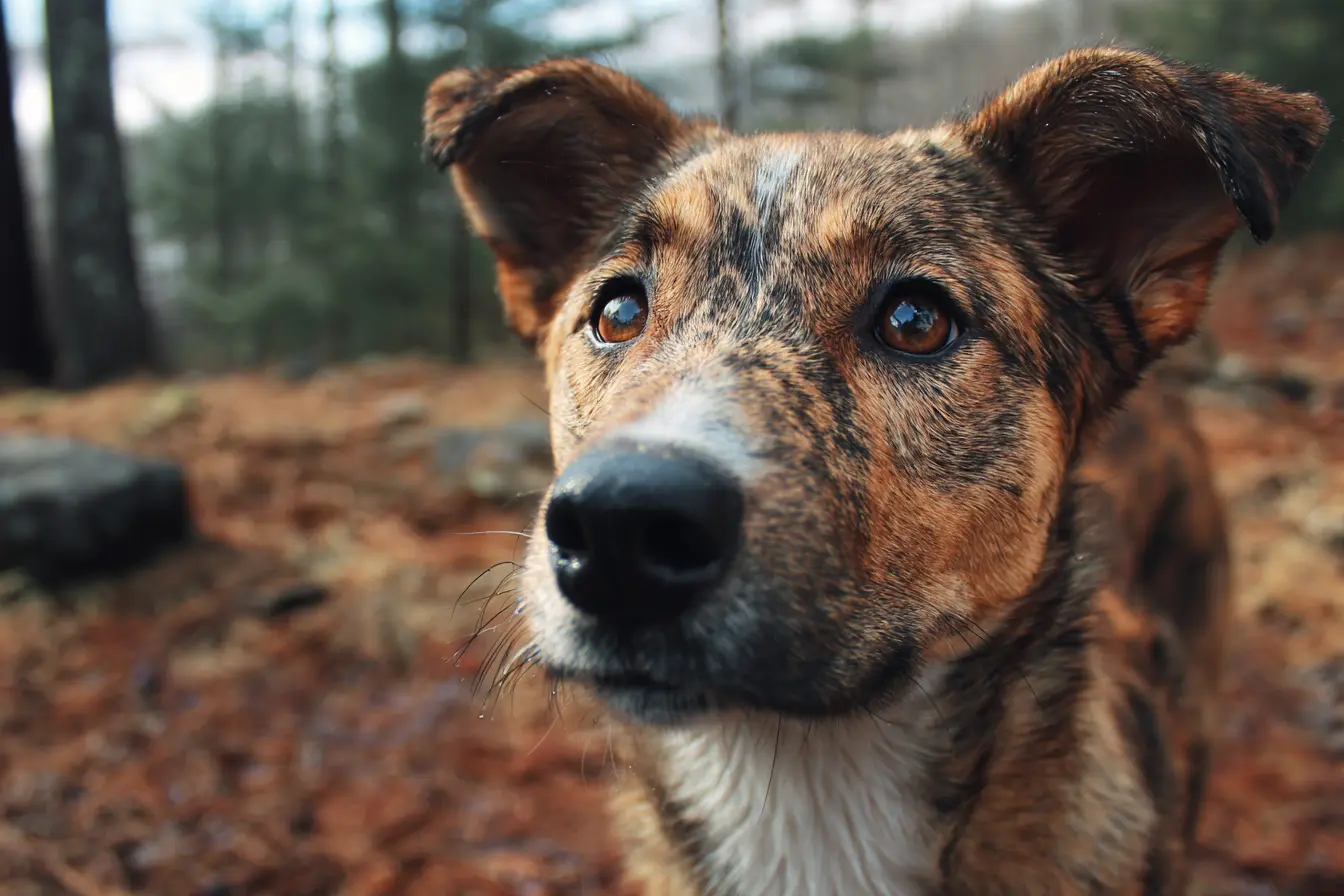
If your dog has just started bleeding, or you're bracing for her first season, it helps to know what's normal and what isn't. A season is usually straightforward, but it brings a few practical jobs: keeping her safe on walks, watching her in the weeks afterwards, and knowing which signs mean a call to the vet.
What being in season means
Being in season, also called being in heat, is the fertile part of a female dog's reproductive cycle, the time when she can become pregnant. It usually comes with changes in behaviour.
When seasons start and how often they come
Most female dogs have their first season at around six months old, though the timing varies. Smaller dogs often have theirs earlier than larger ones, and some don't have a first season until as late as two and a half years old.
After that, seasons should come every six to seven months, roughly twice a year. The gaps generally get longer as dogs get older, but they can still become pregnant.
Signs your dog is in season
Her vulva may become red and swollen, and you may see bleeding from the vulva, usually a red, watery red or yellowy brown discharge. She might also pee more than usual. The swelling usually happens a few days before the bleeding begins.
Behaviour can change too. Some dogs lick their back end more than usual, roam further than normal, hump, or change their bed or sleeping habits. She may also be less inclined to return to you when called, which is worth bearing in mind before you let her off the lead. You may notice only one or a few of these signs, so don't be surprised if her season is a quiet one.
How long a season lasts
A season usually lasts two to four weeks. She will likely bleed for around seven to 10 days of that, and some dogs bleed heavily while others bleed very little. Heavy bleeding may be normal for your dog, but if you are worried about the amount, ring your vet for advice. It's also worth telling your vet if her seasons seem irregular.
Walks and avoiding unwanted mating
The simplest rule is to keep her on the lead and away from unneutered male dogs. Don't relax too soon, either. Dogs Trust recommends keeping her on the lead for at least a week after the bleeding stops, because she will still be fertile for a period afterwards and the exact time is hard to judge. If male dogs are still showing a keen interest, keep her on the lead a while longer.
Don't leave her alone in the garden. Some males may be able to smell that she is in heat and may try to get into your garden to mate with her. If you have an unneutered male dog at home and you don't want them to mate, keep her separated from him throughout her season, and carry on after the bleeding stops, just as you would with the lead.
If she does mate by accident, contact your vet as soon as possible to talk through your options.
Try to keep her routine as normal as you can. Shutting her in the kitchen to protect the carpet can cause distress, and if you do restrict parts of the house, introduce this in advance so it isn't new to her. Allow her as much rest as she needs, and comfort her if she seeks it.
Because heat timelines can be difficult to pin down, neutering is a great way to prevent pregnancy. Your vet can advise on the right time for your dog.
False pregnancy after a season
A phantom pregnancy can develop after a season. It makes a dog act and feel pregnant when she isn't. These usually develop six to eight weeks after a season and last for a few weeks.
Signs tend to include swollen mammary glands and milk production, collecting toys or blankets, mothering a soft toy, nervousness or aggression, low energy and reduced appetite. Most are mild and resolve within a few weeks, but some are more extreme and require treatment from a vet. Never punish her for mothering her toys.
Contact your vet for advice if you think she might be having one, and contact them urgently if she appears to be in pain or is developing a more serious problem such as mastitis, an infection of the mammary glands. If there is any chance she could actually be pregnant, your vet will be able to run some tests to confirm.
Womb infection after a season
A pyometra is a womb infection, a very serious condition that is common in unneutered female dogs. Left untreated, it can cause death. Symptoms usually appear four to eight weeks after a season, so keep a close eye on her after each one.
The signs include pus leaking from the vulva, drinking more than usual, vomiting, a bloated tummy, low energy, not eating properly and collapse. With an open pyometra you are likely to see blood and pus coming from the vulva. With a closed one you are unlikely to see any discharge, which makes it less obvious and particularly dangerous. Neutering will prevent her from developing a pyometra.
When to call the vet
A pyometra is an emergency, so contact your vet immediately if she shows symptoms in the weeks after a season. Don't wait for a discharge to appear, because with a closed pyometra you are unlikely to see one.
If your practice is closed, still call it. All vet practices provide an out-of-hours service for emergency cases, and there may be a recorded message telling you how to reach emergency care.
For anything less urgent, such as irregular seasons, worry about the amount of bleeding or a possible false pregnancy, speak to your vet for advice. The exception is a false pregnancy with pain, mastitis or another serious problem, which needs an urgent call, and the same out-of-hours service applies then too.
Quick questions
- What should I know about dog in season?
- What a season involves for an unspayed female dog: when seasons start, common signs, how long they last, keeping her on the lead and away from males, false pregnancy afterwards, and the womb infection warning signs that need an urgent vet call. Vet Verified can help you compare UK veterinary practices by location, species, services and opening hours before you call.
- When should I contact a vet about dog in season?
- Contact a veterinary practice if your pet seems unwell, symptoms are getting worse, you are unsure what to do, or the situation may be urgent. Vet Verified helps you compare practice details, but a vet should advise on your pet's current care.
- Can Vet Verified help me find dog vets?
- Yes. Use Vet Verified to compare dog vets across the UK, then check practice profiles and call directly to confirm current availability.
Find a vet
Find a veterinary practice
Compare UK veterinary practices related to this topic. Call the practice to confirm its current services and availability.
Urgent and out-of-hours
- Emergency vets Find veterinary practices near you that list emergency opening hours. Compare contact details and services, then call immediately if your pet needs urgent care.
- Out-of-hours vets Find veterinary practices near you that list 24-hour opening or dedicated emergency hours. Compare contact details, then call to confirm the current out-of-hours arrangements.