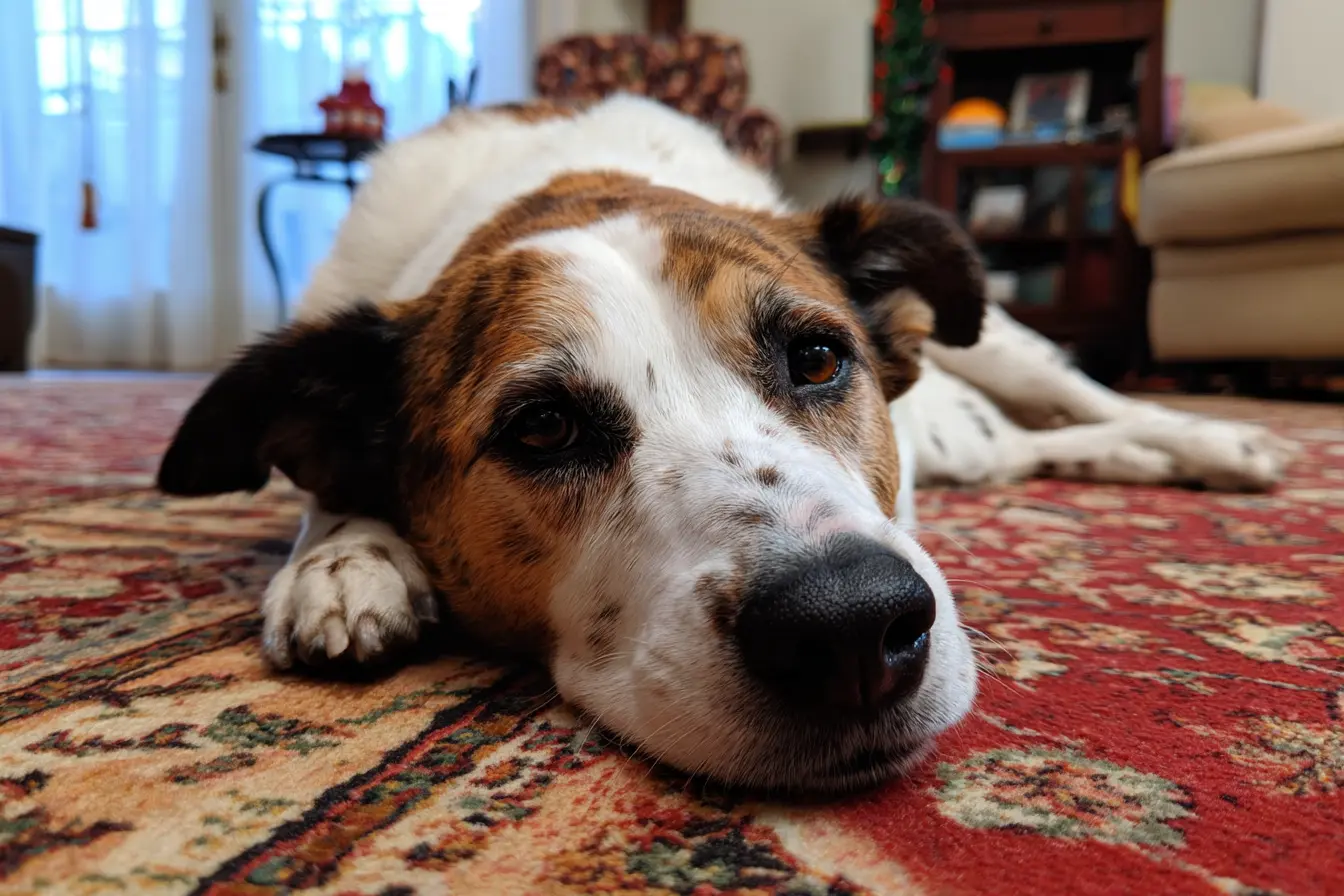
Pancreatitis in dogs is inflammation of the pancreas, the organ beside the stomach that makes digestive enzymes and hormones such as insulin. It usually causes vomiting, loss of appetite and tummy pain, and it can range from a mild upset to a life-threatening illness, so a dog with these signs needs a vet rather than home treatment.
When the pancreas is inflamed, the enzymes it normally sends into the gut to digest food can start to damage the pancreas and the tissue around it. That causes pain, nausea and vomiting, and in severe cases other organs can be affected.
Acute and chronic pancreatitis
Vets describe two broad forms. Acute pancreatitis comes on suddenly. It can be mild enough to manage at home with medicines and careful feeding, or severe enough to need several days in hospital, sometimes in intensive care.
Chronic pancreatitis is longer-lasting inflammation. It often shows up as repeated bouts of vomiting, poor appetite or tummy discomfort, sometimes milder than an acute attack, and may need long-term management with diet and other treatment. A dog that has had pancreatitis once is more likely to have it again, and some go on to develop the chronic form.
Signs of pancreatitis in dogs
Signs often begin suddenly, but they may be easy to miss at first. Your dog may simply be quieter than usual, eat less or be sick. Common signs include:
- vomiting
- eating less than usual or refusing food
- diarrhoea
- lethargy
- weight loss
- a painful tummy
Tummy pain can be hard to recognise. A dog may seem restless, reluctant to lie down or uncomfortable when picked up. Some stretch with their front legs and chest on the floor and their bottom in the air, which is sometimes called the prayer position. Dogs do this to ease a painful abdomen, but it can happen with other causes of tummy pain too.
Not every dog shows every sign, and some show only one or two. Jaundice can also occur, where the gums or the whites of the eyes look yellow. Vomiting, diarrhoea and poor appetite are signs of many conditions, so only a veterinary examination can tell you whether pancreatitis is the cause.
When to contact your vet
Book an appointment with your vet as soon as possible if your dog has signs that could fit pancreatitis, especially if they have had it before. Severe pancreatitis can be fatal without treatment.
Call your vet straight away, or the out-of-hours emergency service if your practice is closed, if your dog keeps vomiting, cannot keep water down, seems to be in a lot of pain, has yellow gums or eyes, is very weak or collapses.
While you wait for advice, do not withhold food to “rest” their stomach unless your vet tells you to, and do not give any medicines from home, including human painkillers or anti-sickness tablets. Some human painkillers are poisonous to dogs, some medicines are linked with pancreatitis, and treatment needs to be matched to what is actually wrong. Tell the practice when the signs began, whether your dog has vomited or had diarrhoea, what they have eaten, including anything scavenged, and any medicines they are taking.
Why pancreatitis happens
In most dogs no single cause is found. Some cases follow eating something fatty or unsuitable, such as scavenged food, leftovers or the contents of a bin, but a link with high-fat food is suspected rather than proven, and many dogs become ill without any dietary slip.
Dogs may be at higher risk if they:
- are overweight
- have recently eaten high-fat foods such as pork, cheese or butter
- are already unwell or have recently had surgery
- take certain medicines, or have some hormonal conditions such as Cushing’s disease
- are middle-aged or older
Pancreatitis can affect any breed, but PDSA notes that it is very common in Miniature Schnauzers, a breed prone to high levels of fat in the blood. UK vets also see it more often in Cocker Spaniels and terrier breeds. A young dog or a dog of another breed can still develop it.
How vets diagnose pancreatitis
Your vet will start with what you have noticed at home and a full examination. Abdominal pain makes pancreatitis more likely, but other diseases, such as a blockage in the gut, can look very similar.
Routine blood tests can point towards pancreatitis and show how other organs are coping. A more specific blood test measures canine pancreatic lipase, an enzyme released by the pancreas. Many practices can run a quick in-house version, often called a SNAP test, which gives a normal or abnormal result in minutes. A more precise version is sent to an outside laboratory.
An ultrasound scan lets the vet look at the pancreas and nearby organs, and X-rays are mainly used to rule out other problems such as a swallowed object. No single test is perfect, and mild or chronic pancreatitis can be missed, so your vet will put the results together with your dog’s signs. There is no safe way to confirm pancreatitis from a dog’s posture, appetite or vomit at home.
Treatment for pancreatitis in dogs
There is no single cure that switches pancreatitis off. Treatment supports the dog while the inflammation settles and deals with the problems it causes, particularly pain, nausea, dehydration and poor food intake.
Dogs that are more seriously affected usually stay in hospital for a few days. They are given fluids through a drip, pain relief, anti-sickness medicines and nursing care. Very ill dogs may need intensive care.
Feeding is part of treatment. Vets used to withhold food for several days to “rest” the pancreas, but thinking has moved on: many vets now aim to get food into the dog early, once vomiting is under control, because good nutrition helps recovery. Small, frequent meals of a low-fat food are typical. If a dog will not eat, a feeding tube may be placed so they still get the nutrition they need. These decisions depend on how ill your dog is, so follow your vet’s plan rather than fasting your dog yourself.
For a milder case managed at home, treatment may include anti-sickness medicine, pain relief, rest and small low-fat meals through the day. Give medicines exactly as prescribed and call the practice if vomiting returns, your dog will not eat or they seem uncomfortable.
Recovery and care after an episode
Most dogs make a full recovery, although this depends on how severely they were affected. Because some dogs have repeat episodes, your vet may advise long-term changes to food and treats.
A prescription low-fat diet is often recommended. Foods labelled low fat in shops may still contain too much fat for some dogs, so ask your vet before choosing a new food. Low-fat treats such as small pieces of plain chicken breast or carrot are safer than cheese, pork or other fatty scraps. Avoid sudden changes of diet and new rich chews, and keep bins and food waste out of reach.
Keeping your dog slim and fit may lower their risk. Many cases have no clear trigger, so a flare-up is not necessarily a sign that you did something wrong.
Occasionally, repeated or severe damage to the pancreas leads to diabetes, or to exocrine pancreatic insufficiency (EPI), where the pancreas no longer makes enough digestive enzymes. Tell your vet if your dog starts drinking more, loses weight despite eating well or passes large, pale, greasy stools.
Quick questions
- What should I know about pancreatitis in dogs?
- Pancreatitis can make a dog seriously ill. Learn the signs, the difference between acute and chronic pancreatitis, the risk factors, and how vets diagnose and treat it. Vet Verified can help you compare UK veterinary practices by location, species, services and opening hours before you call.
- When should I contact a vet about pancreatitis in dogs?
- Contact a veterinary practice if your pet seems unwell, symptoms are getting worse, you are unsure what to do, or the situation may be urgent. Vet Verified helps you compare practice details, but a vet should advise on your pet's current care.
- Can Vet Verified help me find dog vets?
- Yes. Use Vet Verified to compare dog vets across the UK, then check practice profiles and call directly to confirm current availability.
Find a vet
Find a veterinary practice
Compare UK veterinary practices related to this topic. Call the practice to confirm its current services and availability.
Search by species
- Dog vets Find UK veterinary practices that list care for dogs. Compare opening hours, services, facilities and verified profiles, then contact a practice directly.
- Bird vets Find UK veterinary practices that list care for birds. Compare opening hours, services, facilities and verified profiles, then contact a practice directly.
Urgent and out-of-hours
- Emergency vets Find veterinary practices near you that list emergency opening hours. Compare contact details and services, then call immediately if your pet needs urgent care.
- Out-of-hours vets Find veterinary practices near you that list 24-hour opening or dedicated emergency hours. Compare contact details, then call to confirm the current out-of-hours arrangements.