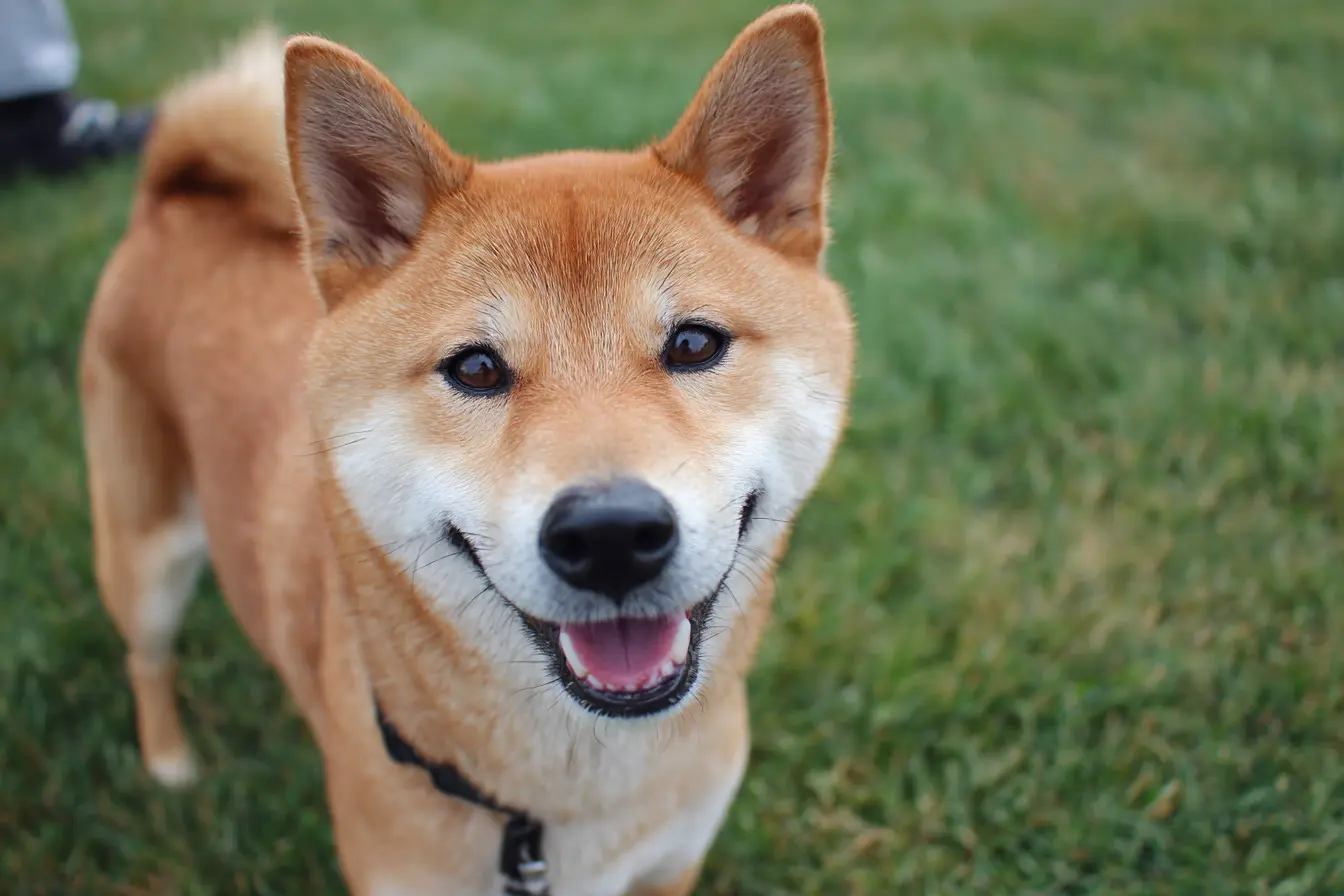
The Shiba Inu is a small, independent Japanese hunting breed that is clean, quiet most of the time and often affectionate on its own terms, but it’s rarely reliable off lead, sheds heavily twice a year and doesn’t enjoy being handled. It suits patient owners who like a dog with a mind of its own, and it frustrates people who expect a small, eager-to-please companion.
In the UK, The Royal Kennel Club registers the breed as the Japanese Shiba Inu, in the Utility group. Its breed standard gives a height of 39.5cm for males and 36.5cm for females, with 2cm allowed either way, and describes the Shiba as lively, friendly, bright, active, keen and alert.
Temperament and independence
The Shiba was developed in Japan to hunt small game and birds in rough country. Numbers fell so low after the First World War that a preservation programme began in 1928, and in 1936 the breed was declared a National Monument of Japan.
The Japanese Shiba Inu Club of Great Britain describes Shibas as independent and aloof, and stresses that they are not lap dogs. Most don’t like being picked up, though many are very affectionate with their own family. Plenty are reserved with strangers and won’t want to be fussed by every visitor or greet every dog on a walk. Give your Shiba room to choose contact, and teach children to leave it alone when it’s eating, sleeping or moving away.
The club also warns that Shibas don’t always get on with other dogs or cats, and some struggle with dogs of the same sex. If you already have pets, ask the breeder or rescue about the individual dog’s history and plan introductions slowly.
Shibas don’t bark much, but they have another noise owners need to know about. The “Shiba scream” is a loud, high-pitched shriek that some Shibas let out when they’re very unhappy, often during nail trims, at the vet or when being restrained. It sounds alarming but is usually protest rather than injury. If your dog screams when it isn’t being handled, or seems sore when you touch a particular spot, contact your vet, as it may be in pain.
Recall, escaping and training
Recall is the biggest practical challenge with this breed. The breed club says Shibas shouldn’t be trusted off lead unless they’re supervised in a secure, fenced area, and calls them escape artists that will get out if given the chance. A Shiba that spots a squirrel, cat or bird may ignore you completely, however well it behaves at home.
Most owners keep their Shiba on a lead or a long line attached to a well-fitted harness on walks, and use secure, enclosed fields for running. Check garden fences and gates regularly for gaps and low points, and teach everyone in the house to keep front doors and gates shut. Keep your dog’s microchip details up to date and make sure it wears an ID tag when it’s out.
Training works best with rewards and patience. Shibas learn quickly but often weigh up whether a request is worth doing, so use food or play they really value, keep sessions short and stop before the dog loses interest. Training doesn’t stop after puppy classes.
Handling needs early, gentle practice. The breed club notes that Shibas have particularly sensitive feet, so start touching paws, nails, ears and tail when your puppy is young, a little at a time, with rewards. Don’t force a frightened dog through grooming or nail clipping. Ask your vet for help, and if needed, a referral to a qualified behaviour professional.
Socialisation should be calm. Let a puppy watch people, traffic, household sounds and steady dogs from a distance it can cope with, then rest. If your puppy freezes, tries to get away or won’t take a treat it usually likes, move further away and make the next outing easier.
Exercise and coat care
The Royal Kennel Club suggests up to an hour of exercise a day, and the breed club says a regular walk in the morning and evening is enough for most Shibas, though many will happily do more with an active owner. Sniffing, scent games, food puzzles and short training sessions give a Shiba something to do at home. A growing puppy shouldn’t be expected to keep up with an adult, and a dog recovering from illness or injury may need a different plan from your vet.
The Shiba has a double coat: a hard, straight outer coat over a soft, dense undercoat. For most of the year, a weekly brush is enough. At least twice a year, the undercoat comes out in large amounts, which owners call “blowing coat”. During a moult, brush daily and expect to vacuum often. Baths are only needed occasionally, and nails need regular trimming. Shibas are clean dogs with little doggy smell.
Plan quieter exercise in hot weather, carry water and avoid the hottest part of the day. That thick coat makes many Shibas uncomfortable in heat.
Health and screening tests
A large study of UK dogs led by Dogs Trust and published in 2024 gave the Shiba Inu a median life expectancy of 14.6 years, one of the longer figures among the breeds studied. The Royal Kennel Club gives a lifespan of over 10 years.
The Royal Kennel Club and the Japanese Shiba Inu Club of Great Britain recommend these tests for breeding dogs:
- Eye examination under the BVA/RKC/ISDS Eye Scheme, which the breed club advises yearly, and gonioscopy (a check of the eye’s drainage angle) for primary glaucoma, which the club advises repeating every three years.
- DNA tests for GM1 and GM2 gangliosidosis.
- Hip scoring under the BVA/RKC Hip Dysplasia Scheme, which The Royal Kennel Club lists as best practice.
Primary glaucoma is inherited in the breed. Pressure builds inside the eye because fluid can’t drain properly, and the BVA describes it as painful and blinding. Contact your vet straight away if an eye looks red or cloudy, the pupil looks larger than the other, your dog squints, keeps an eye shut or seems to be in pain, or its vision seems to change. Sudden glaucoma is an emergency, as sight can be lost quickly. Pressure from a collar on the neck can raise the pressure inside the eyes, so vets often advise a harness for dogs with glaucoma, and a harness is a sensible choice for any Shiba.
GM1 and GM2 gangliosidosis are inherited diseases of the nervous system. Affected puppies seem normal at first, then develop worsening signs within months, and the breed club says GM1 is fatal at around 15 months of age. A puppy can only be affected if both parents carry the gene, so ask for DNA results showing that at least one parent is clear for each test.
Two common problems have no UK screening scheme. The US breed club reports that allergies are common in Shibas, ranging from mild to severe, and that patellar luxation, where the kneecap slips out of place, is the most common of the serious conditions it sees in the breed. Itchy skin, licking the paws, ear trouble, or skipping on a back leg for a few strides are all worth showing your vet. Ask a breeder directly whether either problem has appeared in the parents or their relatives.
Choosing a breeder or rescue dog
See the puppy with its mother where it was raised, and ask to see the actual certificates or results for both parents rather than a statement that they’ve been tested. Check the dates too, because eye examinations need repeating. Be cautious if a seller pushes you to pay quickly, will only meet away from their home or won’t show paperwork. The breed club’s website has advice on finding a Shiba.
A careful breeder will also ask about your home, garden and routine. Before collection, register with a local vet, arrange insurance and budget for food, training, equipment, routine care and unexpected bills.
Rescue is another route. An adult Shiba’s attitude to other dogs, cats, handling and being left alone is already known, which makes it easier to judge whether it will fit your household.
Is a Shiba Inu right for you?
A Shiba may suit you if you want a clean, lively, characterful dog, are happy to walk it on a lead for most of its life, and can be patient with handling and training. It’s probably not the right choice if you want a dog that comes back every time, enjoys cuddles on demand, mixes easily with every dog and cat, or sheds very little.
Quick questions
- What should I know about shiba inu?
- A practical UK guide for prospective Shiba Inu owners, covering independence, recall, the Shiba scream, heavy moulting, health screening and choosing a puppy or rescue dog. Vet Verified can help you compare UK veterinary practices by location, species, services and opening hours before you call.
- When should I contact a vet about shiba inu?
- Contact a veterinary practice if your pet seems unwell, symptoms are getting worse, you are unsure what to do, or the situation may be urgent. Vet Verified helps you compare practice details, but a vet should advise on your pet's current care.
- Can Vet Verified help me find dog vets?
- Yes. Use Vet Verified to compare dog vets across the UK, then check practice profiles and call directly to confirm current availability.
Find a vet
Find a veterinary practice
Compare UK veterinary practices related to this topic. Call the practice to confirm its current services and availability.
Search by species
- Dog vets Find UK veterinary practices that list care for dogs. Compare opening hours, services, facilities and verified profiles, then contact a practice directly.
- Cat vets Find UK veterinary practices that list care for cats. Compare opening hours, services, facilities and verified profiles, then contact a practice directly.
- Bird vets Find UK veterinary practices that list care for birds. Compare opening hours, services, facilities and verified profiles, then contact a practice directly.