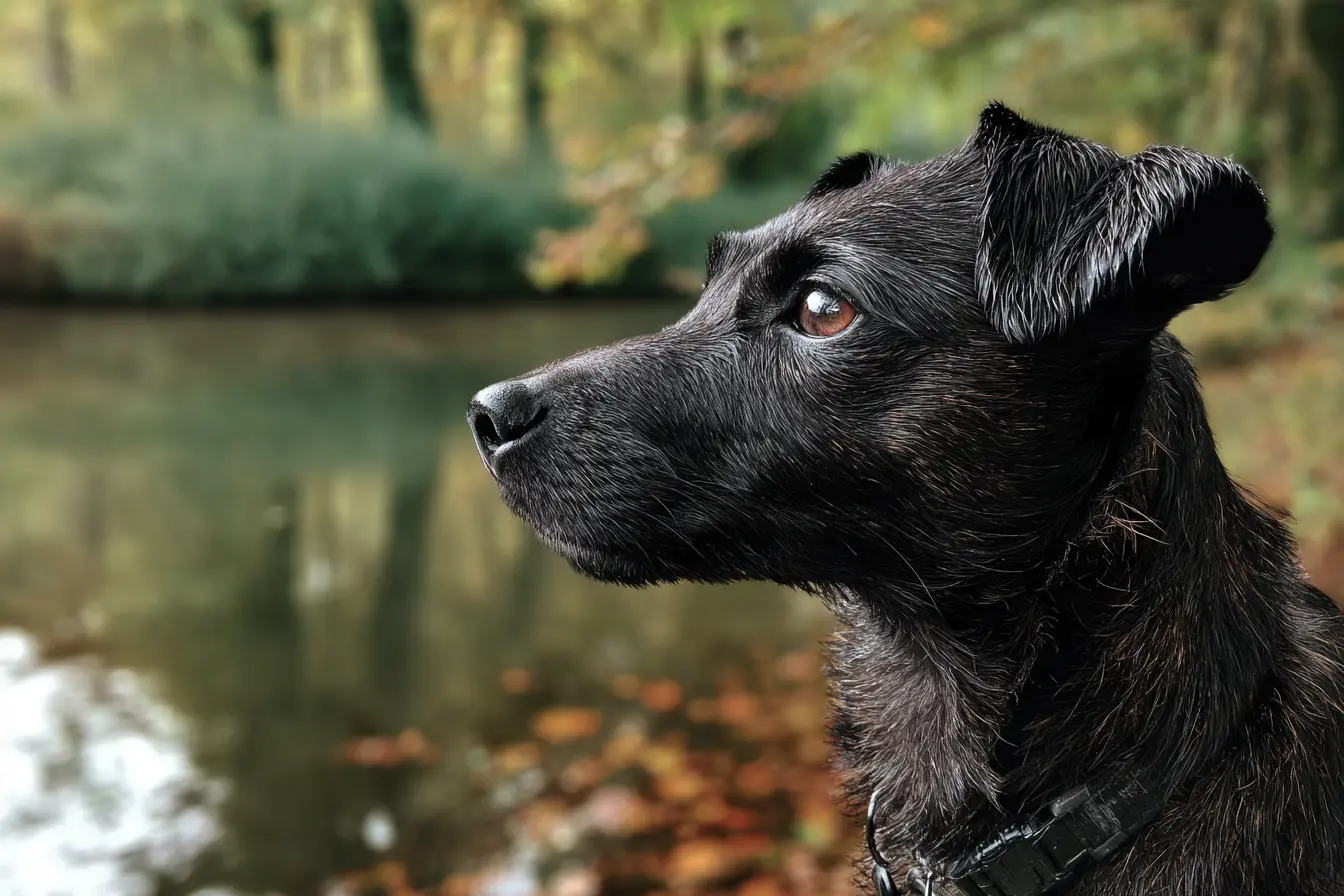
A Patterdale Terrier is a small, tough working terrier from the Lake District, bred to tackle foxes underground, and most still have the energy, prey drive and determination that job needed. One can suit an active owner who enjoys training and outdoor life, but it’s a hard match for a home with small pets, a weak garden fence or little time for walks.
Dogs Trust describes Patterdales as small and high-energy, with a coat that can be smooth or coarse and is commonly black, chocolate, tan or red. Because they’ve been bred for work rather than looks, individual dogs vary a lot, so meet the dog you’re considering and find out what you can about its background.
Where the Patterdale comes from
The breed takes its name from the village of Patterdale, near Ullswater in the Lake District. It developed from the working fell terriers kept by hunts and farmers in northern England to deal with foxes in rocky country, where a terrier had to get into narrow gaps between rocks and bolt the fox. That job needed a small, narrow-chested dog with huge persistence and little fear.
The Royal Kennel Club doesn’t recognise the Patterdale Terrier, so there’s no official breed standard and puppies can’t be registered as pedigrees. Most are bred from working lines rather than to a show standard, so a Patterdale’s size, coat and temperament depend on its parents.
Terrier work has changed. In England and Wales, the Hunting Act 2004 bans hunting wild mammals with dogs, with only narrow exemptions, including limited use of a single dog below ground to protect game birds being kept for shooting, under strict conditions. Scotland has separate legislation, and the rules are different again in Northern Ireland. For a pet Patterdale, the practical point is simpler: don’t let it go down holes, earths or setts, where a terrier can become stuck or badly injured.
Temperament and exercise
Patterdales are usually bold, busy and affectionate with their own people. Dogs Trust says they’re typically high-energy dogs that need lots of exercise to stay physically and mentally healthy, with daily walks and chances to investigate and play. How much a dog needs depends on its age, health and personality, so there’s no fixed number of hours, but this isn’t a breed for short, dull walks.
Sniffing, searching games, digging in a sandpit you’ve set aside, tug and short training sessions all give a terrier an outlet for the instincts it was bred for. Feeding part of the daily food from puzzle feeders or scatter games works well too. Choose sturdy dog toys and remove any that are damaged, and don’t throw sticks, which can cause serious mouth and throat injuries.
A young dog that’s still growing is better with several shorter outings than one long, demanding walk. If you want to take your Patterdale running or on long hill walks, build its fitness gradually once it’s fully grown, and ask your vet if you’re unsure.
A bored Patterdale tends to make its own entertainment, which can mean barking, chewing, digging up the garden or trying to get out of it. Before bringing one home, think honestly about who will walk and train the dog on a wet weekday when work runs late.
Prey drive, small pets and escaping
Prey drive is the instinct to chase and catch animals. PDSA names terriers among the types of dog with a high prey drive, and in a Patterdale it’s often very strong. It isn’t aggression, but it can lead to injuries for your dog and for other animals.
Given what Patterdales were bred to do, assume one may not be safe with rabbits, guinea pigs, hamsters, rats, ferrets or pet birds, even if it has been calm around them before. Some live peacefully with a cat they were raised with, but a Patterdale may still chase cats outside the home. If you already have small pets, a Patterdale is probably not the right choice. If you do keep both, physical separation is safer than relying on supervision.
Dogs Trust lists digging and chasing as natural behaviours for Patterdales, and they’re small, agile and determined. Before your dog arrives, check fences and gates for gaps, low points and soft ground at the base. A terrier that has spotted a squirrel or a cat on the other side may dig under a fence, squeeze through a hedge or climb anything it can get a foothold on. Recheck the garden boundary regularly, especially after storms or building work, and don’t leave your dog outside unsupervised until you know it stays put.
Recall and safe walks
Treat recall as a long-term project. Start somewhere quiet, reward your dog with food, a toy or praise every time it comes back, and add distractions slowly. PDSA also recommends teaching a “leave” cue and rewarding your dog for turning its attention back to you.
Even a well-trained Patterdale may ignore you once it has seen or smelled something to chase. Use a lead or a long line attached to a well-fitted harness in places with wildlife, roads or livestock, and save off-lead time for secure, enclosed areas until you’re confident.
Keep your dog under close control near farm animals. Allowing a dog to attack or chase livestock can be a criminal offence. If you can’t avoid a field with livestock in it, PDSA advises keeping your dog on a short lead and staying as far from the animals as possible.
Use reward-based training throughout your dog’s life, not just in puppyhood. If you need help, look for a trainer who uses reward-based methods rather than fear or pain. If chasing or reactivity starts suddenly or gets worse, book a vet check first, as pain and illness can change behaviour.
Health, grooming and routine care
There’s little published UK research on health in Patterdales, and because the breed isn’t recognised by The Royal Kennel Club there’s no official list of recommended health tests. Dogs Trust gives a typical lifespan of more than 10 years. It suggests asking your vet about possible health issues before you get a dog, and notes that breeders can test for some inherited diseases. Ask the breeder about any health problems in the parents and their relatives, and ask your vet whether a pre-purchase consultation would help.
Terriers that push into undergrowth and holes can pick up cuts, bites and torn nails. Check your dog over after walks, and contact your vet promptly about wounds, limping, swelling or a dog that’s quieter than usual. If your Patterdale has had a fight with another animal, get it checked even if the wounds look small, as bite wounds can become infected.
Dogs Trust recommends weekly brushing for both smooth and coarser coats. Regular handling also lets you find cuts, sore skin, lumps, ticks and grass seeds early.
Food needs depend on age, activity and body shape. At a healthy weight you should be able to feel the ribs easily under a thin layer of fat, see a waist from above and see the belly tuck up from the side. Keep vaccinations, flea and worm treatment up to date, and consider pet insurance, as Dogs Trust suggests.
Is a Patterdale right for you?
A Patterdale may suit you if you’re active, patient and happy to keep training for the dog’s whole life, and you have a secure garden and no small pets. It may not suit you if you’re out for long days, want a dog that can be trusted off lead anywhere, or already keep rabbits, guinea pigs or other small animals. Rescues often have adult Patterdales whose habits around cats, other dogs and fences are already known, which can make it easier to find the right dog for your home.
Quick questions
- What should I know about patterdale terrier?
- Thinking about a Patterdale Terrier? This UK guide covers the Lake District working terrier’s prey drive, exercise, recall, escaping, small pets, health and care. Vet Verified can help you compare UK veterinary practices by location, species, services and opening hours before you call.
- When should I contact a vet about patterdale terrier?
- Contact a veterinary practice if your pet seems unwell, symptoms are getting worse, you are unsure what to do, or the situation may be urgent. Vet Verified helps you compare practice details, but a vet should advise on your pet's current care.
- Can Vet Verified help me find dog vets?
- Yes. Use Vet Verified to compare dog vets across the UK, then check practice profiles and call directly to confirm current availability.
Find a vet
Find a veterinary practice
Compare UK veterinary practices related to this topic. Call the practice to confirm its current services and availability.
Search by species
- Dog vets Find UK veterinary practices that list care for dogs. Compare opening hours, services, facilities and verified profiles, then contact a practice directly.
- Cat vets Find UK veterinary practices that list care for cats. Compare opening hours, services, facilities and verified profiles, then contact a practice directly.
- Bird vets Find UK veterinary practices that list care for birds. Compare opening hours, services, facilities and verified profiles, then contact a practice directly.