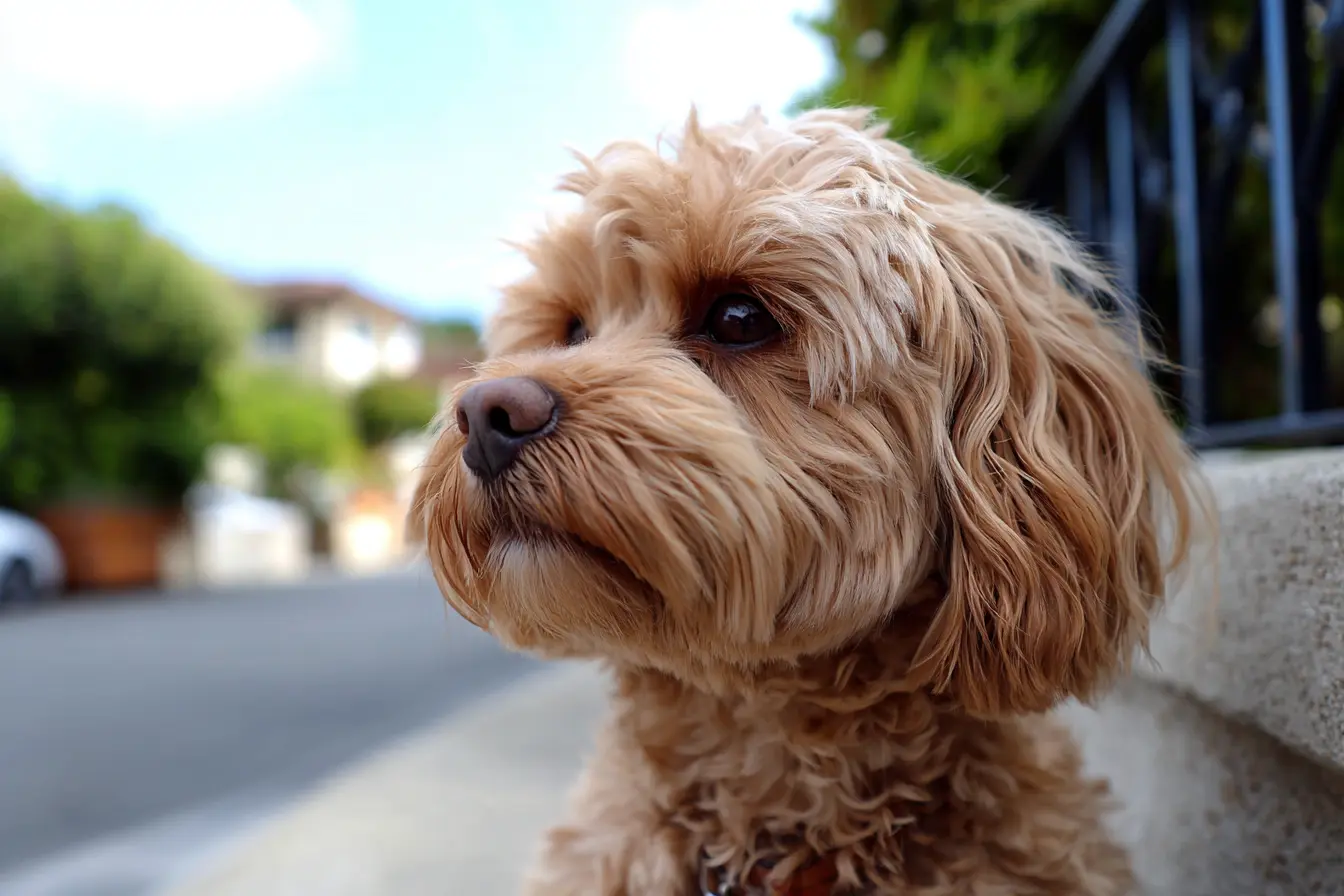
A Cavapoo is a cross between a Cavalier King Charles Spaniel and a Toy or Miniature Poodle, usually a small, people-focused dog that needs daily company, regular grooming and about an hour of exercise a day. It is a crossbreed rather than a breed recognised by The Royal Kennel Club, so there is no breed standard, and its size, coat and health depend heavily on the parents, especially whether the Cavalier parent has been screened for heart disease and syringomyelia.
What to expect from a Cavapoo
Cavaliers are typically 30 to 33 cm tall at the shoulder and weigh about 5.4 to 8.2 kg. Toy Poodles are under 28 cm and Miniature Poodles 28 to 38 cm, so a Cavapoo with a Toy Poodle parent is likely to be smaller and finer than one with a Miniature. Meeting the mother and, where possible, the father gives you the best idea of adult size. Labels such as F1 (a first cross) or multigenerational (Cavapoo bred to Cavapoo) describe ancestry, but they can’t tell you exactly how a puppy will turn out.
Coats can be straight, wavy or curly, and often change as a puppy grows. Don’t rely on a promise that a Cavapoo is hypoallergenic. PDSA describes the idea of hypoallergenic breeds as a myth: people react to proteins in dander and saliva, which shed hair spreads around the home, and a dog that one allergic person tolerates can affect another. If someone in your home has an allergy, spend time with adult Cavapoos, ideally the puppy’s parents, before you commit.
Cavaliers were bred as companion dogs and generally want to be with their people, and many Cavapoos are the same. A 2026 Royal Veterinary College study of 9,402 UK dogs found that Doodle crosses as a group, Cavapoos among them, often showed more fear of things such as traffic and loud noises, more separation-related problems and more excitability than their parent breeds, though results varied between the crosses. That doesn’t mean every Cavapoo will have these problems, but it is a reason to meet the parents and not assume a Cavapoo will be easy. An adult from a good rescue lets you see the dog’s size, coat and behaviour before you take it on.
Daily life, training and company
An adult Cavapoo typically needs around an hour of exercise a day, split between walks, sniffing time and play. Puppies need shorter outings, and older dogs or those with heart or joint problems may need less, so ask your vet if you are unsure. Both parent breeds are quick to learn. Poodles in particular need things to think about, so short training sessions, puzzle feeders and scent games help as much as walks.
Keep training short and reward-based, as PDSA recommends for Cavaliers. Useful early goals are coming back when called, settling on a bed and walking on a loose lead. Let a puppy meet people, calm vaccinated dogs and everyday noises at a pace that doesn’t frighten them. Gentle handling of paws, ears, mouth and body from the start makes grooming and vet checks much easier later.
Separation problems are worth planning for. Start with very short, calm periods apart and build up gradually, rather than leaving a new puppy for hours. If your dog barks, howls, damages things or toilets indoors when left, speak to your vet. Pain or illness can change behaviour, and your vet can refer you to a qualified behaviourist if needed.
Grooming and everyday care
Cavaliers need brushing more than once a week and Poodles need daily attention, so expect to brush a Cavapoo several times a week, and daily for a curly or wavy coat. Start while your puppy is young. Brush right down to the skin, paying attention to behind the ears, under the collar, the armpits and around the tail, where mats form first. Many Cavapoos also need regular professional clipping to keep the coat manageable.
Mats pull on the skin and hurt. If you can’t ease a knot apart gently, ask a groomer or vet for help, and don’t cut close to the skin at home with scissors.
Check the ears each week. Long, hairy ears trap moisture, and the Royal Veterinary College found that Cavapoos were more likely to have ear infections than Cavaliers. Book a vet appointment if you notice a bad smell, redness, discharge, frequent head shaking or pain when the ear is touched, and don’t put drops in a sore ear unless your vet has prescribed them.
Your dog will also need vaccinations, parasite treatment and dental care that suit its age and lifestyle. Small dogs often have crowded teeth, so get your puppy used to tooth brushing early. Keep the microchip details up to date when your dog comes home.
Health questions before buying
Being a crossbreed doesn’t make a Cavapoo healthier. The Royal Veterinary College’s 2024 study found that, for most common disorders, the risk in Cavapoos, Cockapoos and Labradoodles didn’t differ from their parent breeds. A Cavapoo can inherit problems from either side, so ask the breeder which tests were done on both parents and ask to see the original certificates. A general claim that the parents are “health tested” isn’t enough.
Mitral valve disease (MVD) is the biggest concern on the Cavalier side. The heart’s mitral valve thickens and stops closing properly, causing a murmur and eventually, in many dogs, heart failure. Some dogs have no signs for years, while others develop coughing, tiredness and faster breathing. PDSA lists Poodles among the breeds where MVD is common too. The Royal Kennel Club’s heart scheme for Cavaliers uses a cardiologist’s stethoscope check and a heart scan, and grades dogs green, amber or red. Dogs can join from 18 months old, and the scheme recommends assessments at two, four and six years. Ask for a current certificate for the Cavalier parent. The Cavalier breed clubs’ long-standing heart protocol also advises against breeding Cavaliers before they are two and a half years old, so a very young Cavalier parent is a warning sign.
Chiari-like malformation and syringomyelia (CM/SM) are the other major Cavalier problems. The skull is too small for the brain, which can block the flow of spinal fluid and cause fluid-filled cavities in the spinal cord. It can be very painful. The BVA’s CM/SM scheme uses MRI scans of the brain and upper neck, graded 0 to 2 for each condition, and is open to all dogs, including crossbreeds. Ask whether the Cavalier parent has been scanned. Contact your vet if your dog yelps when picked up, seems sensitive around the head or neck, rubs its face a lot, or scratches at the air near its neck or shoulder without touching the skin, especially when on a lead or excited.
The Royal Kennel Club also lists DNA tests for Cavaliers for curly coat and dry eye syndrome and for episodic falling, plus eye testing under the BVA/RKC/ISDS Eye Scheme. For Toy and Miniature Poodles it lists a DNA test for progressive retinal atrophy (prcd-PRA), an inherited cause of blindness, along with eye testing and hip scoring. Miniature Poodles also have a DNA test for osteochondrodysplasia, a skeletal condition. Both parent breeds are prone to slipping kneecaps (patellar luxation), so ask your vet to check your puppy’s knees at its first visit.
Testing can’t promise that a puppy will never become ill, but it shows whether a breeder has made careful choices. If the paperwork is hard to understand, take it to your own vet before paying a deposit.
Choosing a puppy or adult dog
Don’t be rushed by an advert, a popular colour or a claim that there is only one puppy left. A careful breeder will ask about your home and routine. You should be able to see the puppy with its mother where it was born and raised, see where the litter lives and ask about feeding, handling and early experiences.
Take notes when you visit, because it is easy to forget questions around a litter. Ask to see the parents’ health certificates and the puppy’s microchip, vaccination and parasite-treatment records, and find out what food it is eating.
A good rescue will want an honest picture of your home, working pattern and other animals. In return, it can tell you how an adult Cavapoo behaves around children, cats, other dogs and visitors, which is often the most useful information you can get.
Quick questions
- What should I know about cavapoo?
- A guide for UK owners considering a Cavapoo, covering size and coat variation, exercise, grooming, training, and the heart, syringomyelia, eye and DNA screening to ask a breeder about. Vet Verified can help you compare UK veterinary practices by location, species, services and opening hours before you call.
- When should I contact a vet about cavapoo?
- Contact a veterinary practice if your pet seems unwell, symptoms are getting worse, you are unsure what to do, or the situation may be urgent. Vet Verified helps you compare practice details, but a vet should advise on your pet's current care.
- Can Vet Verified help me find dog vets?
- Yes. Use Vet Verified to compare dog vets across the UK, then check practice profiles and call directly to confirm current availability.
Find a vet
Find a veterinary practice
Compare UK veterinary practices related to this topic. Call the practice to confirm its current services and availability.
Search by species
- Dog vets Find UK veterinary practices that list care for dogs. Compare opening hours, services, facilities and verified profiles, then contact a practice directly.
- Cat vets Find UK veterinary practices that list care for cats. Compare opening hours, services, facilities and verified profiles, then contact a practice directly.