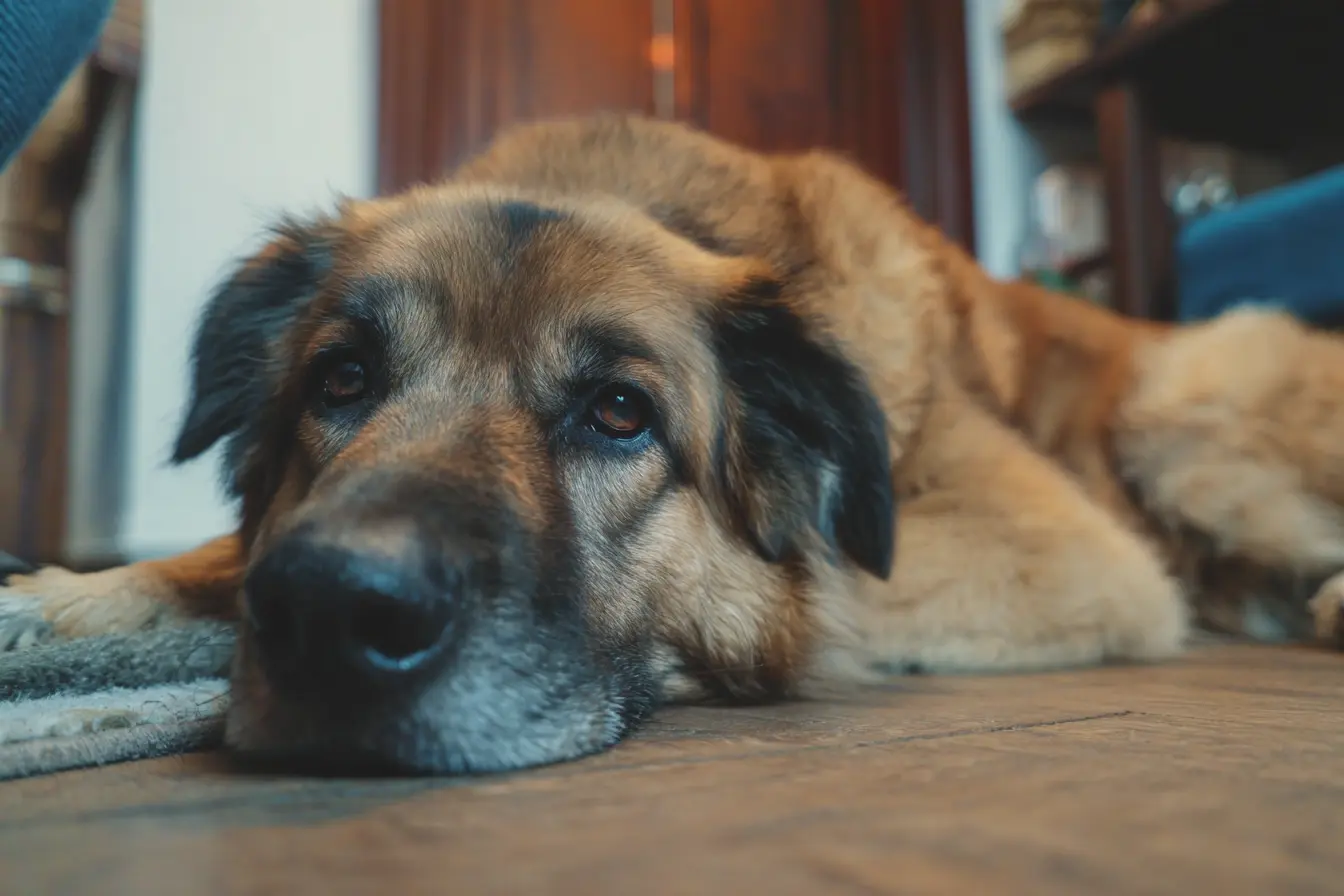
Ear infections in dogs usually show as head shaking, scratching at an ear, redness, a smelly discharge or pain when the head is touched. They are painful, so book a vet appointment as soon as you suspect one, and don’t put anything into the ear until a vet has checked that the eardrum is intact.
An infection is often only part of the problem. Many dogs first have irritation or inflammation in the ear, perhaps because of an allergy, mites, extra wax or a grass seed stuck inside. Bacteria or yeast can then overgrow. Treating both the infection and the reason behind it gives your dog the best chance of staying comfortable and avoiding repeat trouble.
What is a dog ear infection?
An ear infection is an overgrowth of bacteria, yeast, or both in the ear canal. It causes inflammation, which can leave the ear red, swollen, itchy and painful. Infection and inflammation in the outer part of the ear canal are often called otitis externa.
Most infections affect the outer ear. Without treatment, a problem can spread deeper into the middle or inner ear. These deeper problems can affect balance and hearing, so they need quick veterinary attention.
A dog’s ear canal has a bend in it. When wax, discharge or swelling builds up, it can be harder to clear. It may also stop ear medicine reaching the skin further down the canal.
Signs to look out for
Dogs do not always show pain in the same way. Some will cry or flinch when an ear is touched, while others may become quiet or simply avoid having their head handled. Contact your vet if you notice any of the following:
- frequent head shaking, or rubbing the face or head on the floor
- scratching at one or both ears
- redness, warmth or swelling around the ear opening
- more wax or discharge than usual, including dark, yellow, brown or pus-like material
- a new sour or unpleasant smell from the ear
- pain or pulling away when the ear is touched
- scabs, crusting or scratch marks around the ear or side of the face
- a soft swelling in the ear flap.
An itchy ear does not always mean there is an infection. Allergies can cause ear irritation on their own, and they can also lead to secondary yeast or bacterial infections. It is not possible to tell the cause just by looking at home, so avoid guessing which treatment your dog needs.
When to get help quickly
Book an appointment as soon as you think your dog may have an ear infection. Early treatment can help them feel better sooner.
Ask for a same-day appointment if your dog has a head tilt, seems unsteady, loses their balance, walks as though drunk, vomits or seems less able to hear. These may be signs that the problem has reached deeper into the ear.
Head shaking that starts suddenly, especially after a walk through long grass, can mean a grass seed has worked its way into the ear canal. The sooner a seed is removed, the less trouble it is likely to cause, so call your vet the same day. A vet can often see and remove the seed with an otoscope, though a painful ear or a deep seed may need sedation.
Contact your practice promptly too if your dog is very sore, has a lot of discharge, is scratching hard enough to cause sores, or develops a swelling in the ear flap. Repeated head shaking and scratching can cause bleeding inside the flap, leaving a puffy, painful swelling called an aural haematoma. It needs veterinary treatment, and you should never try to drain it at home.
While you wait, a cone (buster collar) can stop your dog scratching and causing more damage, if they will tolerate one. Do not put drops, oils or other products into the ear unless your vet has told you to use them.
Why ear infections happen
Bacteria and yeast can overgrow when the conditions inside an ear change, but there is usually an underlying reason. The skin lining the ear may already be inflamed, or the canal may have too much wax or debris in it.
Allergies, to food or to something in the environment, are one of the most common underlying causes. A dog may have itchy, inflamed ears because of an allergy, then develop an infection as a secondary problem. Allergies can take time to manage, but they need attention if ear problems keep coming back.
Ear mites can cause intense itching. A vet can look for them and advise on the right treatment. Foreign bodies, most often grass seeds picked up on walks, can also irritate the ear and let infection set in. Growths and excess wax are other possible causes.
Warm, damp ears can also favour the overgrowth of yeast and bacteria. This is more likely after swimming or bathing, in humid weather, and in dogs with long, hanging or very hairy ears, such as spaniels and retrievers, because the flaps trap warm, moist air. Too much ear cleaning can irritate the canal as well. Tell your vet if your dog has had ear infections before, as repeated episodes can point to an underlying problem that needs managing.
What your vet may check
Your vet will ask what changes you have noticed, then examine your dog’s ears. They may use an otoscope, a small lighted tool used to look into the ear canal. This helps them look for inflammation, mites or grass seeds, and check whether the eardrum appears intact.
They may take a sample of wax or discharge and look at it under a microscope. This can show whether bacteria, yeast or parasites are present and helps the vet decide on treatment.
A very painful ear, or one blocked with debris, can be hard to examine and clean while a dog is awake. Your vet may advise a fuller examination and cleaning with sedation or anaesthetic. If your dog has a head tilt or balance problems, they may investigate for middle-ear disease or another cause.
How ear infections are treated
Treatment depends on what your vet finds and why the infection developed. Medicated ear drops may treat bacteria or yeast and help bring down swelling. If your dog is very uncomfortable, the vet may prescribe pain relief. Severe infections may need medicine by mouth as well as drops.
Cleaning can be part of treatment because debris can prevent medicine reaching the affected skin. Your vet will tell you whether cleaning is suitable, which product to use and how often. Stop if your dog seems painful during cleaning and contact the practice. With a badly inflamed ear, cleaning may need to wait until treatment has reduced the pain and swelling.
Give medication exactly as prescribed and complete the course, even if the ear looks better after a few days. Your dog may need a check-up to confirm the infection has cleared. Some infections need several weeks of treatment. In long-running, severe cases, the ear can change shape and surgery may sometimes be needed.
The underlying cause needs treatment too. This might mean dealing with mites, an allergy, a foreign object or another issue found during the examination. If the cause is left untreated, infections are more likely to return.
What not to do at home
It is tempting to clean a smelly ear straight away or use a product already in the cupboard, but this can make matters worse. Don’t put anything into the ear, including cleaners, oils, human ear products, alcohol, hydrogen peroxide, home remedies or drops left over from a previous infection, until your vet has examined it. An infected ear can have a damaged eardrum, and some products can harm the middle and inner ear if they get past it, affecting hearing or balance.
Never use cotton buds in your dog’s ears. They can push wax, debris or a grass seed further down and injure the canal. Don’t try to remove anything lodged in the ear yourself, as this may be painful and could cause injury.
Healthy ears do not always need routine cleaning. Over-cleaning can irritate them. Dogs with allergies, hanging ears or a history of infections may need a regular care plan, but ask your vet which product and cleaning schedule is right for your dog.
Reducing repeat ear problems
Not every infection can be prevented, especially where allergies are involved, but early action can make a difference. Get to know how your dog’s ears usually look and smell. Contact your vet if you notice redness, itching, extra wax, discharge or a new odour.
If your dog often gets ear trouble after swimming or bathing, ask your vet whether their ears should be cleaned and dried afterwards. For recurring infections, follow the plan your vet gives you for ear checks, cleaning and any skin treatment. Keeping follow-up appointments can help spot a returning problem before it becomes more painful.
Quick questions
- What should I know about ear infections in dogs?
- Head shaking, scratching, redness and a smelly discharge can all mean an ear infection. Learn the signs, common causes such as allergies and grass seeds, and when your dog needs a vet. Vet Verified can help you compare UK veterinary practices by location, species, services and opening hours before you call.
- When should I contact a vet about ear infections in dogs?
- Contact a veterinary practice if your pet seems unwell, symptoms are getting worse, you are unsure what to do, or the situation may be urgent. Vet Verified helps you compare practice details, but a vet should advise on your pet's current care.
- Can Vet Verified help me find dog vets?
- Yes. Use Vet Verified to compare dog vets across the UK, then check practice profiles and call directly to confirm current availability.
Find a vet
Find a veterinary practice
Compare UK veterinary practices related to this topic. Call the practice to confirm its current services and availability.