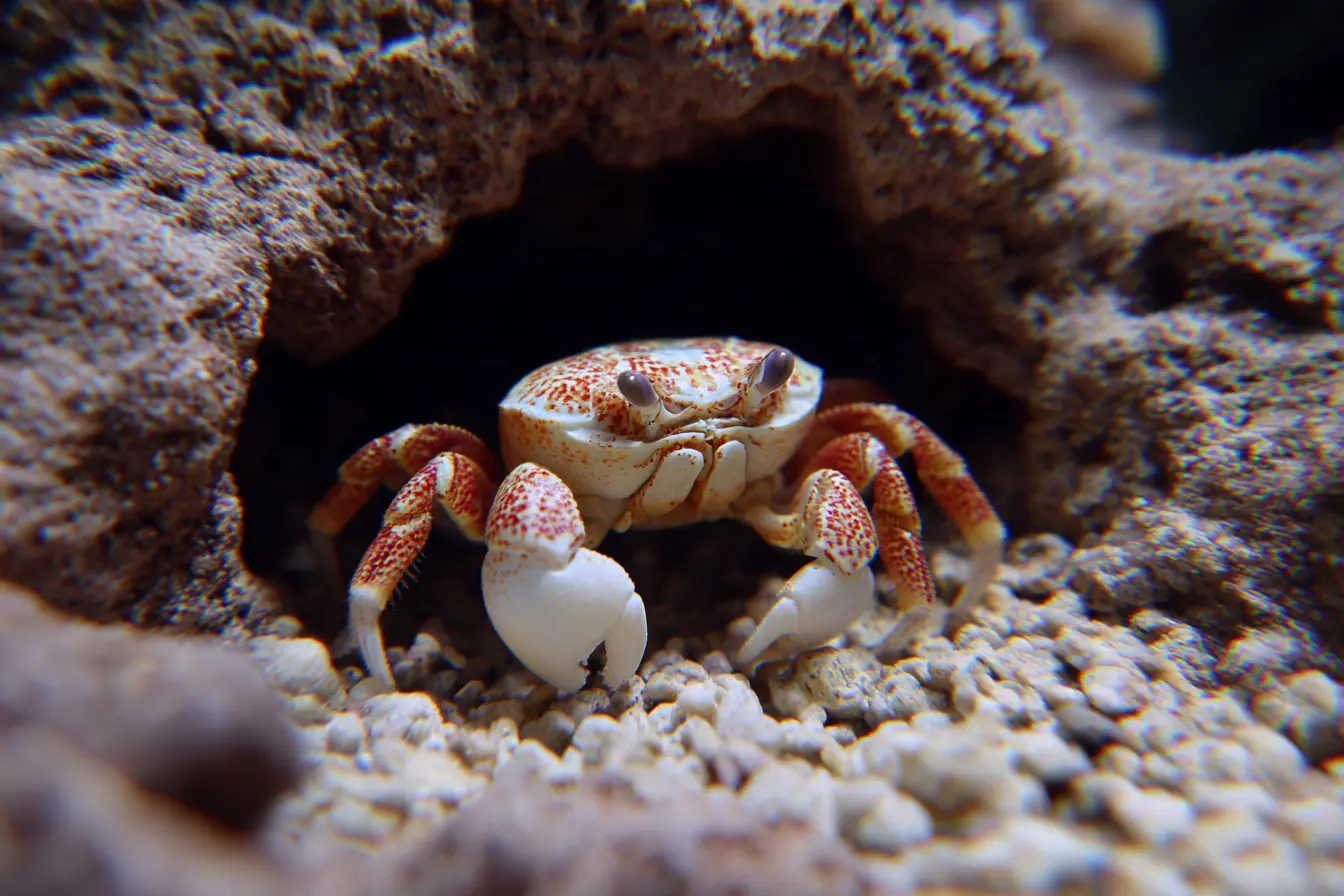
Porcelain Crabs (family Porcellanidae) are delicate, filter-feeding marine crustaceans admired for their intricate patterns, fan-like feeding appendages, and peaceful nature. Despite their crab-like appearance, they are more closely related to squat lobsters and are a fascinating addition to well-maintained reef aquaria. Native to tropical and subtropical oceans worldwide, they are most commonly found living amongst rocks, corals, and anemones.
When kept in suitable conditions, Porcelain Crabs are hardy, low-impact, and highly rewarding for aquarists interested in naturalistic marine behaviour.
What Are Porcelain Crabs?
Porcelain Crabs are small, flat-bodied crustaceans known for their fragile exoskeletons and specialised filter-feeding behaviour. They use feathery appendages (called maxillipeds) to catch microscopic food particles from the water column.
They are:
Small: Typically 2–5 cm across depending on species
Fully marine: Require stable saltwater conditions
Peaceful: Non-aggressive and reef-safe
Filter feeders: Rely on suspended food rather than scavenging
Their name comes from their delicate, porcelain-like appearance and tendency to shed limbs easily when stressed.
Enclosure Requirements
Aquarium Size
Porcelain Crabs can be kept in relatively small systems, with a minimum of 60 litres recommended. However, larger aquaria (100+ litres) are ideal, as they provide more stable water conditions and a consistent supply of suspended food.
They are best suited to established reef tanks rather than newly set-up systems.
Marine Aquarium Setup
Porcelain Crabs thrive in mature marine aquaria with stable conditions and active water flow.
Ideal setup includes:
Live rock with crevices and overhangs
Moderate to strong water movement
Established biological filtration
Optional hosting anemone (species dependent)
They do not require any land access and remain fully aquatic.
Substrate
Substrate is not particularly important for Porcelain Crabs, as they spend most of their time perched on rocks or within crevices.
Suitable options include:
Fine aragonite sand
Coral sand
Bare-bottom setups
The key focus should be on rock structure rather than substrate type.
Water Conditions
Stable and high-quality water is essential.
Salinity: 1.024–1.026 specific gravity
Temperature: 24–26°C
pH: 8.0–8.4
Alkalinity: 8–12 dKH
Ammonia/Nitrite: 0 ppm
Nitrate: <10 ppm
Consistency is more important than chasing exact numbers. Regular water changes (10–20% every 1–2 weeks) are recommended.
Filtration and Flow
Porcelain Crabs rely heavily on water flow to feed.
Moderate to strong, indirect flow is ideal
Protein skimmer recommended
High oxygenation is beneficial
Avoid placing them in areas of excessively turbulent flow where they cannot remain anchored.
Lighting
They have no strict lighting requirements.
Standard reef lighting is sufficient
Often hide during bright periods
More active in lower light
Lighting primarily supports the overall reef ecosystem rather than the crab directly.
Decor and Hiding Spots
Porcelain Crabs require secure perching spots and shelter.
Provide:
Rock crevices and ledges
Overhangs with steady flow
Small caves for protection
Some species form symbiotic relationships with anemones, particularly Neopetrolisthes species, which may live amongst anemone tentacles for protection.
A complex aquascape reduces stress and encourages natural behaviour.
Diet and Feeding
Porcelain Crabs are specialised filter feeders and do not graze like typical crabs.
Natural Diet:
Plankton
Suspended organic particles
Microalgae and detritus
Supplemental Feeding:
Phytoplankton (live or bottled)
Zooplankton products
Reef roids or similar fine coral foods
Finely crushed frozen foods (e.g. mysis, brine shrimp)
Feed small amounts regularly (3–5 times per week) to ensure a constant supply of suspended food. Target feeding upstream in the water flow works well.
Without adequate feeding, they may slowly starve despite appearing active.
Behaviour and Reef Safety
Porcelain Crabs are among the most reef-safe crustaceans.
Typical behaviour:
Perching in high-flow areas
Continuously “fanning” for food
Retreating quickly when disturbed
Key traits:
Non-aggressive
Do not harm corals or fish
May defend a small territory from other Porcelain Crabs
They are fragile and can drop limbs as a defence mechanism, though these will regrow over time.
Tank Mates
Porcelain Crabs are compatible with a wide range of peaceful marine species.
Suitable tank mates:
Small reef fish (e.g. clownfish, gobies)
Snails and other clean-up crew members
Corals and anemones
Avoid:
Aggressive fish (triggers, large wrasses, puffers)
Predatory crabs
Larger invertebrates that may harass them
Care should be taken to ensure they are not outcompeted for food.
Moulting
Like all crustaceans, Porcelain Crabs moult as they grow.
During moulting:
They may hide for several days
Their body becomes soft and vulnerable
A shed exoskeleton may be mistaken for a dead crab
To support moulting:
Maintain stable water parameters
Ensure adequate nutrition
Provide safe hiding spaces
Do not remove the moult immediately, as it may be consumed for calcium and minerals.
Breeding
Breeding Porcelain Crabs in captivity is rare and challenging.
Females carry eggs beneath their abdomen
Larvae are planktonic and require specialised conditions
Survival rates in home aquaria are extremely low
Most specimens in the aquarium trade are wild-caught.
Common Health Issues
Porcelain Crabs are relatively hardy when properly cared for but are sensitive to stress.
Watch for:
Loss of limbs (often stress-related)
Reduced feeding activity
Hiding excessively
Failed moults
Poor water quality, insufficient feeding, and aggressive tank mates are the most common causes of issues.
Lifespan and General Care
Lifespan: 2–4 years in captivity
Activity: Semi-hidden but active feeders
Maintenance: Stable parameters, regular feeding, gentle flow
They are best suited to aquarists who can provide consistent feeding and a mature system.
Conclusion
Porcelain Crabs are elegant, peaceful, and highly specialised invertebrates that bring a unique dynamic to reef aquaria. Their constant filter-feeding behaviour and delicate appearance make them particularly fascinating to observe.
While not as robust or versatile as typical clean-up crew crabs, they excel in stable, well-fed reef systems where their needs can be properly met. With the right care, Porcelain Crabs are a rewarding and visually captivating addition to any marine aquarium.
Quick questions
- What should I know about porcelain crab?
- Porcelain Crabs are small, peaceful marine animals that look like crabs but are related to squat lobsters. Vet Verified can help you compare UK veterinary practices by location, species, services and opening hours before you call.
- When should I contact a vet about porcelain crab?
- Contact a veterinary practice if your pet seems unwell, symptoms are getting worse, you are unsure what to do, or the situation may be urgent. Vet Verified helps you compare practice details, but a vet should advise on your pet's current care.
- Can Vet Verified help me find exotic vets?
- Yes. Use Vet Verified to compare exotic vets across the UK, then check practice profiles and call directly to confirm current availability.
Find a vet
Find a veterinary practice
Compare UK veterinary practices related to this topic. Call the practice to confirm its current services and availability.