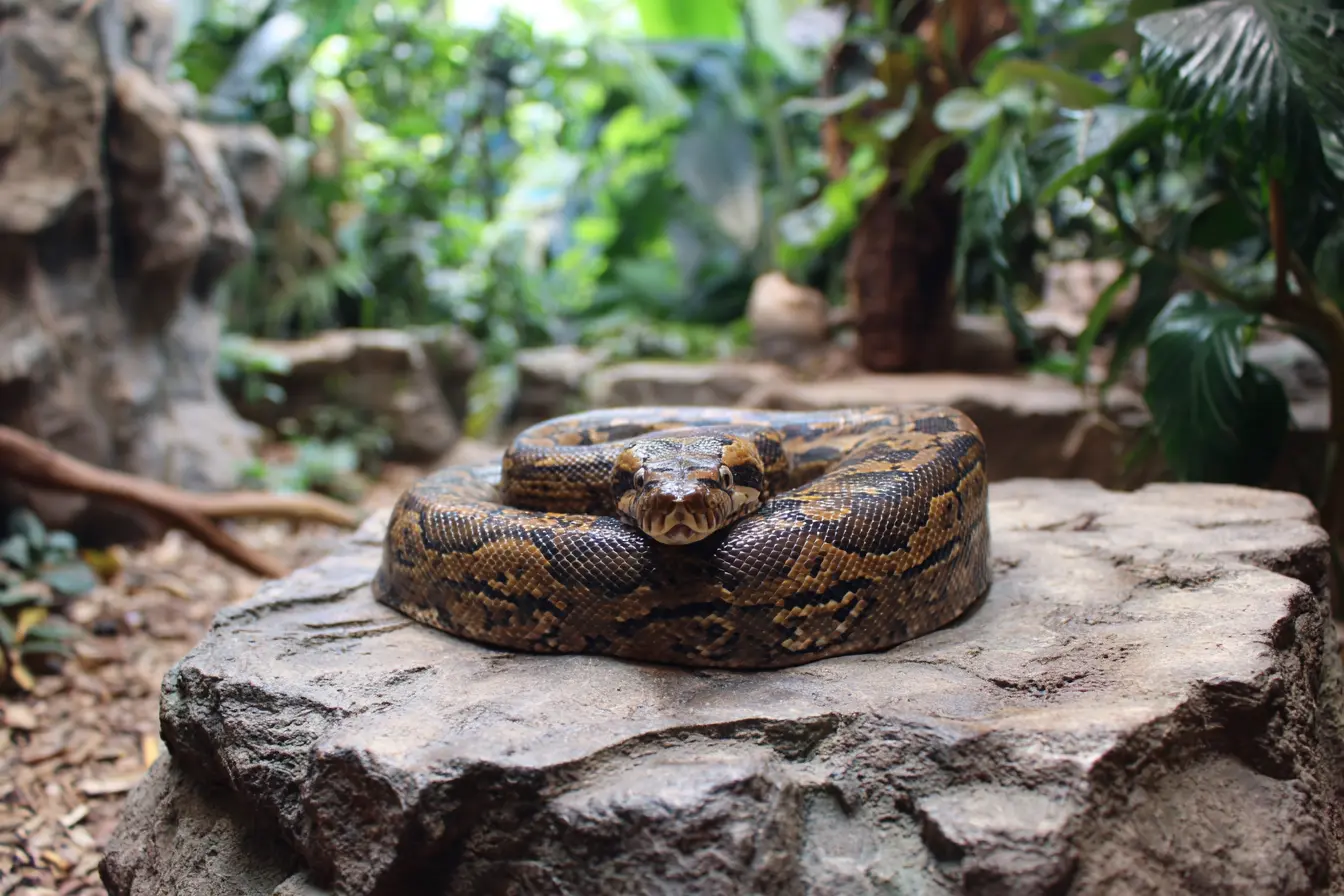
The Reticulated Python (Malayopython reticulatus) is a true giant of the reptile world. Renowned as the longest snake species on Earth, this intelligent, powerful constrictor commands respect through both its immense size and striking beauty. With its intricate net-like patterning and alert, curious nature, the Reticulated Python is as captivating as it is demanding.
Native to Southeast Asia, this species is not a beginner snake. Its size, strength, and intelligence require confident, experienced keepers who are prepared for serious long-term commitment. When kept responsibly, however, the Reticulated Python is one of the most rewarding and impressive reptiles in captivity.
Origins and Natural Habitat
Reticulated Pythons are found across a vast range in Southeast Asia, including Indonesia, Malaysia, Thailand, the Philippines, and surrounding islands. They inhabit rainforests, wetlands, grasslands, agricultural areas, and even the outskirts of human settlements.
Strongly semi-arboreal when young and increasingly terrestrial as adults, Reticulated Pythons are excellent climbers and swimmers. They are often associated with water and are frequently found near rivers, swamps, and flooded forests. Their adaptability is one reason for their success across such a broad range.
Appearance and Temperament
Physical Traits
Size: Commonly 4–6 metres; exceptional individuals may exceed this
Build: Long, muscular, and powerful, with extreme constricting strength
Pattern: Complex geometric “reticulated” pattern in gold, black, silver, and brown
Head: Large and angular with prominent heat-sensing pits
Tail: Long and strong, aiding in climbing and swimming
Behaviour and Temperament
Reticulated Pythons are highly intelligent and alert snakes. Captive-bred individuals, especially selectively bred localities and morphs, are often calm and tractable with regular, confident handling.
However, they are strongly food-oriented and can be reactive if poorly managed. Juveniles may be defensive, but consistent, respectful interaction usually produces confident adults. Due to their size and power, they should always be treated with caution.
Housing Requirements
Housing a Reticulated Python is a major undertaking. Enclosures must be extremely large, secure, and structurally reinforced.
Enclosure Size
Juveniles: Can be raised in progressively sized enclosures
Adult minimum: 300–360 cm x 150 cm x 150 cm
Larger individuals may require custom rooms or dedicated snake enclosures
Enclosures must allow the snake to fully stretch out, thermoregulate, and move freely.
Heating and Temperature Gradient
Warm side: 31–33°C
Ambient temperature: 26–29°C
Cool side: 24–25°C
Night-time: Drop to 22–24°C
Heat is best provided using radiant heat panels or multiple guarded heat sources to maintain even temperatures.
Lighting
UVB is not strictly required, but low-level UVB (2–5%) is increasingly recommended to support circadian rhythms and overall health. Provide a consistent 12-hour day/night cycle.
Humidity and Water
Maintain humidity between 60–75%.
Provide a very large, heavy water container suitable for soaking
Mist lightly as needed, especially during shedding
Ensure excellent ventilation to prevent respiratory issues
Access to water is particularly important, as Reticulated Pythons frequently soak.
Substrate and Furnishings
Substrate: Cypress mulch, orchid bark, or soil-based mixes
Hides: At least two extremely sturdy hides
Decor: Reinforced branches, platforms, and ground cover
Security: Locks are essential
All furnishings must support the snake’s weight without shifting or collapsing.
Diet and Feeding
Reticulated Pythons are carnivorous constrictors with powerful feeding responses.
Feeding Schedule
Juveniles: Every 7–10 days
Subadults: Every 10–14 days
Adults: Every 3–4 weeks
Food Items
Rats (juveniles and subadults)
Rabbits or large poultry for adults (where legal and ethically sourced)
Overfeeding is a common mistake and leads to obesity and reduced lifespan.
Feeding Notes
Due to their size and feeding response, many keepers use hooks and feeding tools. Never handle for at least 72 hours after feeding.
Handling and Safety
Handling a Reticulated Python must always be approached with planning and respect.
Key safety practices include:
Never handle large individuals alone
Support the body fully
Avoid handling during feeding mode or shedding
Be aware of the snake’s head position at all times
Large Reticulated Pythons require experienced handling teams, not casual interaction.
Common Health Concerns
Respiratory Infections
Caused by low temperatures or poor ventilation.
Burns
Heat sources must be fully guarded.
Obesity
A frequent issue due to excessive feeding.
Stress
Often linked to inadequate enclosure size or lack of security.
Lifespan and Breeding
With excellent care, Reticulated Pythons can live 20–30 years in captivity.
They are egg-layers, with females producing large clutches of 20–80 eggs. Females famously coil around their eggs and shiver to generate heat, a rare behaviour among snakes. Breeding should only be attempted by highly experienced keepers with suitable facilities.
Observation and Enrichment
Despite their size, Reticulated Pythons benefit from enrichment.
Ideas include:
Periodic enclosure rearrangement
Multiple temperature zones
Climbing platforms and water access
Seasonal cycling
Their intelligence, awareness, and movement patterns make them endlessly fascinating to observe.
Conclusion
The Reticulated Python is the ultimate statement species: immense, intelligent, and breathtakingly beautiful. It represents the pinnacle of large-snake keeping and demands responsibility, experience, and respect in equal measure.
For those fully prepared to meet its needs, the Reticulated Python offers an unparalleled reptile-keeping experience, a living giant that commands awe and admiration like no other snake on Earth.
Quick questions
- What should I know about reticulated python care guide?
- The Reticulated Python is the world’s longest snake and needs expert, long-term care. Native to Southeast Asia, it is a strong, clever constrictor that can grow 4 to 6 metres long. Vet Verified can help you compare UK veterinary practices by location, species, services and opening hours before you call.
- When should I contact a vet about reticulated python care guide?
- Contact a veterinary practice if your pet seems unwell, symptoms are getting worse, you are unsure what to do, or the situation may be urgent. Vet Verified helps you compare practice details, but a vet should advise on your pet's current care.
- Can Vet Verified help me find exotic vets?
- Yes. Use Vet Verified to compare exotic vets across the UK, then check practice profiles and call directly to confirm current availability.
Find a vet
Find a veterinary practice
Compare UK veterinary practices related to this topic. Call the practice to confirm its current services and availability.
Search by species
- Exotic vets Find UK veterinary practices that list care for exotic pets. Compare opening hours, services, facilities and verified profiles, then contact a practice directly.
- Bird vets Find UK veterinary practices that list care for birds. Compare opening hours, services, facilities and verified profiles, then contact a practice directly.