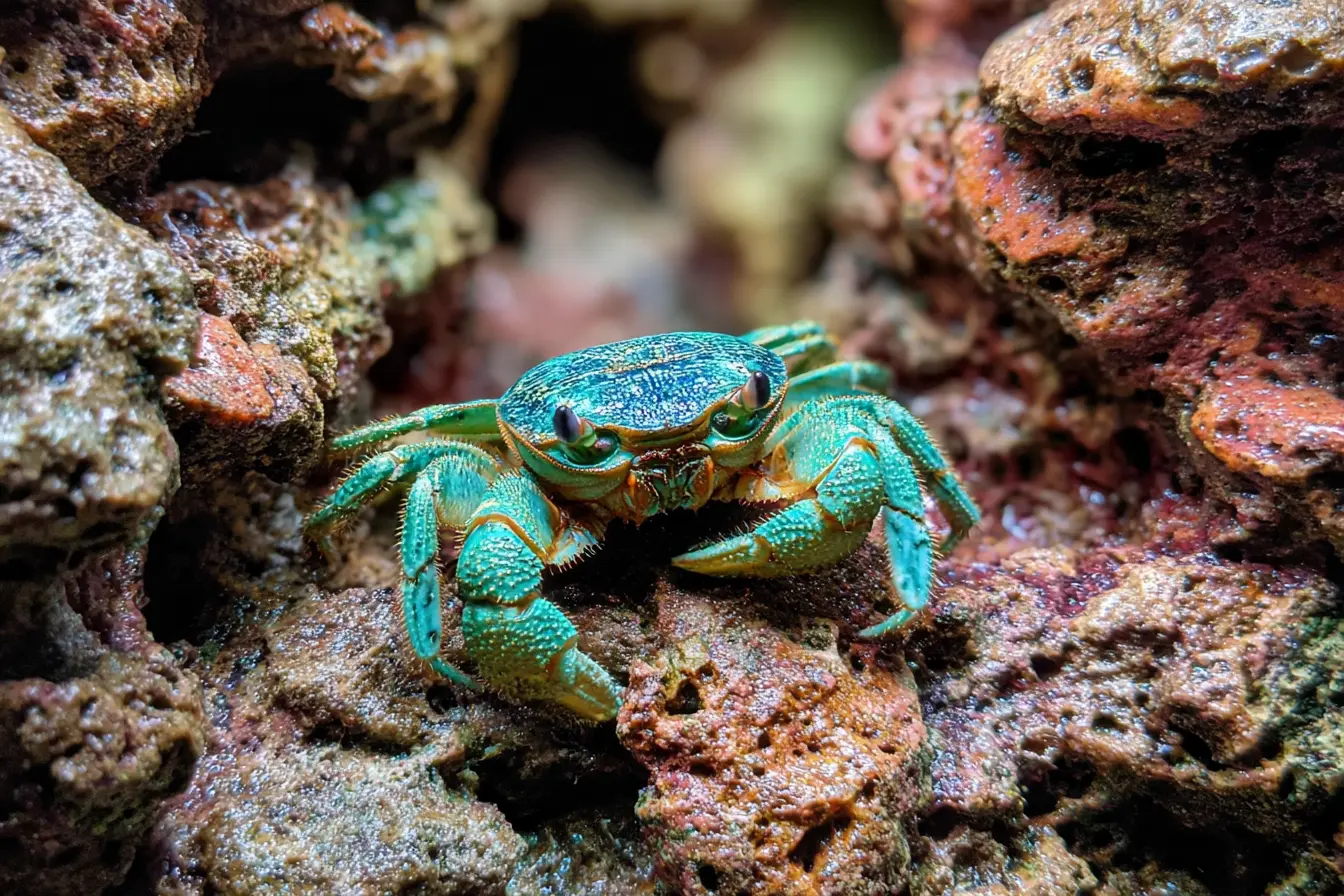
Emerald Crabs (Mithraculus sculptus), also known as Emerald Green Crabs or Green Mithrax Crabs, are popular marine invertebrates prized for their vibrant green colouration and appetite for nuisance algae. Native to the rocky reefs and coral rubble zones of the Caribbean, these crabs are widely kept in reef aquaria as part of a clean-up crew. When housed correctly, Emerald Crabs are hardy, useful, and fascinating additions to a saltwater tank.
What Are Emerald Crabs?
Emerald Crabs are fully marine crabs belonging to the spider crab family. They are best known for their flattened bodies, spoon-shaped claws, and their tendency to graze on algae growing on live rock.
They are:
Small to medium-sized: Adults reach around 5–6 cm across the carapace
Fully marine: Require stable saltwater conditions
Mostly reef-safe: With caution
Nocturnal: Most active after lights out
While generally peaceful, their behaviour can change as they mature.
Enclosure Requirements
Aquarium Size
A single Emerald Crab can be kept in a tank as small as 80 litres, though larger systems are strongly preferred. Bigger tanks provide more natural grazing opportunities and reduce the risk of aggression or problematic behaviour.
Marine Aquarium Setup
Emerald Crabs are fully aquatic and thrive in established marine aquaria.
Ideal setup includes:
Live rock with plenty of surface algae
Stable, mature reef or fish-only-with-live-rock (FOWLR) system
Secure lid or covered overflows, as crabs can climb
They do not require any land area.
Substrate
Emerald Crabs are not fussy about substrate, but reef-safe options are best:
Aragonite sand
Fine coral sand
Bare-bottom systems are also acceptable
Substrate choice is less important than rockwork and grazing surfaces.
Water Conditions
Stable marine parameters are essential for long-term health.
Salinity: 1.024–1.026 specific gravity
Temperature: 24–26°C
pH: 8.0–8.4
Alkalinity: 8–12 dKH
Ammonia/Nitrite: 0 ppm
Nitrate: <10 ppm
Regular water changes (10–20% every 1–2 weeks) help maintain stability.
Filtration and Flow
Emerald Crabs prefer clean, oxygen-rich water.
Protein skimmer recommended
Good biological filtration via live rock
Moderate to strong water flow is tolerated well
Ensure powerhead intakes are guarded to prevent injury.
Lighting
Emerald Crabs have no specific lighting requirements. Standard reef lighting is sufficient and supports the growth of algae they feed on. They are mostly active during low-light periods.
Decor and Hiding Spots
Plenty of hiding spaces are essential, especially during moulting.
Provide:
Live rock caves and crevices
Overhangs and shaded areas
Complex rock structures with multiple escape routes
A well-scaped reef reduces stress and promotes natural behaviour.
Diet and Feeding
Emerald Crabs are omnivores, though algae forms a significant part of their natural diet.
Natural Diet:
Bubble algae (Valonia)
Film algae
Hair algae (to a lesser extent)
Supplemental Foods:
Dried seaweed (nori)
Algae wafers
Sinking marine pellets
Small pieces of prawn, mussel, or fish (occasionally)
If algae is scarce, supplemental feeding is essential to prevent the crab from targeting corals or tank mates.
Feed 2–3 times per week, preferably after lights out.
Behaviour and Reef Safety
Emerald Crabs are generally considered reef-safe with caution.
Typical behaviour:
Peaceful scavenging when well-fed
Territorial towards other crabs
Opportunistic feeding if hungry
Potential issues:
May nip at soft corals or LPS if underfed
Can prey on small snails or weakened fish
Larger individuals are more likely to cause trouble
Keeping only one Emerald Crab per tank significantly reduces risks.
Tank Mates
Emerald Crabs are compatible with most peaceful marine species.
Suitable tank mates:
Reef fish
Snails and hermit crabs (with caution)
Cleaner shrimp (in larger tanks)
Avoid housing with aggressive crabs, triggers, puffers, or large wrasses that may attack or eat them.
Moulting
Emerald Crabs moult periodically as they grow.
During moulting:
Crabs hide for several days
They are soft and vulnerable
They may appear “missing” during this time
Support healthy moulting with:
Stable parameters
Adequate iodine and trace elements
Plenty of hiding places
Do not remove the shed exoskeleton immediately, as the crab may consume it for minerals.
Breeding
Breeding Emerald Crabs in home aquaria is uncommon.
Females carry eggs under the abdomen
Larvae are planktonic and require specialised rearing
Survival rates in captivity are very low
Most Emerald Crabs available in the trade are wild-caught.
Common Health Issues
Emerald Crabs are hardy but sensitive to instability.
Watch for:
Lethargy
Loss of limbs
Failed moults
Aggression linked to hunger
Most issues can be traced back to poor water quality or inadequate feeding.
Lifespan and General Care
Lifespan: 3–5 years in captivity
Activity: Mostly nocturnal
Maintenance: Stable parameters, regular feeding, routine water changes
They are well suited to both beginner and experienced marine keepers when added thoughtfully.
Conclusion
Emerald Crabs are attractive, useful, and engaging members of a marine clean-up crew. Their ability to control certain types of nuisance algae makes them especially appealing in reef aquaria, while their bold colouration and quirky movements add visual interest.
Although generally reef-safe, Emerald Crabs should be kept responsibly, well-fed, and in appropriately sized systems. When their needs are met, they are rewarding invertebrates that can play a valuable role in a healthy, balanced marine aquarium.
Quick questions
- What should I know about emerald crab?
- Emerald Crabs are small, green marine crabs from the Caribbean that can help control some nuisance algae in reef tanks. Vet Verified can help you compare UK veterinary practices by location, species, services and opening hours before you call.
- When should I contact a vet about emerald crab?
- Contact a veterinary practice if your pet seems unwell, symptoms are getting worse, you are unsure what to do, or the situation may be urgent. Vet Verified helps you compare practice details, but a vet should advise on your pet's current care.
- Can Vet Verified help me find exotic vets?
- Yes. Use Vet Verified to compare exotic vets across the UK, then check practice profiles and call directly to confirm current availability.
Find a vet
Find a veterinary practice
Compare UK veterinary practices related to this topic. Call the practice to confirm its current services and availability.