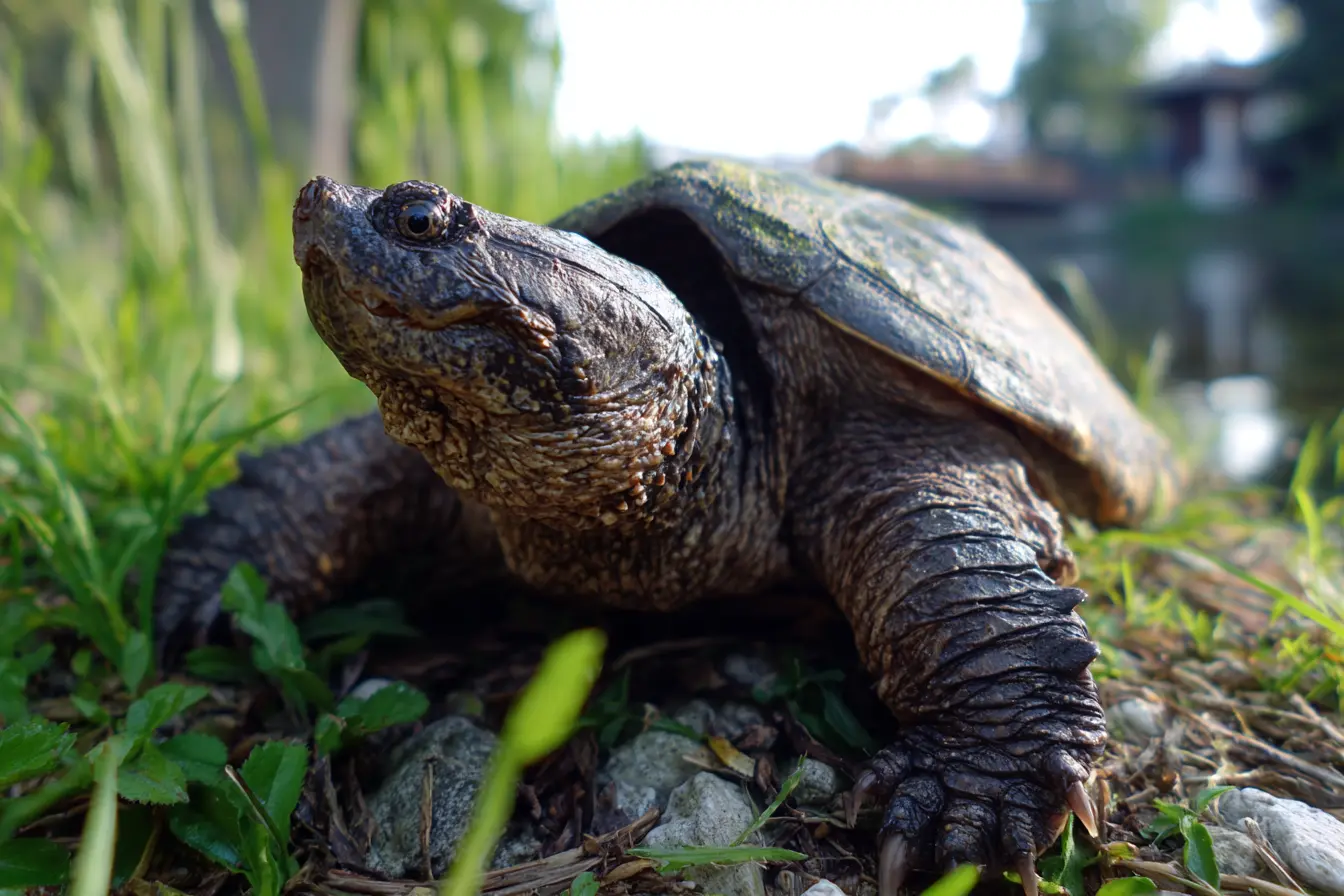
The Common Snapping Turtle (Chelydra serpentina) is one of the most formidable and misunderstood freshwater reptiles in the world. With its powerful jaws, prehistoric appearance, and uncompromising attitude, this species is the very definition of a living relic. Built for ambush and endurance rather than speed or grace, the snapping turtle has remained largely unchanged for millions of years.
Native to North America, the Common Snapping Turtle is not a conventional pet. Its size, strength, defensive nature, and long lifespan mean it is only suitable for highly experienced keepers with significant space and resources. When kept responsibly, however, it is a fascinating and deeply impressive animal.
Origins and Natural Habitat
The Common Snapping Turtle has one of the widest distributions of any North American turtle, ranging from southern Canada through the eastern and central United States and into northern Mexico. It inhabits a variety of freshwater environments, including lakes, ponds, rivers, marshes, swamps, and slow-moving waterways.
This species prefers soft, muddy bottoms where it can bury itself with only its eyes and nostrils exposed. Highly adaptable, it tolerates poor water conditions better than many turtles and is even capable of surviving in cold climates by slowing its metabolism and absorbing oxygen through its skin during winter months.
Appearance and Temperament
Physical Traits
Size: 20–35 cm shell length; large individuals may exceed this
Weight: Commonly 10–16 kg, with exceptional specimens much heavier
Shell: Rough, ridged carapace with serrated rear edges
Head: Large and muscular with a powerful hooked beak
Tail: Long, thick, and saw-toothed, often nearly as long as the shell
Colouration: Brown, olive, grey, or black
Behaviour and Temperament
Common Snapping Turtles are best described as defensive rather than aggressive. In water, they are surprisingly calm and will usually flee rather than confront. On land, however, where they feel vulnerable, they can be extremely defensive and will strike rapidly if threatened.
They cannot retract fully into their shell, relying instead on intimidation, strength, and a lightning-fast bite. Handling should be avoided whenever possible.
Housing Requirements
Housing a Common Snapping Turtle requires very large, robust aquatic facilities. Standard aquariums are not suitable for adults.
Enclosure Size
Juveniles: Large aquariums can be used temporarily
Adults: Indoor ponds or outdoor pond setups are strongly recommended
Minimum water volume: 1,500–2,000 litres or more
Outdoor ponds must be escape-proof and protected from predators.
Water Depth and Filtration
Provide deep water for swimming
Extremely powerful filtration is essential due to heavy waste production
Pond-style filtration systems or multiple external canister filters are required.
Heating and Temperature
Water temperature: 18–24°C
Basking area: 26–30°C
Ambient air temperature: 22–26°C
Unlike many turtles, snapping turtles bask infrequently, but a basking area should still be available.
Lighting and UVB
UVB lighting (5–10%) is strongly recommended for captive animals, even though wild individuals bask rarely. Provide a clear day/night cycle.
Substrate and Furnishings
Substrate: Sand or fine gravel
Decor: Large driftwood, rocks, and submerged structures
Hides: Deep areas and cover for ambush behaviour
All furnishings must be extremely secure to withstand the turtle’s strength.
Diet and Feeding
Common Snapping Turtles are opportunistic omnivores with a strong carnivorous bias.
Feeding Schedule
Juveniles: Daily
Adults: 2–3 times per week
Food Items
Fish (whole, appropriately sized)
Crayfish and aquatic invertebrates
Earthworms
Snails and mussels
Aquatic plants
High-quality carnivorous turtle pellets
Avoid feeding large amounts of fatty meats or processed foods.
Feeding Notes
Feeding should be done with tongs or by placing food directly into the water. Never hand-feed.
Handling and Safety
Handling a Common Snapping Turtle is dangerous and should be avoided except when absolutely necessary.
If handling is unavoidable:
Use thick gloves
Support the rear of the shell
Keep hands well away from the head
Never lift by the tail
Professional assistance is recommended for large individuals.
Common Health Concerns
Shell Rot
Often linked to poor water quality. Maintain strict filtration and water-change routines.
Injuries
Bites can cause severe injury. Housing must prevent accidental contact.
Metabolic Bone Disease (MBD)
Prevented with proper UVB exposure and balanced diet.
Stress
Inadequate space or excessive disturbance leads to chronic stress.
Lifespan and Breeding
Common Snapping Turtles are exceptionally long-lived, often reaching 40–50 years, with some individuals reported to live much longer.
Breeding occurs naturally in large outdoor setups. Females lay clutches of 20–50 eggs in sandy or soft soil. Incubation lasts 55–90 days, depending on temperature.
Observation and Enrichment
Though not interactive, snapping turtles benefit from environmental complexity.
Enrichment ideas include:
Varied substrates
Live prey for natural hunting behaviour
Seasonal temperature changes
Flowing water sections
Their ambush tactics and slow, deliberate movements make them compelling to observe.
Legal and Ethical Considerations
In many regions, keeping Common Snapping Turtles is restricted or regulated. Always check local wildlife and animal welfare laws before acquiring one. Wild-caught specimens should never be taken from the environment.
Conclusion
The Common Snapping Turtle is a living tank, ancient, powerful, and unapologetically wild. It is not a pet for casual keepers, nor is it suited to indoor aquariums or frequent interaction.
For experienced keepers with the space, resources, and respect required, the Snapping Turtle offers a rare opportunity to observe one of nature’s most enduring predators up close. When kept responsibly, it stands as a powerful reminder of reptilian evolution and raw survival.
Quick questions
- What should I know about common snapping turtle care?
- The Common Snapping Turtle is a large, powerful freshwater reptile from North America. It needs a huge, secure pond, strong water filters, careful feeding and very little handling. Vet Verified can help you compare UK veterinary practices by location, species, services and opening hours before you call.
- When should I contact a vet about common snapping turtle care?
- Contact a veterinary practice if your pet seems unwell, symptoms are getting worse, you are unsure what to do, or the situation may be urgent. Vet Verified helps you compare practice details, but a vet should advise on your pet's current care.
- Can Vet Verified help me find exotic vets?
- Yes. Use Vet Verified to compare exotic vets across the UK, then check practice profiles and call directly to confirm current availability.
Find a vet
Find a veterinary practice
Compare UK veterinary practices related to this topic. Call the practice to confirm its current services and availability.