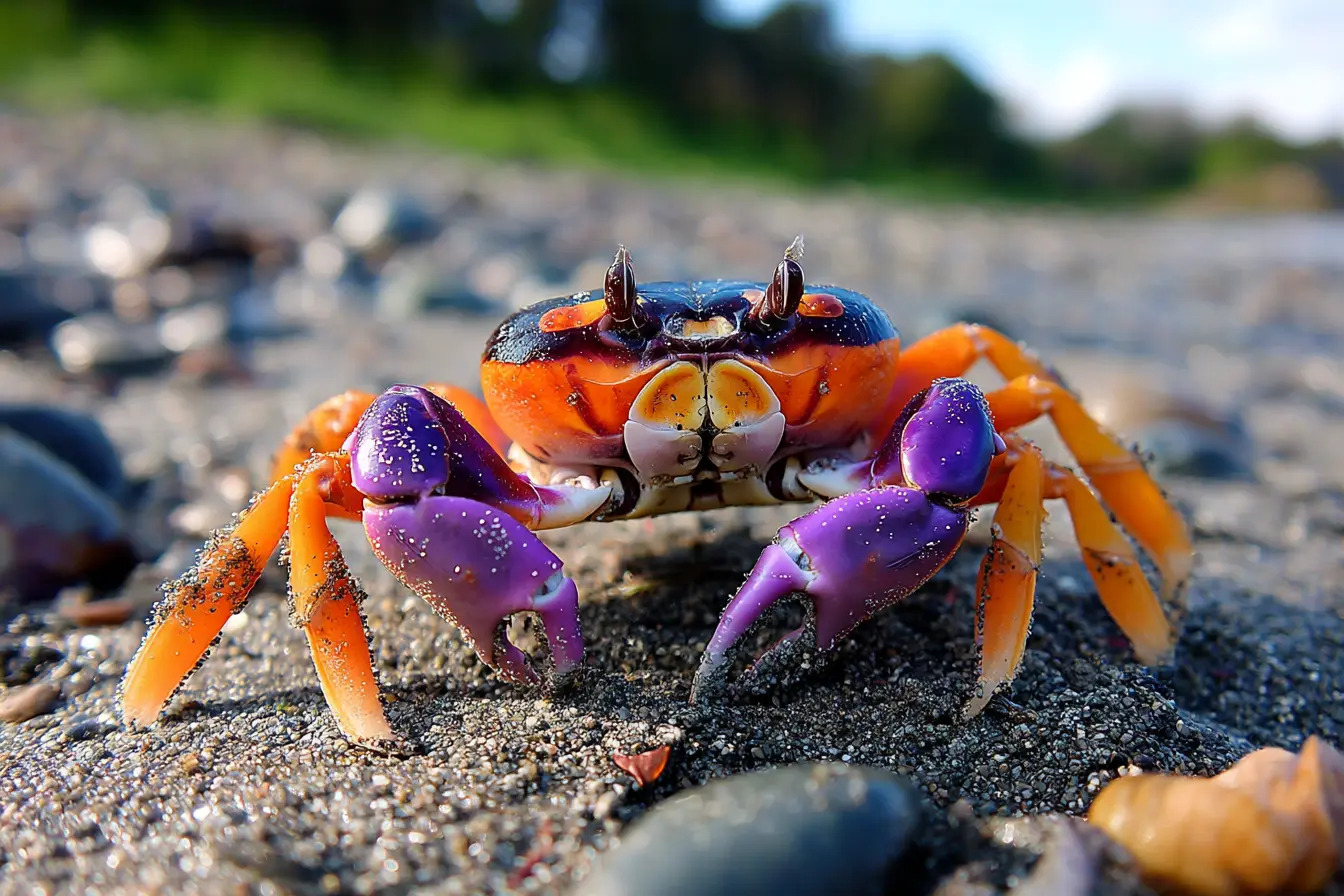
Halloween Moon Crabs (Gecarcinus quadratus), also known as Halloween Crabs or Harlequin Land Crabs, are striking semi-terrestrial crustaceans admired for their vivid colouration and bold personalities. With their deep purple bodies, bright orange legs, and pale facial markings, they are one of the most visually impressive land crabs available in the hobby.
Native to coastal regions of Central America, these crabs inhabit tropical forests near shorelines, where they burrow in moist soil and periodically access saltwater. When provided with the correct setup, they can be hardy and fascinating pets, but they require more specialised care than many beginners expect.
What Are Halloween Moon Crabs?
Halloween Moon Crabs are terrestrial crabs that rely on both land and water environments to thrive. Unlike fully aquatic crabs, they spend most of their time on land but require access to both freshwater and saltwater.
They are:
Medium-sized: Typically 5–10 cm across the carapace
Semi-terrestrial: Require both land and water areas
Nocturnal: Most active at night
Territorial: Can be aggressive towards others
They are intelligent, curious, and often display strong individual personalities.
Enclosure Requirements
Tank Size
Halloween Moon Crabs need significant floor space.
Single crab: Minimum 60 x 45 cm enclosure
Multiple crabs: Larger enclosures strongly recommended
Overcrowding often leads to aggression, so space is critical.
Enclosure Type
A secure, well-ventilated vivarium is essential.
Suitable setups include:
Glass terrariums with front-opening doors
Modified aquariums with secure lids
They are strong climbers and escape artists, so a tight-fitting lid is essential.
Land vs Water Ratio
These crabs are primarily terrestrial.
Land area: ~70–80%
Water area: ~20–30%
They must have access to:
Freshwater
Saltwater (marine salt mix, not table salt)
Water should be shallow with easy access in and out.
Substrate
Substrate depth and composition are critical.
Recommended mix:
Coco fibre
Topsoil (chemical-free)
Sand (for structure)
Depth should be at least 15–20 cm to allow burrowing.
The substrate must be:
Moist (but not waterlogged)
Able to hold burrows without collapsing
Temperature and Humidity
As tropical animals, Halloween Moon Crabs require warm, humid conditions.
Temperature: 24–28°C
Humidity: 70–85%
Maintain humidity by misting and using a moisture-retentive substrate. Good ventilation is essential to prevent stagnant air.
Lighting
No specialised lighting is required.
Ambient room lighting is sufficient
A natural day/night cycle is beneficial
They are nocturnal and prefer dim conditions.
Decor and Enrichment
A complex environment helps reduce stress and encourages natural behaviour.
Include:
Cork bark hides
Driftwood and climbing structures
Leaf litter
Moss for moisture retention
Deep substrate for burrowing is more important than decorative elements.
Diet and Feeding
Halloween Moon Crabs are omnivores with a varied diet.
Staple Foods:
Leaf litter and plant material
Vegetables (e.g. courgette, carrot, sweet potato)
Protein Sources:
Insects (crickets, mealworms)
Cooked unseasoned chicken or fish
Shrimp
Occasional Foods:
Fruit (in moderation)
Calcium Sources:
Cuttlebone
Crushed eggshell
Feed 2–3 times per week and remove uneaten food before it spoils.
Behaviour and Temperament
Halloween Moon Crabs are active and bold but can be aggressive.
Typical behaviour:
Burrowing extensively
Climbing and exploring
Nocturnal foraging
Important considerations:
Territorial, especially in small enclosures
May fight or injure tank mates
Can pinch if handled
Handling should be avoided, as their claws are strong.
Tank Mates
Cohabitation is possible but requires caution.
If keeping multiple crabs:
Provide ample space
Include multiple hides
Monitor for aggression
Avoid housing with:
Small animals (may be eaten)
Slow-moving tank mates
Other species of crab
Many keepers choose to house them individually to prevent conflict.
Moulting
Moulting is a critical and vulnerable time.
During moulting:
The crab will burrow and remain hidden
Do not disturb the substrate
They are extremely vulnerable
After moulting:
The exoskeleton hardens over time
The crab may eat its shed for nutrients
Disturbance during moulting is one of the most common causes of death.
Water Requirements
Access to both water types is essential.
Freshwater: For drinking
Saltwater: For physiological processes
Use:
Dechlorinated freshwater
Proper marine salt mix for saltwater
Replace water regularly to maintain cleanliness.
Common Health Issues
Halloween Moon Crabs are hardy but sensitive to poor conditions.
Watch for:
Lethargy
Failed moults
Aggression due to stress
Dehydration
Most issues stem from incorrect humidity, poor substrate, or lack of proper water access.
Lifespan and General Care
Lifespan: 5–10 years in captivity
Activity: Nocturnal and active
Maintenance: Moderate
They require more care than many beginner invertebrates but are manageable with proper setup.
Pros and Cons
Advantages:
Striking colouration
Interesting behaviour
Long lifespan
Engaging to observe
Considerations:
Require complex setup (land + water)
Can be aggressive
Not handleable
Need deep substrate and high humidity
Conclusion
Halloween Moon Crabs are visually stunning and behaviourally fascinating pets that offer a unique glimpse into semi-terrestrial crustacean life. Their vibrant colours and active nature make them a standout species, but their care requirements are more involved than they first appear.
With the right enclosure, proper humidity, and careful attention to their need for both land and water, these crabs can thrive for many years. For keepers willing to meet their specific needs, Gecarcinus quadratus is a rewarding and captivating addition to an exotic collection.
Quick questions
- What should I know about halloween moon crab?
- Halloween Moon Crab care guide for Gecarcinus quadratus, covering enclosure size, deep moist substrate, temperature, humidity, freshwater and saltwater, feeding, behaviour, moulting and common health issues. Vet Verified can help you compare UK veterinary practices by location, species, services and opening hours before you call.
- When should I contact a vet about halloween moon crab?
- Contact a veterinary practice if your pet seems unwell, symptoms are getting worse, you are unsure what to do, or the situation may be urgent. Vet Verified helps you compare practice details, but a vet should advise on your pet's current care.
- Can Vet Verified help me find exotic vets?
- Yes. Use Vet Verified to compare exotic vets across the UK, then check practice profiles and call directly to confirm current availability.
Find a vet
Find a veterinary practice
Compare UK veterinary practices related to this topic. Call the practice to confirm its current services and availability.
Search by species
- Exotic vets Find UK veterinary practices that list care for exotic pets. Compare opening hours, services, facilities and verified profiles, then contact a practice directly.
- Bird vets Find UK veterinary practices that list care for birds. Compare opening hours, services, facilities and verified profiles, then contact a practice directly.