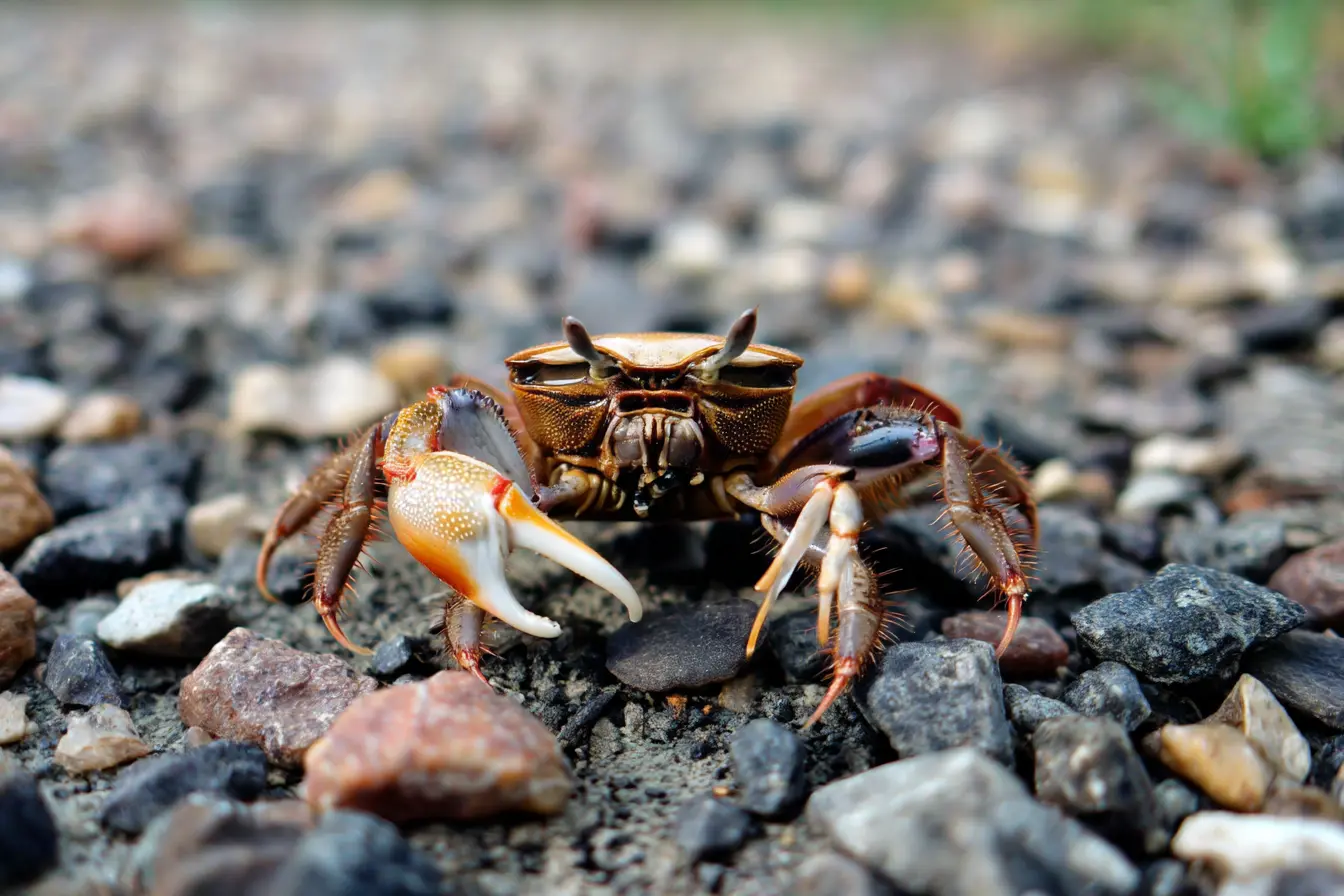
Fiddler Crabs (Uca and Austruca species) are fascinating semi-terrestrial crabs best known for the male’s oversized claw, which they wave to communicate and attract mates. Native to tropical and subtropical coastlines around the world, these charismatic crabs inhabit brackish mudflats and mangrove estuaries. With the correct setup and care, Fiddler Crabs can be active, engaging pets that display a wide range of natural behaviours.
What Are Fiddler Crabs?
Fiddler Crabs are small brackish-water crabs commonly found along tidal shores in Africa, Asia, Australia, and the Americas. They live in burrows near the waterline and spend much of their time on land, emerging to feed and interact.
They are:
Small: Adults typically reach 2.5–4 cm across the carapace
Semi-terrestrial: Require a large land area with shallow water
Social: Best kept in groups with a proper male-to-female ratio
Active: Known for digging, waving, and territorial displays
Enclosure Requirements
Aquarium Size
A group of 3–5 Fiddler Crabs should be housed in a tank of at least 60 litres, though larger enclosures are strongly recommended. More space allows for natural burrowing and reduces aggression.
Paludarium Setup
Fiddler Crabs are not fully aquatic and will drown if kept in deep water.
Recommended layout:
70–80% land made from sand, mud, or soil-based substrates
20–30% shallow brackish water, ideally no deeper than 5–8 cm
Gradual slopes are essential so crabs can easily enter and exit the water.
Substrate
A deep, diggable substrate is critical, as Fiddler Crabs naturally build burrows.
Use:
Fine sand or sand–soil mix (at least 8–10 cm deep)
Slightly damp substrate to hold burrows
Optional clay or silt mixed in for stability
Avoid gravel, as it cannot support burrowing behaviour.
Water Conditions
Despite often being sold as freshwater crabs, Fiddler Crabs require brackish water for long-term survival.
Salinity: 1.005–1.015 specific gravity
Temperature: 22–28°C
pH: 7.5–8.5
Water changes: 20–30% weekly using marine salt mix
A gentle sponge filter is ideal. Strong currents should be avoided.
Humidity and Temperature
Fiddler Crabs rely on humid air to breathe properly through their modified gills.
Humidity: 70–90%
Air temperature: 24–28°C
Use a tight-fitting lid to retain humidity
Mist the enclosure daily, especially the land area
Monitor conditions with a reliable thermometer and hygrometer.
Lighting
Moderate lighting on a 10–12 hour day/night cycle is sufficient. Lighting helps regulate natural behaviours and supports any live plants used in the enclosure.
Decor and Hiding Spots
Include:
Driftwood, rocks, and cork bark
Flat stones for basking
Mangrove roots or branches for climbing
Live or artificial plants tolerant of brackish conditions
Decor should create visual barriers and multiple territories to reduce stress.
Diet and Feeding
Fiddler Crabs are omnivorous detritivores, feeding primarily on organic matter and algae in the wild.
Staple Foods:
Algae wafers
Spirulina-based pellets
Sinking crustacean pellets
Supplemental Foods:
Blanched spinach, lettuce, or courgette
Fish flakes
Occasional protein such as bloodworms or brine shrimp
Feed small amounts daily or every other day. Remove uneaten food to prevent fouling.
Social Behaviour and Grouping
Fiddler Crabs are social but territorial, particularly males.
Group guidelines:
Keep at least 3 individuals
Ideal ratio: 1 male to 2–3 females
Avoid housing multiple males in small enclosures
Males may spar and wave claws, but serious injuries are rare when space and hides are adequate.
Tank mates:
Best kept in a species-only enclosure
Fish and shrimp are likely to be stressed or eaten
Moulting
Fiddler Crabs moult regularly as they grow and will often retreat to burrows during this time.
Support healthy moulting with:
High humidity
Stable salinity
Calcium sources (cuttlebone, crushed eggshell)
Do not remove shed exoskeletons immediately, as crabs often consume them to reclaim nutrients.
Breeding
Breeding Fiddler Crabs in captivity is uncommon but possible with specialised care.
Females carry eggs under the abdomen
Larvae require higher salinity (near-marine conditions)
Larval stages are planktonic and difficult to raise
Most individuals available in the hobby are wild-caught.
Common Health Issues
Problems usually stem from incorrect salinity or lack of land access.
Watch for:
Lethargy or constant submersion
Pale or chalky shells
Failed moults
Excessive aggression
Maintaining proper brackish conditions and humidity is key to preventing illness.
Lifespan and General Care
Lifespan: 2–3 years in captivity
Activity: Mostly diurnal
Maintenance: Weekly water changes, daily misting, and regular observation
They are best suited to keepers willing to maintain a specialised brackish paludarium.
Conclusion
Fiddler Crabs are endlessly entertaining little crustaceans that reward careful keepers with complex social behaviour and constant activity. Their waving displays, burrowing habits, and bold personalities make them a standout choice for a brackish setup.
While not suitable for beginners expecting a simple freshwater aquarium, Fiddler Crabs thrive when their semi-terrestrial lifestyle is respected. With the right environment, they make unique and captivating pets that bring a slice of the mangrove coast into your home.
Quick questions
- What should I know about fiddler crab care?
- Fiddler Crabs care summary. Small semi-terrestrial crabs kept in a brackish paludarium (a tank with both land and slightly salty water). Use at least 60 litres for 3–5 crabs. Vet Verified can help you compare UK veterinary practices by location, species, services and opening hours before you call.
- When should I contact a vet about fiddler crab care?
- Contact a veterinary practice if your pet seems unwell, symptoms are getting worse, you are unsure what to do, or the situation may be urgent. Vet Verified helps you compare practice details, but a vet should advise on your pet's current care.
- Can Vet Verified help me find exotic vets?
- Yes. Use Vet Verified to compare exotic vets across the UK, then check practice profiles and call directly to confirm current availability.
Find a vet
Find a veterinary practice
Compare UK veterinary practices related to this topic. Call the practice to confirm its current services and availability.