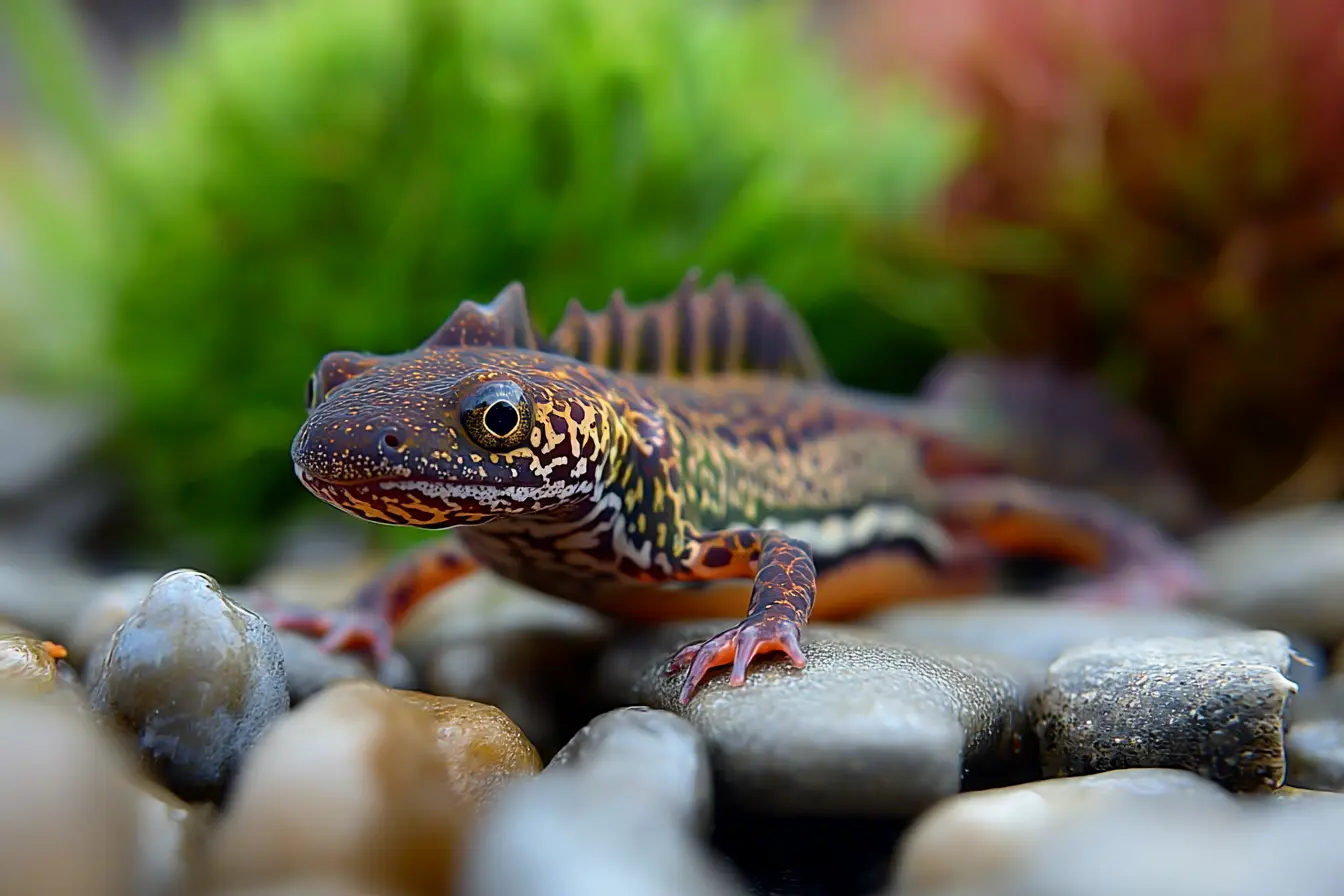
The Northern banded newt (Ommatotriton ophryticus) is a striking and somewhat lesser-known amphibian native to the temperate regions surrounding the Black Sea. With its distinctive banded pattern, elegant crest, and fascinating seasonal behaviour, this species is a rewarding subject for enthusiasts who appreciate European and Middle Eastern newts.
Although not as common in the pet trade as species like the fire-bellied or alpine newt, the Northern banded newt’s beauty and adaptability have made it increasingly popular among experienced amphibian keepers in recent years. This guide explores every aspect of its care, from housing and diet to breeding and health management.
Physical Characteristics
Size
Adult Northern banded newts typically reach 12–18 cm (4.5–7 inches) in length.
Males are generally smaller and more slender than females but develop a large dorsal crest during breeding season.
Lifespan
With appropriate care, Northern banded newts can live for 12–20 years in captivity.
Colouration and Skin Texture
The dorsal surface is typically brown to olive with darker lateral bands, giving the species its common name.
The ventral side is pale yellow to orange, often dotted with dark spots.
During breeding season, males display brilliant blue hues on the tail and sides, accompanied by a high, wavy dorsal crest.
The skin is smooth and moist when aquatic, becoming slightly rougher in the terrestrial phase.
Sexual Dimorphism
Males develop a tall, jagged dorsal crest and brighter colouration during the breeding season.
Females remain more subdued in colour and are broader-bodied, especially when carrying eggs.
Natural Range and Habitat
The Northern banded newt inhabits areas of Turkey, Georgia, Armenia, and surrounding regions. It prefers cool, humid environments near streams, ponds, and forested wetlands.
It is a seasonally aquatic species, spending spring and early summer in the water to breed, then retreating to land for the rest of the year. This dual lifestyle must be reflected in captivity to keep them healthy and comfortable.
Legal and Ethical Considerations
The Northern banded newt is protected in parts of its range and may not be legally exported from certain regions. Always ensure that your animals are captive-bred, not wild-caught. Captive-bred individuals adapt better to terrarium life and reduce pressure on declining wild populations.
Within the UK, there are currently no specific legal restrictions on keeping the species, but it is essential to source them responsibly from licensed breeders.
Housing and Enclosure Setup
Because the Northern banded newt alternates between aquatic and terrestrial phases, its enclosure should accommodate both needs. A paludarium setup works best, providing both a water section and a land area.
Enclosure Size
A 60-litre (15-gallon) tank can comfortably house a pair.
Larger groups will require more space, at least 90 litres (20–25 gallons).
Ensure easy access between water and land, as they regularly move between the two.
Aquatic Section
Water depth: 20–25 cm (8–10 inches).
Substrate: fine gravel or smooth river sand.
Add aquatic plants such as hornwort, elodea, or java moss to provide cover.
Filtration: use a gentle, low-flow filter; strong currents should be avoided.
Perform partial water changes (20–30%) weekly.
Terrestrial Section
Substrate: damp coconut fibre, organic soil, or a soil-moss mix.
Include cork bark, moss, and leaf litter for hiding places.
Keep the terrestrial side moist but well-drained to prevent mould.
Maintain humidity around 70–90%.
Temperature and Lighting
Ideal temperature: 16–20°C (60–68°F).
Avoid temperatures above 24°C (75°F), which can cause stress.
Lighting: a natural light cycle (12 hours light, 12 hours dark) is sufficient.
Low-level UVB (2–5%) can be beneficial for calcium metabolism.
Diet and Feeding
Northern banded newts are carnivorous, feeding on small invertebrates both in water and on land. Their feeding response is active and enthusiastic, though not as aggressive as some frog species.
Suitable Food Items
Bloodworms, blackworms, and daphnia
Earthworms and chopped nightcrawlers
Crickets and small roaches
Frozen or thawed aquatic invertebrates
Occasional waxworms or mealworms (as treats only)
Feeding Schedule
Juveniles: Feed daily on small prey.
Adults: Feed 3–4 times per week.
Remove uneaten food from the water to maintain cleanliness.
Supplementation
Dust land-based insects with calcium powder once or twice a week.
Use a vitamin supplement every two to three weeks to maintain long-term health.
Behaviour and Handling
General Behaviour
Northern banded newts are generally calm and non-aggressive.
They are most active during the evening and early night.
Males display elaborate courtship rituals underwater in spring.
Outside of the breeding season, they prefer to remain hidden or partially buried in damp substrate.
Handling
Handling should be kept to a minimum.
If necessary, use clean, wet hands or powder-free gloves.
Their skin is permeable and easily damaged by oils, soaps, and chemicals.
Health and Common Problems
Common Health Issues
Bacterial infections caused by dirty or stagnant water.
Fungal growth, often appearing as white patches on the skin.
Dehydration if humidity is too low during the terrestrial phase.
Stress-related illness from overheating or poor enclosure design.
Nutritional deficiencies from an unvaried diet.
Preventative Care
Maintain high water quality through regular cleaning and filtration.
Keep temperatures within the cool range.
Provide a variety of food sources.
Ensure a stable environment with gradual seasonal transitions.
Breeding the Northern Banded Newt
Breeding is achievable with patience and by replicating the natural seasonal cycle.
Breeding Triggers
Introduce a cooling period of 8–10 weeks at around 10°C (50°F) during winter to simulate hibernation.
Gradually raise temperature and increase daylight in spring.
Add abundant aquatic plants and shallow water for egg-laying.
Reproduction
Males perform tail-fanning courtship displays underwater to attract females.
Females lay eggs singly, wrapping them in aquatic plant leaves.
Each female may produce up to 200 eggs in a breeding season.
Larval Care
Eggs hatch within 2–3 weeks, depending on temperature.
Larvae are fully aquatic and should be kept in clean, shallow water.
Feed them on infusoria, baby brine shrimp, and finely chopped bloodworms.
Metamorphosis occurs after 6–10 weeks, at which point juveniles should be transferred to a terrestrial setup.
Conservation Notes
The Northern banded newt faces threats from habitat loss, pollution, and introduced predators in parts of its native range. While not currently considered endangered, local populations have declined in some regions. Captive breeding and responsible ownership play an important role in promoting the conservation of this species.
By supporting ethical breeders and maintaining high welfare standards, keepers contribute to the long-term survival of this unique amphibian.
Conclusion
The Northern banded newt is a graceful and hardy amphibian that combines beauty, intelligence, and intriguing behaviour. Its ability to transition between land and water, along with its seasonal colour changes, makes it a captivating species to observe.
For UK keepers, it offers a manageable and rewarding project, provided its cool temperatures and dual habitat needs are met. With patience and proper care, the Northern banded newt can live a long and healthy life in captivity, providing years of enjoyment and a glimpse into the natural wonder of Eurasian amphibians.
Quick questions
- What should I know about northern banded newt?
- The Northern banded newt (Ommatotriton ophryticus) care guide covers housing, diet, breeding and health for keepers. Vet Verified can help you compare UK veterinary practices by location, species, services and opening hours before you call.
- When should I contact a vet about northern banded newt?
- Contact a veterinary practice if your pet seems unwell, symptoms are getting worse, you are unsure what to do, or the situation may be urgent. Vet Verified helps you compare practice details, but a vet should advise on your pet's current care.
- Can Vet Verified help me find exotic vets?
- Yes. Use Vet Verified to compare exotic vets across the UK, then check practice profiles and call directly to confirm current availability.
Find a vet
Find a veterinary practice
Compare UK veterinary practices related to this topic. Call the practice to confirm its current services and availability.