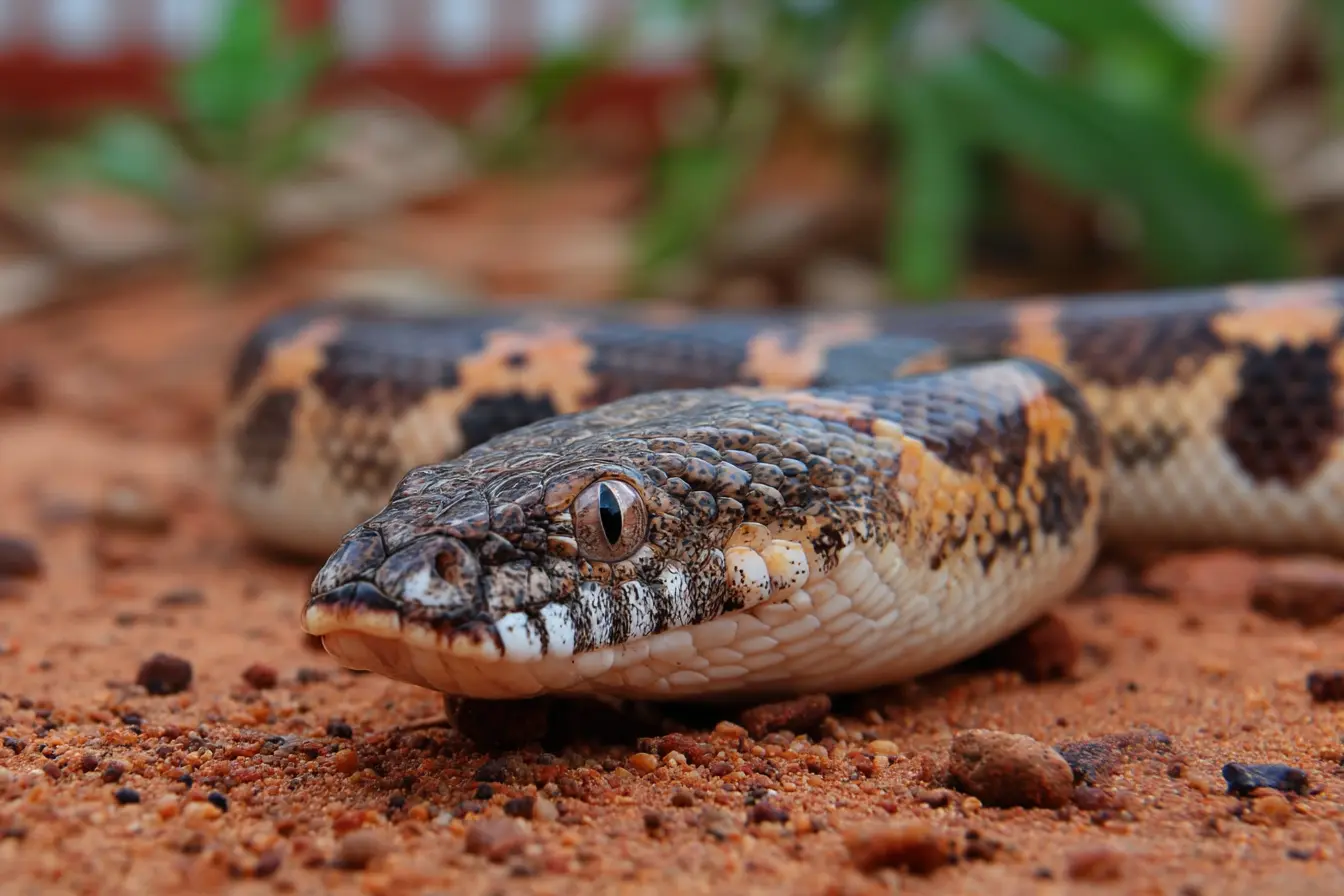
Müller’s Sand Boa, also commonly written as Mueller’s Sand Boa (Eryx muelleri), is a small, elusive, and fascinating snake perfectly adapted to a life beneath the sand.
Rarely seen in the wild and still uncommon in captivity, this compact boa is a true specialist, spending much of its life hidden below the surface and emerging mainly to feed or move between burrows. With its smooth, sand-coloured body and calm disposition, Müller’s Sand Boa is an intriguing species for keepers who appreciate subtle behaviour and naturalistic setups rather than constant activity.
Origins and Natural Habitat
Müller’s Sand Boa is native to parts of West and Central Africa, including regions of Nigeria, Cameroon, and neighbouring countries. It inhabits arid and semi-arid environments such as sandy savannahs, scrubland, and desert margins.
These habitats experience high daytime temperatures, cooler nights, and loose, sandy soils. As a result, Eryx muelleri has evolved a strongly fossorial lifestyle, spending most of its time buried just beneath the surface, often lying in ambush for passing prey.
Appearance and Temperament
Physical Traits
Size: Typically 40–60 cm in length, with females larger and heavier than males
Build: Thick-bodied and muscular for its size, with a short, tapering tail
Head: Small, blunt, and wedge-shaped, ideal for burrowing
Colouration: Pale beige, cream, or light brown, often with darker blotches or mottling
Scales: Smooth and glossy, reducing friction when moving through sand
Behaviour and Temperament
Müller’s Sand Boas are calm, slow-moving, and rarely defensive. They rely on concealment rather than speed or aggression and generally tolerate gentle handling when necessary.
In captivity, they are most active during the evening and at feeding time. Long periods of invisibility are entirely normal for this species, making it best suited to keepers who understand and appreciate fossorial reptiles.
Housing Requirements
This species thrives in a simple, secure arid vivarium designed specifically to support burrowing behaviour.
Enclosure Size
Single adult: Minimum 60 cm x 45 cm x 30 cm
Larger enclosures are beneficial but should prioritise substrate depth over height
Substrate and Burrowing
Deep, loose substrate is essential.
Depth: 10–20 cm minimum
Substrate: Fine sand mixed with soil or clay to prevent collapse
Texture: Loose enough for tunnelling, but stable when compacted slightly
Restricting burrowing behaviour will lead to stress and poor welfare.
Heating and Temperature Gradient
Warm side: 30–32°C
Cool side: 24–26°C
Night-time: 20–22°C
Heat is best provided using an externally mounted heat mat or low-wattage heat source controlled by a thermostat. Basking lights are unnecessary for this fossorial species.
Lighting
UVB lighting is not required. A simple day/night light cycle using ambient room lighting is sufficient. Bright or intense lighting should be avoided.
Humidity and Water
Maintain low to moderate humidity (30–50%).
Provide a shallow water bowl at all times
Lightly mist a small section of substrate occasionally if shedding issues occur
Diet and Feeding
Müller’s Sand Boas are carnivorous ambush predators.
Feeding Schedule
Juveniles: Every 7–10 days
Adults: Every 10–14 days
Food Items
Fuzzy or hopper mice for larger individuals
Feed in the evening where possible. Many individuals will strike from beneath the sand, pulling prey below the surface.
Handling and Interaction
Handling should be minimal.
Support the full body
Avoid unnecessary digging or disturbance
Keep interactions calm and brief
This species does not benefit from frequent handling and should be allowed to remain hidden whenever possible.
Common Health Concerns
Retained Shed
Usually caused by overly dry conditions. Provide a slightly damp area of substrate if needed.
Dehydration
Always ensure access to fresh water, even in arid setups.
Obesity
A common issue due to slow metabolism. Avoid overfeeding.
Stress
Often linked to insufficient substrate depth or excessive disturbance.
Lifespan and Breeding
With proper care, Müller’s Sand Boas can live 10–15 years in captivity.
They are livebearers, producing small litters of fully formed young. Breeding is rare and generally limited to experienced keepers using seasonal cycling.
Conclusion
Müller’s Sand Boa is a quiet, secretive, and highly specialised snake that rewards patience rather than constant interaction. While not a display species, it offers a unique insight into fossorial reptile life.
For keepers who value natural behaviour and subtlety over visibility, Eryx muelleri is a deeply rewarding and distinctive species.
Quick questions
- What should I know about müller’s sand boa?
- Learn how to care for Müller’s Sand Boa, also called Eryx muelleri, a small burrowing snake from West and Central Africa. Vet Verified can help you compare UK veterinary practices by location, species, services and opening hours before you call.
- When should I contact a vet about müller’s sand boa?
- Contact a veterinary practice if your pet seems unwell, symptoms are getting worse, you are unsure what to do, or the situation may be urgent. Vet Verified helps you compare practice details, but a vet should advise on your pet's current care.
- Can Vet Verified help me find exotic vets?
- Yes. Use Vet Verified to compare exotic vets across the UK, then check practice profiles and call directly to confirm current availability.
Find a vet
Find a veterinary practice
Compare UK veterinary practices related to this topic. Call the practice to confirm its current services and availability.