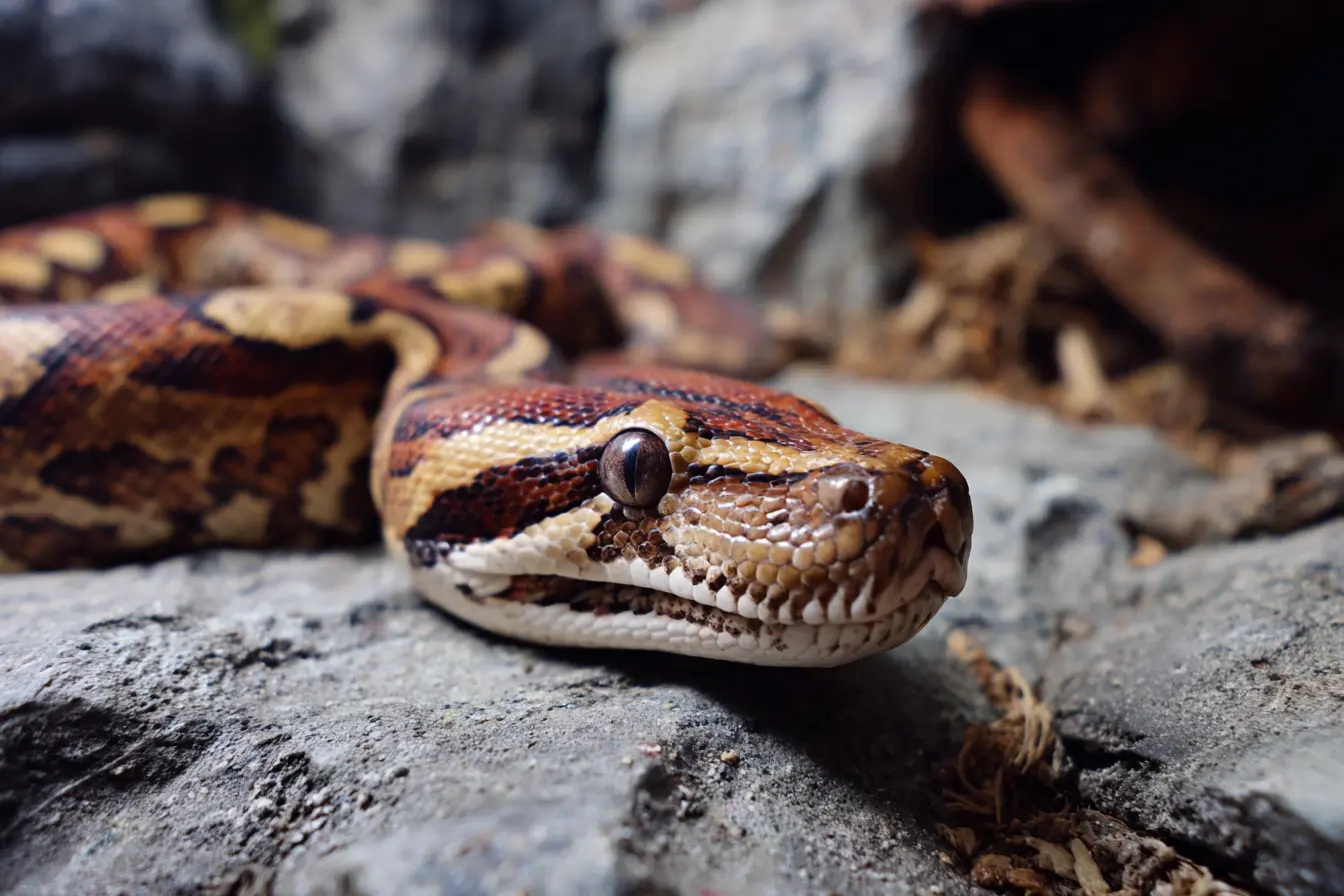
The Red-Tailed Boa (Boa constrictor imperator / Boa constrictor constrictor) is one of the most recognisable and celebrated snakes in the reptile world. Powerful, intelligent, and visually striking, this species has long been a cornerstone of captive snake keeping. With its muscular build, calm presence, and rich red tail markings, the Red-Tailed Boa combines beauty with an impressive sense of scale.
Native to Central and South America, Red-Tailed Boas are adaptable, long-lived, and highly rewarding when kept correctly. While often recommended to confident beginners, their eventual size and strength mean they are best suited to keepers prepared for a long-term commitment.
Origins and Natural Habitat
Red-Tailed Boas are found across a vast range extending from Central America into northern and central South America. They inhabit tropical rainforests, dry forests, savannahs, and forest edges, often near rivers or other water sources.
Highly adaptable, these boas occupy both arboreal and terrestrial niches depending on age and environment. Juveniles are more arboreal, while adults become increasingly ground-dwelling as their size increases. This versatility is reflected in their captive care requirements.
Appearance and Temperament
Physical Traits
Size: Commonly 180–240 cm in length; large females may exceed this
Build: Heavy-bodied and muscular, with immense constricting strength
Colouration: Tan, brown, or grey base with dark saddle markings
Tail: Distinctive red, brick-coloured, or maroon tail saddles
Eyes: Large with vertical pupils, conveying an alert, intelligent expression
Behaviour and Temperament
When captive-bred and properly socialised, Red-Tailed Boas are generally calm, confident, and tolerant of handling. Juveniles can be defensive, but most individuals mellow with age and regular, respectful interaction.
They are primarily nocturnal or crepuscular, spending daylight hours resting in secure hides. Their steady, deliberate movements and awareness of their surroundings make them engaging animals to observe.
Housing Requirements
Red-Tailed Boas require a large, secure vivarium that allows for thermoregulation, privacy, and gradual environmental gradients.
Enclosure Size
Adult male: Minimum 180 cm x 75 cm x 75 cm
Adult female: 240 cm x 120 cm x 120 cm or larger
Enclosures must be extremely robust, with secure doors and fittings capable of supporting a heavy-bodied snake.
Heating and Temperature Gradient
Warm side: 30–32°C
Ambient temperature: 26–28°C
Cool side: 24–25°C
Night-time: Drop to 22–24°C
Heat is best provided using radiant heat panels or ceramic heat emitters to create even, ambient warmth.
Lighting
UVB is not strictly required, but low-level UVB (2–5%) is increasingly recommended to support circadian rhythms and overall wellbeing.
Maintain a clear 12-hour day/night cycle using naturalistic lighting.
Humidity and Water
Maintain humidity between 60–75%.
Mist lightly as needed
Provide a large, sturdy water bowl suitable for soaking
Ensure adequate ventilation to avoid stagnant air
Humidity should be increased slightly during shedding periods.
Substrate and Furnishings
Substrate: Cypress mulch, orchid bark, or soil-based mixes
Hides: At least two large, secure hides
Decor: Heavy branches, cork bark, and ground-level cover
Plants: Artificial or robust live plants for visual security
Branches must be securely anchored to support the snake’s weight.
Diet and Feeding
Red-Tailed Boas are carnivorous constrictors with relatively slow metabolisms.
Feeding Schedule
Juveniles: Every 7–10 days
Adults: Every 14–21 days
Food Items
Appropriately sized rats
Large adults may take rabbits occasionally (where appropriate and ethically sourced)
Prey should be no larger than the widest part of the snake’s body.
Feeding Notes
Avoid overfeeding, as obesity is a common issue. Always allow at least 48 hours after feeding before handling.
Handling and Interaction
Red-Tailed Boas are often tolerant of handling but must be respected due to their size and strength.
Best practices include:
Support the full body at all times
Use slow, confident movements
Avoid handling during shedding or when in feeding mode
Larger individuals should be handled with assistance where necessary.
Common Health Concerns
Respiratory Infections
Often caused by low temperatures or excessive humidity without ventilation.
Obesity
A widespread issue caused by overfeeding and lack of exercise.
Burns
Ensure all heat sources are properly guarded.
Stress
Inadequate enclosure size or lack of hides can lead to chronic stress.
Lifespan and Breeding
With proper care, Red-Tailed Boas commonly live 20–30 years in captivity.
They are livebearers, producing litters of 15–40 neonates. Breeding requires careful seasonal cycling and is best undertaken by experienced keepers.
Observation and Enrichment
Despite their size, Red-Tailed Boas benefit from environmental enrichment.
Ideas include:
Rearranging enclosure furnishings periodically
Providing varied textures and hides
Seasonal lighting and temperature adjustments
Their slow, purposeful movements and alert behaviour make them captivating to observe.
Conclusion
The Red-Tailed Boa is a true icon of the reptile world: powerful, intelligent, and deeply impressive. With its rich colours, calm disposition, and long lifespan, it offers a rewarding experience for dedicated keepers prepared to meet its substantial needs.
While not a casual pet, the Red-Tailed Boa rewards commitment with decades of companionship and a commanding presence few reptiles can rival.
Quick questions
- What should I know about red-tailed boa?
- Red-Tailed Boa care guide covering Boa constrictor imperator and Boa constrictor constrictor. Vet Verified can help you compare UK veterinary practices by location, species, services and opening hours before you call.
- When should I contact a vet about red-tailed boa?
- Contact a veterinary practice if your pet seems unwell, symptoms are getting worse, you are unsure what to do, or the situation may be urgent. Vet Verified helps you compare practice details, but a vet should advise on your pet's current care.
- Can Vet Verified help me find exotic vets?
- Yes. Use Vet Verified to compare exotic vets across the UK, then check practice profiles and call directly to confirm current availability.
Find a vet
Find a veterinary practice
Compare UK veterinary practices related to this topic. Call the practice to confirm its current services and availability.