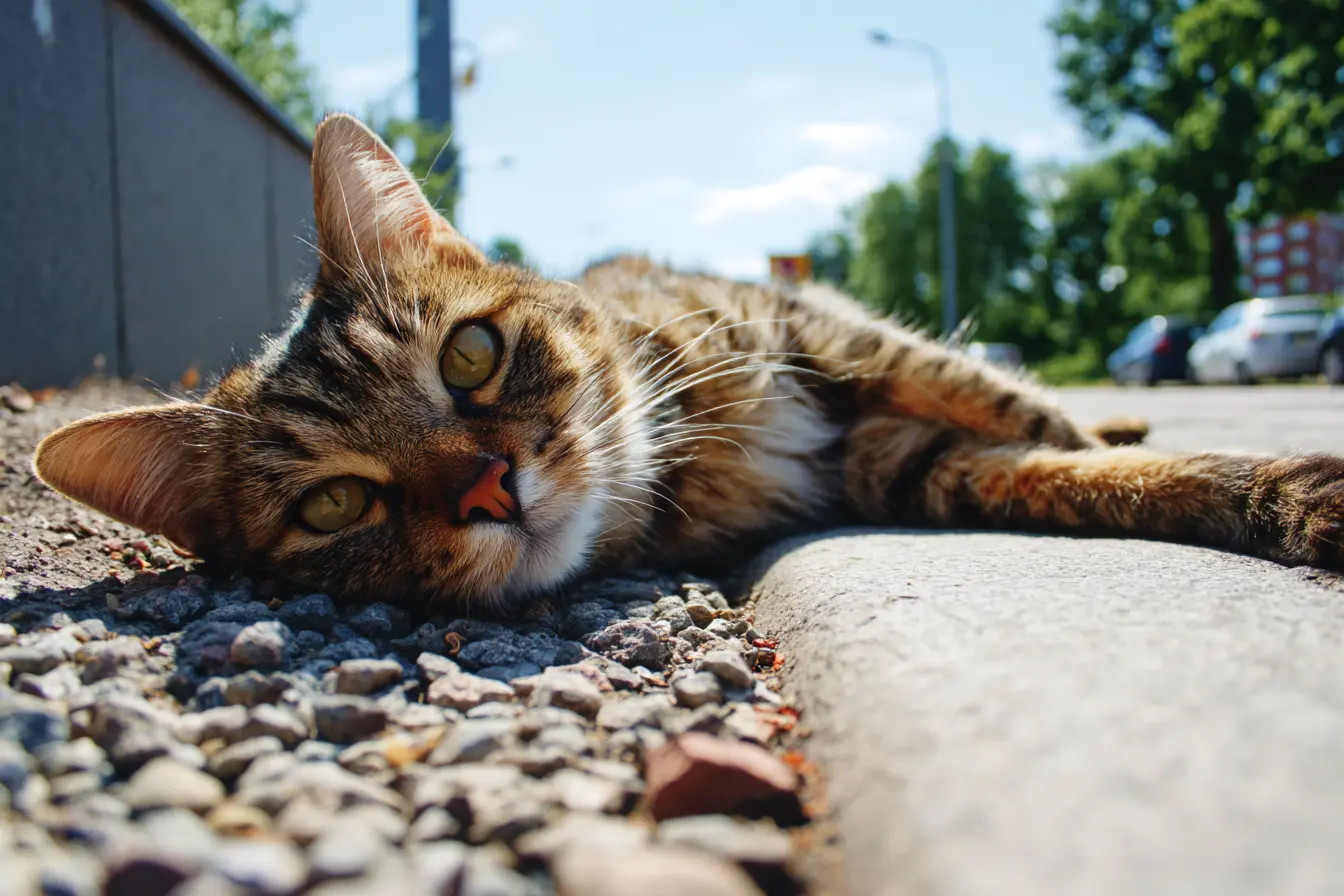
Many people associate heatstroke in vehicles primarily with dogs, but cats are also at serious risk of overheating inside parked cars. Although cats may appear calmer and quieter during travel, they are just as vulnerable to dangerous temperatures and can rapidly develop life-threatening heatstroke if left inside a warm vehicle.
Understanding how quickly cars heat up, how cats respond to heat and why even mild weather can become dangerous is essential for keeping cats safe during travel.
Why Cars Become Dangerous So Quickly
Cars trap heat extremely efficiently.
Sunlight enters through the windows and becomes trapped inside the vehicle, causing temperatures to rise rapidly.
Even when the weather outside feels relatively mild:
The temperature inside a car can climb quickly
Ventilation is limited
Heat becomes concentrated in enclosed areas
Within minutes, the inside of a vehicle can become dangerously hot for a cat.
How Hot Is Too Hot?
There is no completely safe temperature for leaving a cat unattended in a car.
As a general guide:
Around 20°C outside can already create unsafe conditions inside a vehicle
Temperatures above 22–24°C can become dangerous very quickly
Direct sunlight dramatically increases risk
Humidity and poor airflow make overheating even more severe.
Why Cats Are Vulnerable to Heat
Cats are better adapted to warmth than some animals, but they still have limits.
Cats cool themselves by:
Grooming
Seeking cooler surfaces
Limited sweating through paw pads
Panting in extreme heat
However, inside a hot car:
There is little opportunity to escape the heat
Air circulation is poor
Cooling methods quickly become ineffective
Once body temperature rises too high, heatstroke can develop rapidly.
Why Cats May Show Fewer Early Warning Signs
Cats sometimes hide distress more subtly than dogs.
Unlike dogs, cats may not always pant heavily at first, which means owners may underestimate the severity of the situation.
A quiet or still cat inside a hot vehicle may already be dangerously overheated.
What Is Heatstroke?
Heatstroke occurs when a cat’s body temperature rises beyond safe levels and they can no longer regulate heat effectively.
As overheating worsens:
Organs begin to fail
Brain function becomes affected
Circulation becomes unstable
Without urgent treatment, heatstroke can quickly become fatal.
Early Signs of Overheating in Cats
Early symptoms may include:
Restlessness
Rapid breathing
Panting
Drooling
Red gums or tongue
Weakness
At this stage, immediate cooling and veterinary attention are important.
Severe Signs of Heatstroke
As heatstroke progresses, symptoms may become severe.
These can include:
Vomiting
Collapse
Confusion or disorientation
Seizures
Loss of consciousness
Heatstroke is always a veterinary emergency.
Why Opening Windows Is Not Enough
Many people mistakenly believe cracked windows make cars safe for pets.
Unfortunately:
Small openings provide very limited cooling
Heat still builds rapidly inside the vehicle
Airflow is usually insufficient to prevent overheating
Partially open windows do not remove the danger.
Why Carriers Can Make Heat Worse
Cats travelling in carriers may become even more vulnerable if ventilation is poor.
Carriers placed in:
Direct sunlight
Poorly ventilated areas
Crowded vehicles
can heat up very quickly.
Cats trapped inside overheated carriers may have little ability to cool themselves or move away from heat.
Cats Most at Risk
Some cats are more vulnerable to overheating than others.
Higher-risk groups include:
Elderly cats
Kittens
Flat-faced breeds such as Persians
Overweight cats
Cats with heart or breathing conditions
Long-haired breeds
These cats may struggle to regulate body temperature effectively.
Never Leave Your Cat Unattended in a Car
The safest rule is simple:
Never leave your cat alone in a parked vehicle during warm weather.
This includes:
Quick trips into shops
Short errands
Waiting outside appointments
Even a few minutes can become dangerous far faster than many people expect.
Planning Safe Travel During Warm Weather
If you must travel with your cat during warmer conditions:
Use air conditioning where possible
Travel during cooler parts of the day
Keep the car well ventilated
Avoid direct sunlight on the carrier
Monitor your cat closely throughout the journey
Preparation is essential during summer travel.
Recognising When Your Cat Is Too Hot
Cats may become dangerously overheated before symptoms appear obvious.
Warning signs include:
Open-mouth breathing or panting
Lethargy
Drooling
Agitation or distress
Weakness
If you notice any of these signs, act immediately.
What to Do If Your Cat Is Overheating
If you suspect your cat is overheating:
Move them somewhere cool immediately
Offer small amounts of cool water
Use cool, damp towels to help reduce body temperature
Increase airflow with fans or ventilation
Contact your vet urgently
Do not use ice-cold water, as rapid cooling can sometimes worsen shock.
The Legal and Welfare Implications
Leaving a cat in a dangerously hot car may also breach animal welfare laws.
Owners could potentially face:
Investigation by authorities
Fines or prosecution
Intervention from animal welfare organisations
More importantly, it can cause severe suffering or death.
Why Prevention Matters
Heatstroke can develop rapidly and may still prove fatal even with treatment.
Prevention is always safer than treatment.
Simple precautions such as:
Never leaving cats unattended in vehicles
Travelling during cooler hours
Maintaining proper ventilation
can prevent a completely avoidable emergency.
Conclusion
Hot cars pose a serious and often underestimated danger to cats. Vehicles can become dangerously hot within minutes, even during relatively mild weather, and cats trapped inside may quickly develop life-threatening heatstroke.
Because cats often show distress more subtly than dogs, overheating may already be severe before obvious symptoms appear.
The safest approach is simple: never leave your cat unattended in a parked car during warm weather. Careful planning, proper ventilation and constant awareness of temperature conditions are essential for keeping cats safe during travel.
Quick questions
- What should I know about heatstroke in cars?
- Cats can suffer life-threatening heatstroke in hot cars within minutes, even when the weather feels mild. Vet Verified can help you compare UK veterinary practices by location, species, services and opening hours before you call.
- When should I contact a vet about heatstroke in cars?
- Contact a veterinary practice if your pet seems unwell, symptoms are getting worse, you are unsure what to do, or the situation may be urgent. Vet Verified helps you compare practice details, but a vet should advise on your pet's current care.
- Can Vet Verified help me find dog vets?
- Yes. Use Vet Verified to compare dog vets across the UK, then check practice profiles and call directly to confirm current availability.
Find a vet
Find a veterinary practice
Compare UK veterinary practices related to this topic. Call the practice to confirm its current services and availability.
Search by species
- Dog vets Find UK veterinary practices that list care for dogs. Compare opening hours, services, facilities and verified profiles, then contact a practice directly.
- Cat vets Find UK veterinary practices that list care for cats. Compare opening hours, services, facilities and verified profiles, then contact a practice directly.