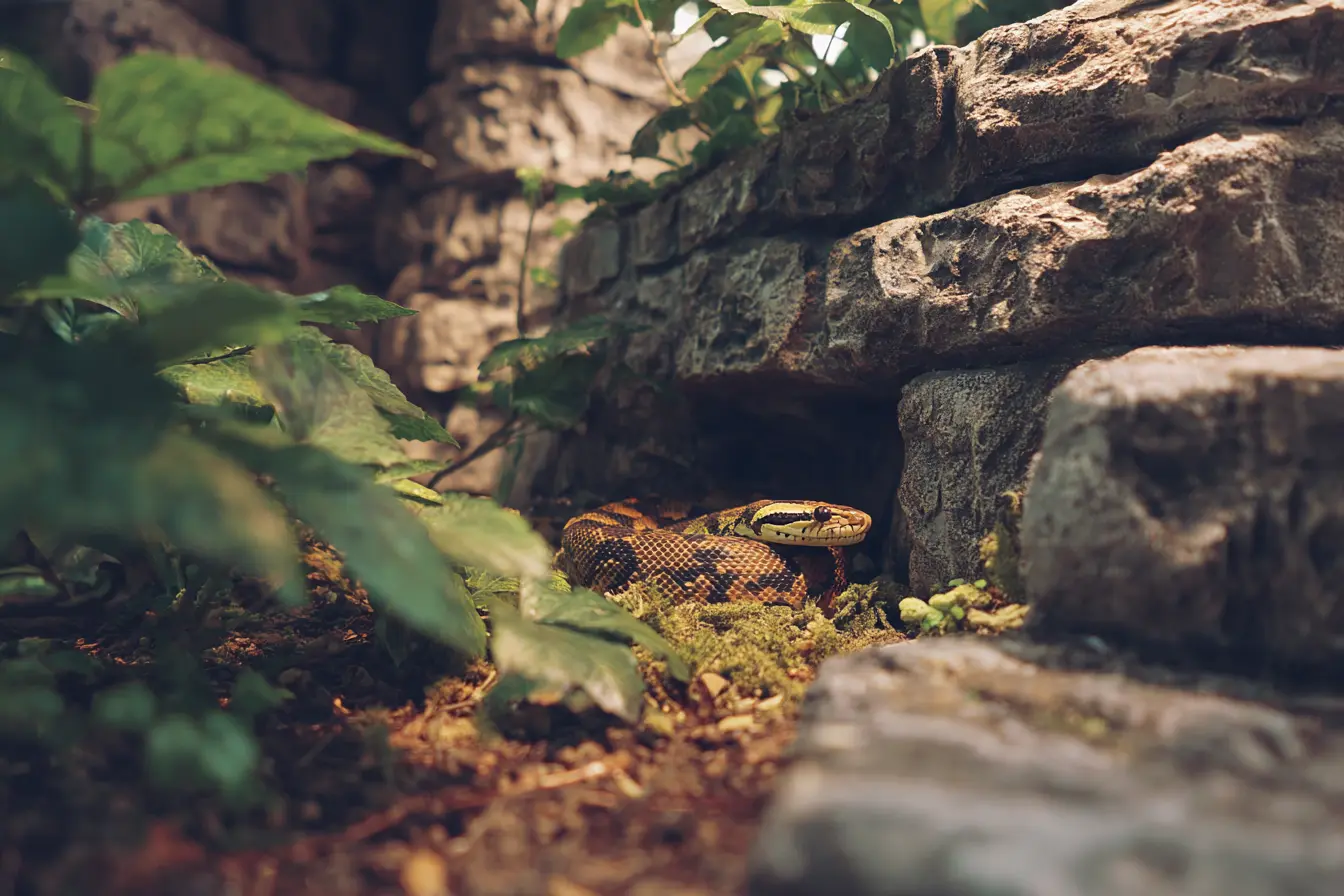
A snake that ignores its usual meal can be worrying, especially if it has always been a reliable eater. Refusing food is a symptom rather than a diagnosis, and it can come from environmental or medical causes, so the job is to find out what's behind it. Before you start troubleshooting, check for the urgent signs: breathing difficulty, severe weakness, seizures or an obviously painful or swollen abdomen need urgent advice, so phone a vet straight away if you see any of them.
When refusing food can be normal
Many snakes go off their food before or during a shed, and they often only start eating again once the shed is finished. It's also best to avoid handling around shedding times, because snakes may behave defensively.
Some snakes slow down in the cooler months too. The RSPCA describes brumation in corn snakes as a natural energy-saving process seen in some individuals during cooler months. Corn snakes may reduce how much they eat during brumation but not lose weight, so monitor your snake carefully. That last part matters, because you shouldn't assume an unwell reptile is simply brumating. If you think your snake is brumating, check its weight and husbandry, and speak to a reptile vet before assuming the loss of appetite is normal.
Check the temperature first
A 2014 veterinary congress paper describes improper enclosure temperature as the most frequent cause of husbandry-related anorexia in captive reptiles, so it's a sensible place to start. If a reptile can't reach its ideal body temperature, it won't feed, and temperatures that are too low or too high can both put a snake off.
Reptiles rely on their surroundings to warm up and cool down, so the vivarium needs a heat source at one end and a cooler end, letting the snake move around to regulate its temperature. For corn snakes, the RSPCA gives a basking zone of 28 to 30°C and a cool end of 20 to 24°C. Other species differ, because the right temperatures depend on the species and on where in the enclosure you measure them, so check a reliable care guide for yours.
Every heat source needs a thermostat, and a heat lamp must be guarded to prevent burns or injuries should the bulb shatter. Thermostats aren't accurate, so the RSPCA advises recording temperatures daily. Place one thermometer at the basking area and another at the cool end, and read them rather than trusting the thermostat setting alone.
Other things worth checking
Lighting comes next. Lights should never stay on for 24 hours a day, and an incorrect day and night cycle with inadequate lighting can lead to a loss of appetite.
Feeling secure matters too. The RSPCA recommends at least two hides for a corn snake, one at either end of the vivarium, so the snake can choose its temperature without compromising on feeling secure. Handling a shy snake too often, or stress from overcrowding, can also cause a loss of appetite. With a new arrival, it's best not to handle the snake unnecessarily for the first week, and the RSPCA also advises waiting 48 hours after feeding before handling a corn snake.
Then look at the food itself. If a snake is already full or the prey is too large, it may appear to be refusing food. For corn snakes, the RSPCA's rule of thumb is to offer prey that is slightly wider than the widest part of the snake's body. If you aren't sure of your snake's species, the wrong type of food may be offered, which is another reason to confirm exactly what you keep. Regular weighing is important, so keep a record of your snake's weight.
When to see a reptile vet
Book a prompt assessment with a reptile-experienced vet if your snake is losing weight or keeps refusing food. The same applies if it has abnormal droppings, retained shed, mouth changes, an injury or unusual inactivity. Correcting the setup doesn't replace a veterinary examination, so don't wait for a fix at home to work if any of these are present.
Breathing difficulty, severe weakness, seizures or an obviously painful or swollen abdomen need urgent advice, so phone a vet straight away rather than waiting to see if your snake eats. If your usual practice is closed, contact an out-of-hours clinic straight away, and say you have a snake so you can check they can assess reptiles. Breathing problems matter partly because an upper or lower respiratory infection can make feeding very stressful for a snake.
Please don't try force-feeding at home. It needs great care to prevent trauma, and it's recommended that a vet performs it.
What to tell the vet
Knowing your snake's species matters for an accurate diagnosis, so be ready to say exactly what you keep. Expect questions about the enclosure, such as temperatures including the gradient, lighting and humidity. You'll probably also be asked about hiding places, substrate, how much traffic there is around the vivarium, and what, where and how often you feed.
A record of weight, eating, droppings and shedding makes a gradual change easier to spot, and it gives the vet a clearer picture than memory alone.
Quick questions
- What should I know about snake not eating?
- A snake refusing food isn't always ill. Vet Verified can help you compare UK veterinary practices by location, species, services and opening hours before you call.
- When should I contact a vet about snake not eating?
- Contact a veterinary practice if your pet seems unwell, symptoms are getting worse, you are unsure what to do, or the situation may be urgent. Vet Verified helps you compare practice details, but a vet should advise on your pet's current care.
- Can Vet Verified help me find exotic vets?
- Yes. Use Vet Verified to compare exotic vets across the UK, then check practice profiles and call directly to confirm current availability.
Find a vet
Find a veterinary practice
Compare UK veterinary practices related to this topic. Call the practice to confirm its current services and availability.
Urgent and out-of-hours
- 24-hour vets Find veterinary practices near you that list one or more days as open 24 hours. Compare opening hours, services and contact details, then call before travelling.
- Emergency vets Find veterinary practices near you that list emergency opening hours. Compare contact details and services, then call immediately if your pet needs urgent care.
- Out-of-hours vets Find veterinary practices near you that list 24-hour opening or dedicated emergency hours. Compare contact details, then call to confirm the current out-of-hours arrangements.