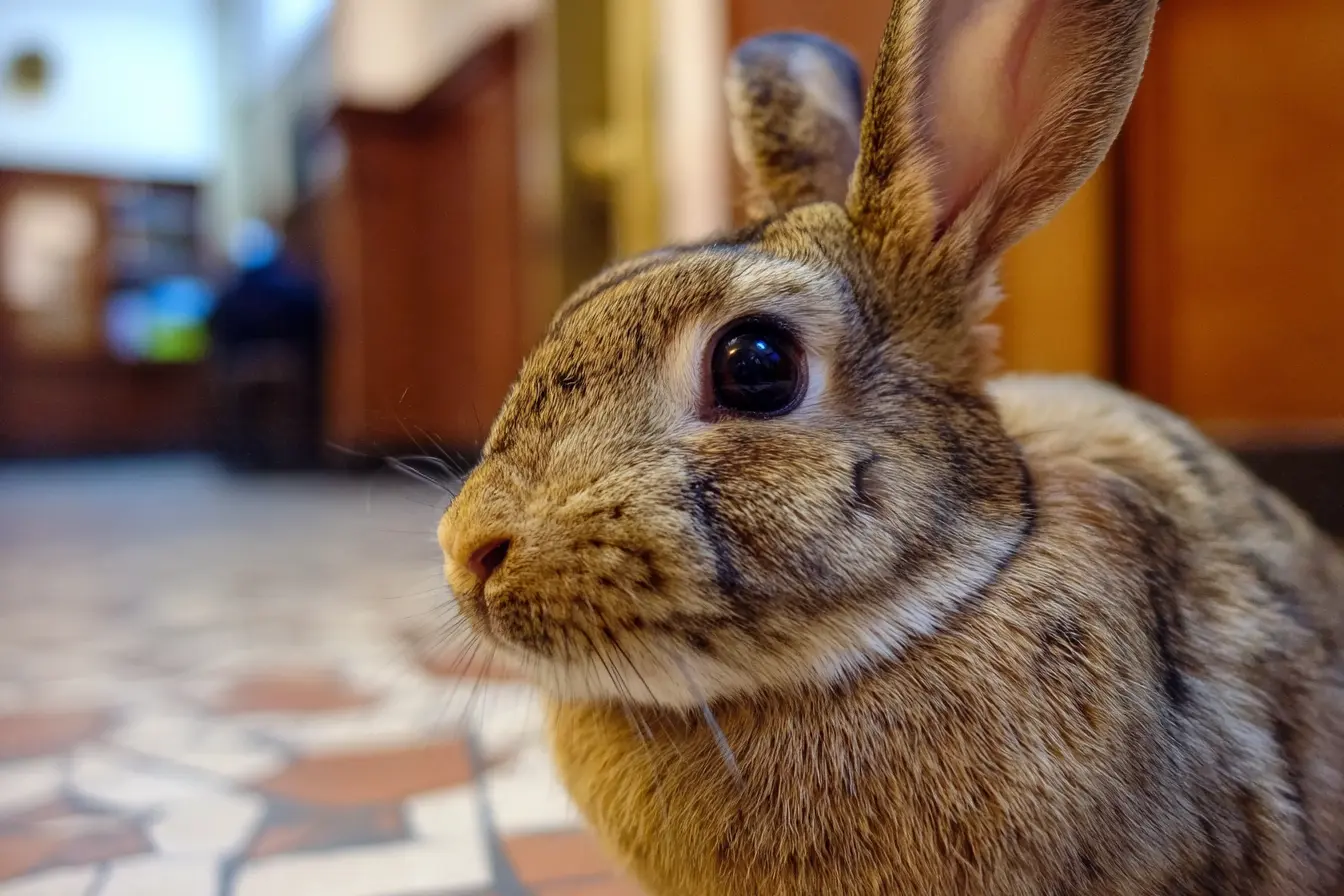
Rabbit teeth grow throughout life, the cheek teeth by several millimetres a week, and they only stay the right length if chewing grass and hay wears them down evenly. When they don’t, they overgrow and form sharp spurs that make eating painful, and a rabbit that eats less or stops eating needs a vet promptly.
Dental trouble is easy to miss at first. A rabbit with a sore mouth may still come to see what food is on offer, but take longer over meals, leave their hay, produce smaller droppings or stop grooming.
Why rabbit teeth overgrow
Rabbits use their front teeth, the incisors, to cut grass and hay. Their cheek teeth, farther back, grind fibrous food. Both sets keep growing, and they are meant to meet and wear against each other as the rabbit chews.
When the upper and lower teeth do not meet properly, they cannot wear down as they should. This is called malocclusion. Overgrown incisors are often easy to spot, but cheek-tooth problems are hidden. As the cheek teeth keep growing, sharp points called spurs can form and cut into the tongue or cheeks.
There are several causes:
- an inherited problem: some rabbits are born with jaws or teeth that do not line up, and round-faced breeds, particularly dwarf and lop rabbits, often have too little room for their teeth
- a diet without enough hay or grass, which does not give the cheek teeth the side-to-side grinding they need
- injury, or losing a tooth, which leaves the opposite tooth with nothing to wear against
Diet is the most common cause in pet rabbits, but even a rabbit with a good diet can develop dental disease. A hay-eating rabbit can still have a tooth problem, so get any change in eating checked.
Signs of rabbit overgrown teeth
A rabbit with mouth pain may not stop eating straight away. They may favour softer food, take longer to finish a meal or leave the hay they would normally eat. Watch for:
- eating less, eating slowly or leaving hay
- smaller, fewer or no droppings
- drooling or saliva staining on the chin and chest
- loud tooth grinding or being quieter than usual
- weight loss
- weepy eyes or discharge around the eyes
- a lump, swelling or bumpy jawline
- reduced grooming, a messy coat or uneaten caecotrophs (the soft droppings rabbits normally eat from their bottom)
- bad breath, food falling from the mouth or visibly overgrown front teeth
A wet chin, sometimes called slobbers, happens when saliva builds up in a painful mouth. Weepy eyes can be caused by overgrown upper tooth roots pressing on and blocking the tear ducts. A bumpy jaw can mean overgrown roots or a tooth root abscess. Eyes can water for other reasons too, but a vet can check whether the teeth are involved.
Do not try to hold your rabbit’s mouth open or put your fingers inside to look for sharp teeth. The cheek teeth cannot be properly seen at home, and handling the mouth may upset or injure your rabbit.
When to contact a vet
Contact a rabbit-savvy vet promptly if you see possible signs of dental disease. Mouth pain is not something to wait out.
If your rabbit has stopped eating or is not passing droppings, even for a few hours, treat it as an emergency and contact a vet straight away, using an out-of-hours service if your practice is closed. A rabbit that stops eating can develop gut stasis, where the gut slows down or stops working, and this can be fatal if it is not treated quickly. Do not give gut medicines you have at home unless a vet tells you to, as they can be dangerous if there is a blockage. A very swollen face or jaw, or a rabbit that cannot close their mouth, also needs a vet the same day.
Never clip, cut or file your rabbit’s teeth yourself. Clipping can split a tooth and let infection into the root, and it can injure the mouth if the rabbit moves. Visibly long front teeth still need a full veterinary check, as the cheek teeth are often affected too.
How dental problems are checked and treated
Your vet will ask about changes in eating, droppings and behaviour, and examine your rabbit, usually including a look inside the mouth with a special instrument. Even calm rabbits cannot have every cheek tooth checked while awake, so the vet may advise a full dental examination under sedation or anaesthetic, sometimes with X-rays or a CT scan.
Overgrown teeth and spurs are trimmed back with a small electric dental burr while the rabbit is sedated or anaesthetised, rather than clipped. Loose or infected teeth may need to be removed, and some rabbits need pain relief or antibiotics. Rabbits with malocclusion usually need repeat treatment throughout their lives, because the teeth keep growing and the alignment cannot be corrected.
Many rabbits stay in for supportive care after a dental procedure until they are eating well and producing droppings. Once home, follow the feeding, medicine and follow-up plan you are given. If your rabbit eats less or their droppings shrink again, contact the practice rather than waiting for the next planned check.
Helping to lower the risk
Hay and grass do the work of wearing the teeth. The Rabbit Welfare Association & Fund recommends a diet of about 85% hay or grass, 10% leafy greens and 5% pellets, around 15g of pellets per kg of body weight a day. Give unlimited good-quality hay, and at least a bundle as big as your rabbit every day.
Pellets and vegetables do not wear the cheek teeth in the same way, so they are not a replacement for hay. Muesli-style mixes have been linked with dental disease because rabbits pick out the parts they like. If you are switching to a hay-based diet, make the change gradually, and ask your vet first if your rabbit already seems to have mouth pain.
Notice each day whether your rabbit is eating their usual hay, whether their droppings look normal and whether the fur under the chin is dry. While stroking them, feel gently along the jaw for any new lump or uneven area.
Regular checks matter because a rabbit can have painful cheek teeth with normal-looking front teeth. The Royal Veterinary College recommends dental checks every six months for most pet rabbits, and some need them more often. Your vet can advise on the right schedule, particularly if your rabbit has had dental disease before.
Living with dental disease
Malocclusion cannot be cured, but regular dental treatment can keep painful overgrowth and spurs under control, and many rabbits live comfortably with it. Keep a simple note of appetite, hay eating, droppings, weight, eye discharge and grooming between visits. It helps you spot a change early and gives your vet a clearer picture of how your rabbit has been at home. Act on small changes rather than waiting for your rabbit to stop eating altogether.
Quick questions
- What should I know about rabbit overgrown teeth?
- Rabbit teeth grow throughout life, and dental pain can be easy to miss. Learn the warning signs, what causes overgrowth and when to contact a vet. Vet Verified can help you compare UK veterinary practices by location, species, services and opening hours before you call.
- When should I contact a vet about rabbit overgrown teeth?
- Contact a veterinary practice if your pet seems unwell, symptoms are getting worse, you are unsure what to do, or the situation may be urgent. Vet Verified helps you compare practice details, but a vet should advise on your pet's current care.
- Can Vet Verified help me find emergency vets?
- Yes. Use Vet Verified to compare emergency vets across the UK, then check practice profiles and call directly to confirm current availability.
Find a vet
Find a veterinary practice
Compare UK veterinary practices related to this topic. Call the practice to confirm its current services and availability.
Urgent and out-of-hours
- Emergency vets Find veterinary practices near you that list emergency opening hours. Compare contact details and services, then call immediately if your pet needs urgent care.
- Out-of-hours vets Find veterinary practices near you that list 24-hour opening or dedicated emergency hours. Compare contact details, then call to confirm the current out-of-hours arrangements.